

5 Ways Prepainted Steel Panels Improve Home Appliance Durability
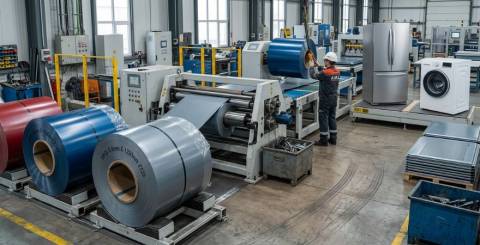
Home appliance manufacturers face a simple but expensive challenge: keeping metal panels attractive and structurally sound through years of daily use. Refrigerators operate in humid kitchens, washing machines vibrate through thousands of cycles, and outdoor air-conditioner housings face sunlight, rain, dust, and temperature changes. A panel that looks acceptable at delivery can still become a warranty problem if the substrate, pretreatment, coating, or forming performance does not match the application.
Prepainted and laminated steel give appliance producers a controlled way to combine corrosion protection, surface appearance, and production efficiency. The material arrives with a factory-applied finish, so manufacturers can stamp and assemble panels without adding a complete post-painting line. For OEM and ODM buyers, however, the term "prepainted steel" is only a starting point. Durability depends on the base metal, coating chemistry, film or paint system, thickness, curing quality, forming method, and the environment in which the appliance will be used.
What Is Prepainted Steel, and Why Does It Matter?
Prepainted steel is produced on a continuous coil-coating line. The steel coil is cleaned and pretreated, receives one or more primer and topcoat layers, and is cured under controlled conditions before being recoiled. Depending on the product, the substrate may be galvanized steel, zinc-aluminum coated steel, or another specified base. Decorative laminated products use a bonded PVC or PET film instead of a conventional liquid topcoat.
Appliance panels are rarely used as flat sheets. They are stamped, bent, drawn, punched, and joined, so the finish must survive the same sheet metal forming techniques used to create the final housing. A coating that performs well on a flat laboratory sample may still crack, whiten, peel, or lose adhesion when formed around a tight radius. This is why appliance-grade material selection has to consider both end-use exposure and the manufacturing process.
1. Better Corrosion Protection in Humid Environments
Kitchens, laundries, utility rooms, and refrigerated spaces expose metal to moisture, condensation, detergent residue, and repeated cleaning. Untreated carbon steel can rust quickly under these conditions, while a correctly specified coated system creates several lines of defense.
• Metallic coating: A galvanized or zinc-aluminum layer provides sacrificial protection to the steel substrate.
• Pretreatment: A chrome-free or other specified pretreatment improves paint adhesion and adds another barrier against moisture.
• Primer and topcoat: The organic coating limits direct contact with water, cleaning chemicals, and humid air.
• Edge and forming control: Appropriate design, cutting, and forming reduce exposed areas where corrosion can begin.
The same durability principle appears in other steel applications, where protective coating systems are selected to manage moisture, sunlight, and chemical exposure before they reach the substrate. For appliance buyers, salt-spray and humidity results are useful for comparing coating systems, but test hours should not be treated as a direct prediction of real-world service life. The test method, cut-edge preparation, acceptance criteria, and sample construction all matter.
A practical specification should therefore describe the appliance part, operating environment, substrate, metallic coating mass, pretreatment, primer, topcoat, coating thickness, and required test method. This is more reliable than asking only for a generic "anti-rust" panel.
2. Stronger Resistance to Scratches, Impact, and Cleaning
Appliance surfaces are handled throughout manufacturing, transport, installation, and daily use. Washing-machine tops hold detergent bottles, refrigerator doors are opened repeatedly, and cabinet panels are wiped with household cleaners. If the finish is too soft, it scratches easily. If it is too brittle or poorly bonded, it may chip or peel during forming and assembly.
The coating formulation, film thickness, curing window, and adhesion to the pretreated substrate all influence performance. Buyers commonly review pencil hardness, cross-cut adhesion, reverse-impact resistance, and bend or T-bend results. These tests answer different questions: hardness indicates resistance to surface marking, adhesion shows whether the coating remains bonded, impact testing checks sudden deformation, and bend testing reveals whether the finish can tolerate the forming radius used in production.
The target should not simply be the hardest possible coating. A very hard finish can be less flexible, while a highly flexible finish may not provide the scratch resistance needed for a visible door panel. The best balance depends on whether the material will become a flat side panel, a deeply drawn part, a folded cabinet, or a decorative front surface.
3. Improved UV and Color-Fade Resistance
Outdoor air-conditioner covers and appliances installed near windows can receive years of ultraviolet exposure. Inadequate coatings may chalk, fade, lose gloss, or yellow before the appliance reaches the end of its mechanical life. This creates a visible quality problem even when the equipment continues to function.
Standard polyester systems can perform well for many indoor and moderate outdoor uses, while higher-durability polyester or PVDF systems may be selected for stronger UV exposure. The correct choice depends on climate, color, gloss level, installation location, expected service life, and cost. Dark colors and high-gloss finishes can also reveal surface changes more clearly than lighter or textured finishes.
Buyers serving high-sun or coastal markets should request the supplier's weathering data, color-difference criteria, gloss-retention criteria, and the exact coating system used for the tested sample. A broad claim such as "UV resistant" is not enough unless it is connected to a defined material specification and test condition.
4. More Reliable Performance During Forming and Temperature Changes
Durability starts before an appliance reaches the customer. During production, coated steel may pass through leveling, slitting, punching, stamping, bending, hemming, and fastening operations. Each step can place stress on the paint or laminate. Poor adhesion may cause peeling, while an unsuitable film can whiten or crack at tight bends.
VCM laminated steel uses a PVC or PET decorative film bonded to the steel substrate. It is commonly chosen for visible refrigerator doors, washing-machine fronts, wine-cooler shells, display cabinets, and other applications where pattern, texture, or premium appearance is important. Some VCM grades may also be designed for low-temperature, antibacterial, odor, or food-contact requirements, but these properties should never be assumed from the product name alone. They must be verified for the exact film, adhesive, substrate, and certification required by the project.
Temperature cycling can also affect the interface between the steel, adhesive, film, and paint layers. A refrigerator door, for example, may experience cool internal conditions and warm, humid external air. An outdoor unit may move between strong daytime heat and cooler nights. Sample forming and application-specific testing help confirm that the selected system remains stable under these changes.
5. More Consistent Finish Quality Across Large Orders
A durable appliance also needs to look consistent. Large OEM orders may use several coils over many production runs, yet adjacent panels still need to match in color, gloss, texture, and surface direction. Continuous coil-coating and lamination lines offer better control over these variables than painting individual assembled parts, but consistency still depends on process discipline and approved standards.
Buyers should agree on a physical master sample rather than relying only on a screen image or RAL/NCS code. A color code defines a target, but substrate, coating chemistry, gloss, lighting, and surface texture can change how the final panel appears. Repeat orders should reference the approved sample, permissible color difference, gloss tolerance, film pattern, direction, and any protected surface requirements.
This control matters most on highly visible parts such as refrigerator doors, washing-machine fronts, and showroom appliances. A small mismatch that is acceptable on a hidden base frame may be unacceptable on two panels installed side by side.
PPGI, PPGL, PCM, and VCM: Which Type Fits the Application?
The four terms are related, but they are not interchangeable. The correct material depends on the appliance component, forming method, appearance target, climate, and compliance needs.
• PPGI: PPGI coil combines a hot-dip galvanized substrate with a factory-applied paint system. It is a practical choice for many washing-machine shells, air-conditioner housings, side panels, and general appliance cabinets when the coating specification matches the environment.
• PPGL: Prepainted zinc-aluminum coated steel can provide useful heat and corrosion performance for selected outdoor housings, base frames, and climate-exposed components. Suitability still depends on edge design, forming, coating chemistry, and the actual service environment.
• PCM: Painted pre-coated metal is used for solid-color appliance panels and cabinet bodies. It is not a laminated film product. Buyers should define color, gloss, hardness, flexibility, coating thickness, and any special easy-clean or antibacterial requirement.
• VCM: Vinyl-coated or film-laminated metal provides decorative patterns, textures, and premium visual effects. It is commonly used on visible refrigerator, washer, wine-cooler, and display-cabinet panels. Special hygiene or food-contact claims require project-specific evidence.
A refrigerator exterior door and an outdoor air-conditioner cover may both be made from coated steel, but they solve different problems. The refrigerator door prioritizes appearance, forming quality, fingerprints, and indoor humidity; the outdoor cover prioritizes UV exposure, rain, temperature changes, and corrosion. Using the same generic specification for both parts can create unnecessary cost in one application and insufficient performance in the other.
What Buyers Should Verify Before Production
A strong sourcing decision combines documents, physical samples, and production trials. Before approving a full order, buyers should request information that can be linked directly to the ordered specification.
• Substrate details: Steel grade, thickness tolerance, metallic coating type, and coating mass.
• Paint or film system: Pretreatment, primer, topcoat or laminate type, total coating thickness, gloss, color, and surface protection film.
• Adhesion and forming performance: Cross-cut adhesion, bend or T-bend, reverse impact, and a trial using the actual production radius where possible.
• Environmental performance: Salt-spray, humidity, UV or accelerated weathering data when relevant to the application.
• Appearance control: Approved physical sample, color-difference tolerance, gloss tolerance, texture or film-pattern direction, and defect acceptance limits.
• Shipment protection: Coil or sheet packaging, edge protection, moisture barriers, pallet or skid design, and inspection before loading.
• Document scope: Material test reports, inspection records, management-system certificates, and any project-specific compliance documents should match the supplying facility and ordered product.
For a new program, a sample coil or trial batch is often more informative than a long list of generic test values. It allows the manufacturer to evaluate feeding, forming, tool marks, bend appearance, assembly, protective-film removal, and final color under the lighting used on the production floor.
Common Sourcing Mistakes to Avoid
• Choosing by price alone: The lowest-cost coating may not meet the humidity, UV, forming, or appearance requirements of the target part.
• Using one specification for every component: Visible doors, hidden frames, indoor cabinets, and outdoor housings often need different material systems.
• Treating salt-spray hours as a warranty: Laboratory results are useful for comparison but do not independently predict years of service in every climate.
• Approving color digitally: Screen colors do not replace a physical master sample produced on the intended coating or film system.
• Ignoring the forming process: A coating can pass flat-sheet inspection and still fail at a tight bend, deep draw, hem, or punched edge.
• Assuming special claims are standard: Antibacterial, food-contact, odor, chemical-resistance, and low-temperature properties need evidence for the exact grade.
• Leaving packaging until the end: Moisture, edge damage, coil collapse, and transport abrasion can affect an otherwise acceptable production batch.
Final Thoughts
Prepainted and laminated steel improve appliance durability by protecting the substrate, resisting daily wear, controlling color change, surviving forming operations, and delivering a consistent finish across large production runs. Those benefits do not come from the product name alone. They come from matching the substrate, pretreatment, coating or film, forming method, test requirements, and packaging to the actual component.
For procurement teams, the most reliable approach is to define the application first, review measurable specifications second, and confirm performance with an approved sample or production trial before scaling. That process reduces material substitutions, appearance disputes, forming failures, and premature corrosion while giving both buyer and supplier a clear basis for quality control.
Frequently Asked Questions
What is the minimum order quantity for prepainted appliance steel?
MOQ varies by substrate, thickness, width, paint system, color, film pattern, and production schedule. Standard colors and common specifications may support smaller trials, while custom coatings or laminated films usually require a larger production quantity. The MOQ should be confirmed for the exact specification rather than treated as a fixed industry number.
Which material is best for refrigerator panels?
There is no single answer for every refrigerator component. PCM or VCM may be selected for visible exterior doors and decorative panels, while structural, hidden, or interior parts may use different materials. Low-temperature, hygiene, odor, or food-contact requirements must be verified for the exact component and material system.
Can colors and surface patterns be customized?
Yes. Suppliers can often match RAL, NCS, customer master samples, or selected laminate patterns. Customization may change the MOQ, lead time, setup cost, and approval process. A physical sample should be signed off before mass production.
How long will a coated panel last outdoors?
Service life depends on climate, UV exposure, proximity to salt or industrial pollution, substrate, coating chemistry, coating thickness, edge design, forming quality, installation, and maintenance. A supplier should provide test data and a specification suitable for the intended environment, but no single laboratory result can guarantee the same lifetime in every location.
What quality documents should a buyer request?
Common documents include the ordered material specification, inspection report, substrate and coating details, color and gloss record, relevant performance test results, packing information, and any required management-system or product-compliance certificates. Buyers should check the issuer, validity, scope, and relationship to the actual supplying facility.
Similar Articles

A worn guide, an overheated insulator, or a component that reacts with a cleaning solution can disrupt an otherwise reliable machine. These problems often begin with a material choice that was reasonable during development but becomes unsuitable under actual operating conditions.
Learn about HVAC sheet metal fabrication, including its key processes, materials, applications, and benefits for efficient heating and cooling systems.

Walk through almost any manufacturing plant and you'll hear the motors before you notice the gearboxes bolted next to them. That's kind of the point

Learn how to choose the right food powder manufacturing grinder by comparing grinding capacity, precision, efficiency, durability, and processing needs.

Electric cables are among the most critical parts of any construction. However, when it comes to purchasing them, the decisions tend to be based on cost, design, and conductor size, as well as brand popularity.

In an era of supply chain realignment and accelerating technological change, precision manufacturing has emerged as a critical competitive differentiator for businesses across the industrial spectrum

Avoid seven common industrial agitator selection mistakes involving tank size, viscosity, impellers, motor power, materials, maintenance, and suppliers.
Pick a stainless steel pipe based on three things: the grade, the wall thickness, and the working environment. Get these three right, and the pipe lasts for decades.

The right pressure sensor matches four things: pressure range, media type, accuracy, and output signal. Get these four right, and the sensor will last for years.