

Food Powder Manufacturing Grinder Choosing
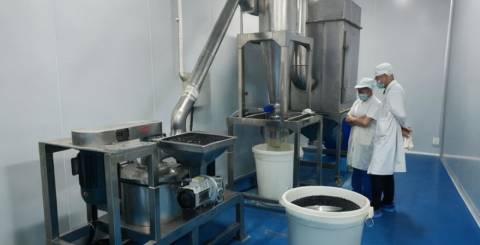
Food powders are used in a wide range of manufacturing processes, from rice flour to spice powder, herb powder, sugar powder and other powdered food ingredients. Although these materials may all appear to require the same basic grinding operation, the equipment selection process is rarely that simple. A grinder that performs well with rice may not be the best choice for oily seeds. A machine capable of producing a fine powder may also generate more heat than a heat-sensitive ingredient can tolerate. At the same time, production capacity, cleaning requirements and the way the ground powder is transferred to the next process can all affect the final result.
For food powder manufacturers, therefore, choosing powder grinding equipment should start with the characteristics of the material and the required production process rather than simply comparing motor power or advertised capacity.
Why Food Powder Manufacturing Require Different Grinding Solutions
The first step in selecting grinding equipment is understanding that food ingredients behave differently during size reduction. Hard grains such as rice require sufficient mechanical force to break the particles and may cause considerable wear on grinding components over continuous production. Spices and herbs may have different fiber structures, while nuts and some seeds contain relatively high levels of oil and can become sticky or heat-sensitive during high-speed grinding.
The required final particle size is another important consideration. A manufacturer producing a coarse ingredient powder does not necessarily need the same grinding system as a company producing a fine flour with controlled particle-size distribution. This is why industrial grinding should be treated as a process rather than simply a single machine operation. Before selecting equipment, manufacturers should consider at least the following factors:
• Material hardness and structure
• Moisture and oil content
• Feed particle size
• Required final particle size
• Production capacity
• Heat generation during grinding
• Cleaning and sanitation requirements
• Dust control
• Feeding and conveying arrangements
Start With the Food Material Characteristics
Food material properties are one of the strongest factors affecting grinding performance. For example, grains with relatively high hardness can place greater demands on the grinding components. If abrasive ingredients are processed continuously, conventional components may wear more quickly, potentially affecting both particle size consistency and maintenance intervals. On the other hand, oily materials can create a different challenge. Excessive heat may soften or smear the material, while fine particles can accumulate on internal surfaces and reduce grinding efficiency.
For this reason, manufacturers should provide equipment suppliers with as much information as possible about the material before selecting a grinder. A useful material specification can include:
• Material name
• Moisture content
• Bulk density
• Initial particle size
• Hardness
• Oil or fat content
• Required final fineness
• Expected hourly throughput
This information is much more useful than simply asking for a “high-capacity grinder.”
Define the Required Particle Size
Particle size is another critical consideration. Some food manufacturers only require a relatively coarse powder, while others need a fine flour with a narrow particle-size range. The grinding technology and operating conditions required can be significantly different.
For applications requiring fine powders, an air classifier can be particularly useful because grinding and particle classification can work together. Instead of relying only on a fixed screen size, the classification process can help control which particles leave the grinding system. This can be valuable for ingredients such as flour and other food powders where consistent fineness is important.
Manufacturers should therefore define the target particle size using a measurable specification, such as mesh size or particle-size distribution, rather than simply describing the desired powder as “fine.”
Do Not Evaluate Capacity Without Considering Fineness
Production capacity is one of the first specifications buyers usually ask about, but capacity should never be considered independently. The same grinding machine may produce different capacities depending on:
• Material hardness
• Moisture
• Feed size
• Final particle size
• Grinding configuration
• Operating conditions
A machine producing several hundred kilograms per hour of one grain does not necessarily produce the same throughput when processing a harder or more difficult material to the same fineness.
Consider Heat Generation During Grinding
High-speed grinding can generate heat, and temperature can become an important process variable for certain food ingredients. When selecting equipment, manufacturers should consider whether the material is sensitive to temperature and whether the expected grinding conditions could affect its quality.
Pin mills and other high-speed impact grinding systems can provide effective size reduction for many applications, but depending on the material and operating conditions, additional cooling may be required. This does not mean that one grinding technology is universally better than another. The appropriate configuration depends on the material, desired fineness, capacity and acceptable processing temperature.
Cleaning and Sanitation Convenience
Food-processing equipment has requirements that go beyond grinding performance. Manufacturers may need to clean equipment regularly between production batches, particularly when different ingredients are processed on the same production line. The design should therefore allow operators to access areas that require cleaning and maintenance. Stainless-steel construction, appropriate contact materials and a practical internal layout can all contribute to easier sanitation.
Meanwhile, dust control is a key design to well control the powder dust issue. Once a material has been converted into a fine powder, the powder must normally be collected, transferred and introduced into the next processing stage. Fine particles can become airborne during feeding, grinding and discharge if the system is not properly designed.
Conclusion: Choose the Right Grinding System for Food Powder Manufacturing
Selecting the powder grinding equipment for food powder manufacturing is ultimately a process-engineering decision. The best solution is not necessarily the machine with the highest motor power or the largest advertised capacity. A right grinding system is designed around product quality, production efficiency, maintenance and long-term reliability.
Similar Articles
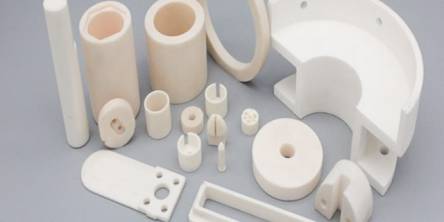
A worn guide, an overheated insulator, or a component that reacts with a cleaning solution can disrupt an otherwise reliable machine. These problems often begin with a material choice that was reasonable during development but becomes unsuitable under actual operating conditions.
Learn about HVAC sheet metal fabrication, including its key processes, materials, applications, and benefits for efficient heating and cooling systems.
Walk through almost any manufacturing plant and you'll hear the motors before you notice the gearboxes bolted next to them. That's kind of the point
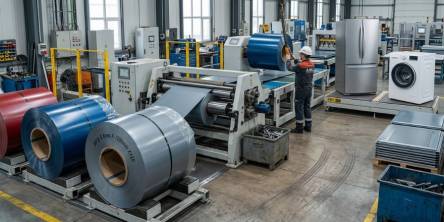
Learn how prepainted steel panels resist corrosion, scratches, UV exposure, forming stress, and finish inconsistency in home appliance manufacturing.

Electric cables are among the most critical parts of any construction. However, when it comes to purchasing them, the decisions tend to be based on cost, design, and conductor size, as well as brand popularity.
In an era of supply chain realignment and accelerating technological change, precision manufacturing has emerged as a critical competitive differentiator for businesses across the industrial spectrum
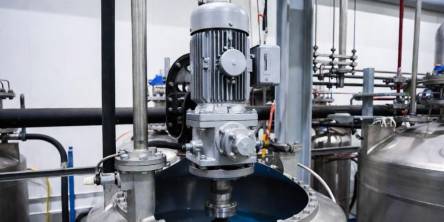
Avoid seven common industrial agitator selection mistakes involving tank size, viscosity, impellers, motor power, materials, maintenance, and suppliers.
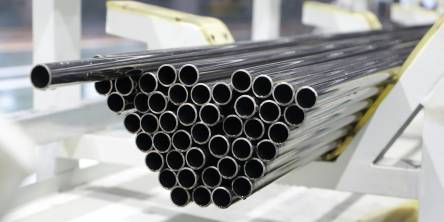
Pick a stainless steel pipe based on three things: the grade, the wall thickness, and the working environment. Get these three right, and the pipe lasts for decades.

The right pressure sensor matches four things: pressure range, media type, accuracy, and output signal. Get these four right, and the sensor will last for years.