

Why Steel Components Are Essential for Durable Construction

Buildings carry more weight than their load calculations suggest. They carry financial expectations, operational commitments, and in many cases, someone's life savings. When a roof starts failing at year twelve, or a frame needs emergency reinforcement, two decades in, the true cost of cutting corners becomes impossible to ignore. That reckoning is exactly why more owners, contractors, and architects are asking a smarter question up front: what will this building actually cost me over its entire lifetime?
That question, almost without exception, leads back to durable steel components. From primary structural frames down to secondary roofing members, structural steel construction consistently delivers on longevity, safety, and real-world value in ways that timber, masonry, and composite alternatives genuinely struggle to match. Globally, 214.7 kg of steel was used in new products per person in 2024, a figure that tells you everything about how central steel remains to modern construction, everywhere.
Choosing the right steel building materials from day one is what separates structures that perform for fifty-plus years from those that become expensive problems.
The Steel Components That Actually Carry Durability Through a Building
Understanding *why* steel is durable is one thing. Understanding *which* components matter most and how they work together is where specification decisions get real.
Primary Members: Beams, Columns, and Frames
I-beams, H-sections, and built-up members carry gravity and lateral loads across decades of service. These are the non-negotiables. The connection design, bolted or welded, moment or pinned, is as critical as the member selection itself. Choosing appropriate steel grades matched to exposure conditions and local structural codes is where long-term reliability either begins or quietly gets compromised.
Secondary Framing: Purlins and Girts
Once the primary frame is standing, its long-term performance depends heavily on how well the secondary framing system distributes loads, and that's exactly where secondary members become indispensable. Purlins and girts prevent deflection, panel damage, and the kind of water ingress that can quietly destroy a building from the top down before anyone notices.
For builders sourcing steel roof purlins for sale, finding a supplier with structurally rated, properly coated profiles is genuinely non-negotiable. These members transfer roof and wall loads back to the main structure, and their specification, correct spacing, appropriate lapping, sag rods, and corrosion-resistant coatings determine how a roof performs not just at handover, but fifteen and thirty years later. Suppliers like MetalMart.biz offer pre-galvanized CEE and ZEE profiles across the range, allowing project teams to match secondary framing precisely to span and load requirements without compromise.
Connections, Bracing, and Fasteners
Purlins keep the roof performing. But it's the connections, bracing members, and fasteners tying every element together that often determine whether a steel structure stands the test of time or fails at its weakest point years before it should.
High-strength bolts, correctly detailed cleats, properly specified base plates, one of these is glamorous. But this is precisely where failures originate when specifications aren't enforced.
Demand coating class certifications, bolt grade verification, and material test reports from every supplier. That documentation is the difference between a genuinely durable system and an expensive future liability.
Decking, Cladding, and Roof Systems
With the structural skeleton secured, attention turns to the building envelope, the roof, wall cladding, and decking systems that shield everything beneath them from the elements. Steel roof decking, insulated metal panels, and Galvalume-coated wall cladding all contribute to long-term rigidity and weather resistance.
PVDF and polyester coating systems extend service life considerably in high-UV and coastal environments. Well-detailed envelope systems also improve thermal performance, making durable steel components a practical energy investment throughout the building's operational life, not just at construction.
What Actually Makes Steel So Durable? Let's Break It Down
Durability isn't a vague marketing claim. It's something measurable, such as structural performance under repeated loads, resistance to environmental exposure, dimensional stability over time, and a realistic life expectancy across the full design period. Steel delivers on all four. Here's why that matters to you specifically, depending on what you're building.
Strength and Structural Integrity That Holds for Decades
Steel beams, columns, channels, and purlins maintain their load-carrying capacity under repeated stress cycles in ways that wood and unreinforced masonry simply cannot replicate. Period. Properly specified and protected steel frames routinely achieve design lives of 50 to 100-plus years, which is precisely why steel dominates in industrial plants, warehouses, bridges, and multi-storey commercial buildings, where structural failure carries consequences nobody wants to think about.
The connection design matters just as much as the member itself. Whether it's bolted moment frames, welded joints, or braced configurations, the right grade of steel matched to local codes and exposure conditions is where genuine long-term reliability begins. Get that specification right, and you're building something that won't need rethinking mid-lifecycle.
Corrosion, Fire, and Environmental Resistance
Raw tensile strength alone doesn't guarantee a long building life. How a steel component holds up against corrosion, heat, and environmental exposure is equally critical, and this is where proper protective systems earn their cost back many times over.
Galvanizing, Galvalume coatings, epoxy primers, and intumescent paint systems are what transform structural steel into truly long-lasting construction materials, even in coastal or high-humidity environments. A sensible maintenance strategy includes inspections every five years, spot touch-ups as needed, and scheduled recoating, which extends service life dramatically without requiring significant expenditure. That's not guesswork. That's documented, predictable performance.
Precision Fabrication and Dimensional Stability
Here's something that doesn't get talked about enough: the precision with which steel components are manufactured in the first place quietly determines how well a building ages. Factory-fabricated steel building materials are produced to tight dimensional tolerances. Less warping. Less cracking. Less movement over time.
That stability directly supports the long-term performance of roofing systems, cladding, and building envelopes. Seals hold longer. Finishes stay intact. Water ingress becomes far less likely. Small manufacturing decisions made before a single bolt is tightened on site can have enormous consequences twenty years down the line.
Steel as a Lifecycle Strategy, Not Just a Material Choice
Selecting the right individual components matters. But true durability comes from treating structural steel construction as a holistic, lifecycle-driven strategy, one that delivers compounding returns long after the building opens.
Lifecycle Costs Favor Steel, Substantially
The most compelling argument for investing in quality steel isn't made in engineering terms. It's financial. A steel frame typically demands less maintenance over a 30-to-50-year period than a comparable timber or masonry system. Factor in lower repair frequency, higher end-of-life salvage value, and reduced insurance premiums in many markets, and the lifetime economics strongly favor steeper even when the upfront cost runs higher.
Faster Delivery, Fewer Hidden Risks
Factory-controlled fabrication improves weld quality, dimensional alignment, and finish consistency well beyond what's achievable on a busy job site. In one documented case, steel-driven construction methods delivered results 43% faster than conventional approaches, cutting 10 months off a projected 32-month schedule. Fewer on-site defects mean fewer long-term durability risks hiding inside the finished structure, invisible until it's too late to address them inexpensively.
Steel's Environmental Case Stronger Than You Might Expect
Safety and lifecycle value are powerful incentives. But in an era of genuine environmental accountability, durable steel components carry a sustainability story worth understanding, too. According to the American Institute of Steel Construction, 98% of structural steel is recovered for recycling at the end of service life. That makes structural steel one of the most genuinely circular long-lasting construction materials available in any market today.
Well-detailed steel roof and wall systems also support high-performance insulation, cool roof assemblies, and rooftop solar integration, delivering ongoing energy savings across the building's operational life. And because durable components avoid premature replacement, they reduce the hidden embodied carbon cost of rebuilding something that should have lasted longer the first time.
Common Questions About Steel Durability in Construction
1. Why is steel such a strong construction material?
Steel is durable, adaptable, and consistent. It supports prefabrication, uniform quality, lightweight design, and straightforward installation. It's also the most recycled material on Earth, which matters more every year.
2. How long does a steel building actually last?
With correct specification, protective coatings, and routine maintenance, structural steel buildings routinely reach 50-year design lives. In low-corrosion environments with good detailing, 100-year service life is achievable and not uncommon in commercial or industrial settings.
3. What maintenance does steel actually need?
Periodic visual inspections every three to five years, coating touch-ups where needed, fastener checks, and sealant review around penetrations. Compared to timber or masonry, steel's maintenance demands are low and, importantly, highly predictable.
Build It Right the First Time
When longevity, safety, and lifecycle value all matter, and they always matter, structural steel construction is consistently the most defensible choice available to any project team. The right combination of primary members, secondary framing, quality connections, and properly specified coatings is what makes genuinely durable construction achievable rather than aspirational. Whether you're specifying a large industrial facility or a rural farm shed, the fundamentals don't change. Explore your steel building materials options, request a specification consultation, and build structures that actually stand the test of time.
Similar Articles
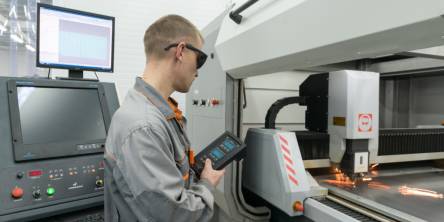
Choosing metal testing equipment? Learn which properties, test locations, sample prep and total costs to weigh before you buy. Read our guide first.
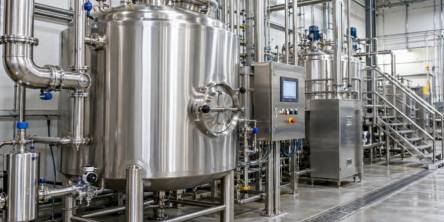
Discover why sanitary fabrication matters in food processing facility upgrades, improving hygiene, food safety, equipment durability, and regulatory compliance.

An efficiently operating manufacturing business involves more than making good products. Good organization is key to keeping costs under control, meeting deadlines, ensuring quality, and reacting promptly to changes.
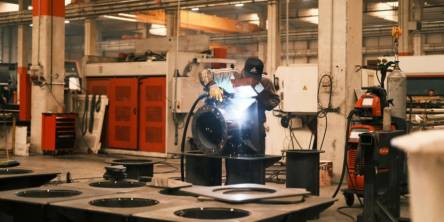
Learn how to design closed die forging with the right parting lines, draft angles, and critical details to improve manufacturability, quality, and efficiency.
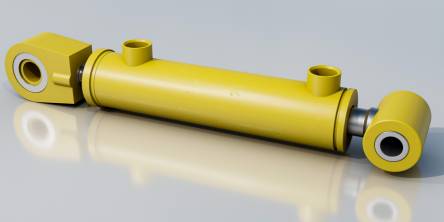
Spot the top 7 warning signs your heavy equipment needs hydraulic cylinder repair, from oil leaks to drift, and learn when to book an inspection.
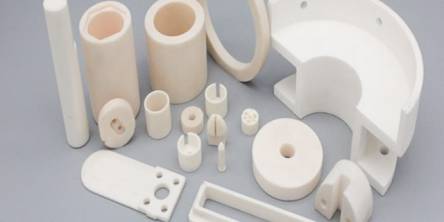
A worn guide, an overheated insulator, or a component that reacts with a cleaning solution can disrupt an otherwise reliable machine. These problems often begin with a material choice that was reasonable during development but becomes unsuitable under actual operating conditions.
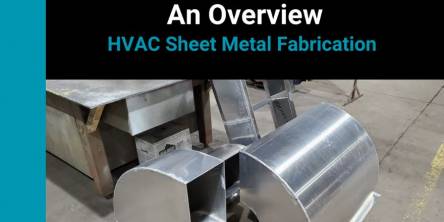
Learn about HVAC sheet metal fabrication, including its key processes, materials, applications, and benefits for efficient heating and cooling systems.
Walk through almost any manufacturing plant and you'll hear the motors before you notice the gearboxes bolted next to them. That's kind of the point
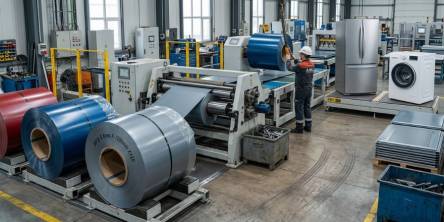
Learn how prepainted steel panels resist corrosion, scratches, UV exposure, forming stress, and finish inconsistency in home appliance manufacturing.