

Why Sanitary Fabrication Matters in Food Processing Facility Upgrades
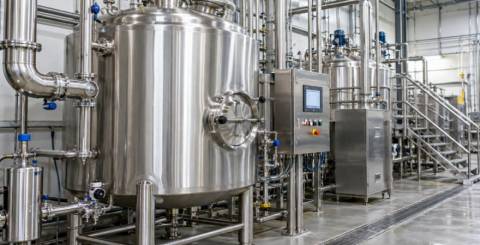
Upgrading a food processing facility involves more than installing new equipment or replacing aging components. Every modification can affect how effectively production areas are cleaned, inspected, and maintained. When sanitary design is overlooked, even relatively minor changes can introduce surfaces that collect residue, restrict cleaning access, or create additional maintenance requirements.
For food and beverage manufacturers in Cambridge and throughout Ontario, sanitary fabrication is an important consideration when planning equipment upgrades. Stainless steel components, welded connections, and processing equipment must be designed around the facility's operating conditions and sanitation procedures.
Addressing hygienic requirements during the planning stage helps facilities avoid modifications that solve immediate equipment problems while introducing longer-term cleaning or reliability concerns.
Selecting Stainless Steel for Processing Environments
Material selection is one of the first decisions in sanitary stainless steel fabrication. Although stainless steel is widely used in food processing, different grades offer varying levels of corrosion resistance and suitability for specific applications.
Two commonly used grades are 304 and 316 stainless steel.
304 stainless steel is frequently used for processing equipment, work surfaces, tanks, and structural components. It provides good corrosion resistance in many food manufacturing environments and is generally suitable where operating conditions do not involve aggressive chemicals or high chloride exposure.
316 stainless steel contains molybdenum, which improves resistance to certain forms of corrosion, particularly in chloride-containing environments. It may be more appropriate for equipment exposed to demanding cleaning chemicals, salt-containing products, or other corrosive conditions.
Choosing between these materials requires an understanding of the products being processed, cleaning procedures, operating temperatures, and chemical exposure.
Material selection should also account for compatibility with existing equipment. Introducing components with different corrosion characteristics can create maintenance challenges, particularly where cleaning chemicals or production conditions affect connected surfaces differently.
The goal is not simply to specify stainless steel, but to select a material appropriate for the equipment's intended service conditions.
How Weld Quality Affects Equipment Cleanability
Welded connections play an important role in food processing equipment fabrication. Poorly executed welds can create irregular surfaces, crevices, and other areas where product residue or moisture may accumulate.
These conditions can make routine sanitation more difficult and increase the possibility of contamination if cleaning procedures cannot adequately reach affected areas.
Hygienic welding focuses on producing joints that support effective cleaning and inspection. Tungsten inert gas (TIG) welding is commonly used for sanitary stainless steel applications because it allows precise control over weld formation.
However, the welding process alone does not guarantee a hygienic result. Joint preparation, welding technique, shielding, and finishing methods all influence the quality of the completed connection.
Important considerations include maintaining smooth transitions between joined surfaces, avoiding excessive weld reinforcement, and preventing defects that could retain product material.
For product-contact piping, internal weld quality is especially important because some connections become difficult to access after installation.
Appropriate inspection and finishing procedures help ensure that welded assemblies meet the facility's hygienic design requirements before equipment enters production.
Designing Equipment for Cleaning and Inspection
Sanitary fabrication extends beyond material selection and weld appearance. Equipment geometry and accessibility directly affect how efficiently maintenance and sanitation personnel can perform their work.
During food processing facility upgrades, engineers should evaluate whether new components can be cleaned using existing procedures and whether critical surfaces remain accessible for inspection.
Several design considerations deserve attention:
● Drainage: Tanks, piping, and equipment surfaces should minimize areas where standing water or cleaning solutions can remain.
● Joints and crevices: Connections should avoid unnecessary gaps, overlapping surfaces, and inaccessible spaces that could trap residue.
● Surface accessibility: Components should provide sufficient access for cleaning and inspection, particularly around equipment supports and transfer points.
● Maintenance clearance: Equipment should allow workers to inspect, remove, or service components without excessive disassembly.
These details become particularly important when modifying older production lines. An existing equipment layout may have limited clearance or contain components that were not originally designed around current cleaning requirements.
A replacement assembly should therefore be evaluated as part of the complete processing system rather than as an isolated fabricated component.
Coordinating Fabrication With Existing Production Equipment
Equipment upgrades often take place in facilities that must maintain production schedules. Fabrication and installation planning should account for existing equipment connections, available installation space, and the facility's operational constraints.
Accurate measurements are essential when replacing stainless steel piping, modifying processing vessels, or integrating new components into established production lines.
Small dimensional differences can complicate installation, place unnecessary stress on connected equipment, or affect drainage and cleaning accessibility.
Coordination between facility engineers, maintenance supervisors, sanitation personnel, and fabrication teams can help identify these issues before installation begins.
Where practical, prefabricating and inspecting assemblies before a planned shutdown can reduce the amount of work required within active production areas.
Installation plans should also address cleaning, inspection, and appropriate verification before modified equipment returns to service.
These steps help facilities manage production interruptions while maintaining the hygienic requirements of the processing environment.
Working With Fabrication Teams Familiar With Food Processing
Food processing projects require fabrication teams that understand more than standard industrial metalworking practices.
Experience with food-contact surfaces, hygienic welding, material selection, and sanitation requirements can influence how effectively equipment modifications integrate into existing operations.
When evaluating providers for Sanitary Fabrication Cambridge projects, facility managers should consider relevant processing-industry experience, welding capabilities, quality control practices, and familiarity with plant maintenance procedures.
For example, Cambridge-based Complete Millwrighting & Fabrication Inc. provides 304 and 316 stainless steel fabrication, TIG welding, and sanitary fabrication services, with HACCP-educated workers supporting its industrial processing work.
Regardless of the contractor selected, project discussions should establish material specifications, surface finishing expectations, inspection requirements, and installation responsibilities.
Clear communication helps ensure that fabrication decisions reflect the facility's actual sanitation and production needs.
Sanitary fabrication should ultimately be treated as part of long-term equipment reliability rather than a final consideration during installation. By evaluating materials, weld quality, cleanability, and maintenance access early in the upgrade process, food manufacturers can make modifications that support consistent sanitation practices and dependable production over time.
Similar Articles

An efficiently operating manufacturing business involves more than making good products. Good organization is key to keeping costs under control, meeting deadlines, ensuring quality, and reacting promptly to changes.
Learn how to design closed die forging with the right parting lines, draft angles, and critical details to improve manufacturability, quality, and efficiency.
Spot the top 7 warning signs your heavy equipment needs hydraulic cylinder repair, from oil leaks to drift, and learn when to book an inspection.
A worn guide, an overheated insulator, or a component that reacts with a cleaning solution can disrupt an otherwise reliable machine. These problems often begin with a material choice that was reasonable during development but becomes unsuitable under actual operating conditions.
Learn about HVAC sheet metal fabrication, including its key processes, materials, applications, and benefits for efficient heating and cooling systems.
Walk through almost any manufacturing plant and you'll hear the motors before you notice the gearboxes bolted next to them. That's kind of the point
Learn how prepainted steel panels resist corrosion, scratches, UV exposure, forming stress, and finish inconsistency in home appliance manufacturing.
Learn how to choose the right food powder manufacturing grinder by comparing grinding capacity, precision, efficiency, durability, and processing needs.

Electric cables are among the most critical parts of any construction. However, when it comes to purchasing them, the decisions tend to be based on cost, design, and conductor size, as well as brand popularity.