

How to Design a Closed Die Forging: Parting Lines, Draft, and Details Engineers Overlook
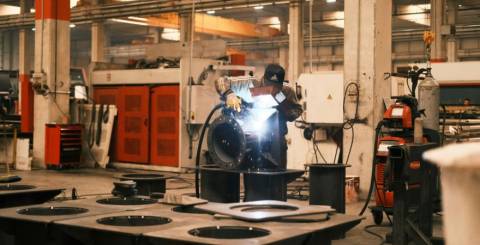
Closed die forging can deliver strong, near-net-shape parts with aligned grain flow, but only when the geometry is planned around how hot metal fills an impression. Engineers often inherit a machined from bar drawing and expect a forging to match it with minimal changes. That approach invites misruns, die lock, excess machining, or unnecessary die complexity. A better path is to design the forging as its own article, with intentional parting lines, draft angles, fillet radii, and machining stock that match the process, the alloy, and the load path the part must survive in service.
1. Choose the Parting Line to Control Flash and Die Fill
The parting line governs more than appearance. It sets where flash forms, how metal flows into deep cavities, and whether the part can actually be ejected. A practical rule is to place the parting line so each die half sees a continuous silhouette that avoids reverse drafts and pockets that trap the forging. For example, a crank arm with a thick boss can be parted through the boss center so the boss forges in compression rather than shearing across the split line. An early review with a seasoned forging manufacturer can validate a proposed parting plane against real die closure and trimming constraints, and may suggest a blocker die or a preform to help fill wide to narrow sections without creating laps.
2. Draft Angles and Fillet Radii That Actually Forge
Zero draft and sharp corners look tidy on a CAD model but fight physics in a hot impression. External surfaces can tolerate modest draft, while internal pockets generally need more to prevent the forging from sticking in the cavity and to reduce die galling. Generous fillet radii guide the billet as it stretches around turns, reducing the risk of cold shuts where two flows meet. Consider a clevis with ears: calling out vertical ears with no draft and knife edge corners often leads to torn edges or underfill at the tips. Adding workable draft on the ear walls and a smooth fillet transition into the yoke lets the flash carry pressure to the extremities so those thin areas fill before the press bottoms out or the hammer blow dissipates.
3. Tolerances, Machining Stock, and As-Forged Surfaces
As-forged dimensions have process-dependent capability, and surfaces carry scale and die texture. Treat the forging like a pre-shaped blank by assigning finish machining to functional datums and precision interfaces. Allow a small, deliberate layer of stock on bores, gasket faces, and spline seats to clean up after heat treatment. A common mistake is applying tight symmetric tolerances and fine finishes to every feature, then discovering they drive excessive rework. For a gear blank, make the hub bore and one face the machining datums, specify those as "to machine," and let the tooth OD forge near net. After normalizing or quench and temper, a single setup can finish the bore size and face runout without chasing as-forged variation on non-critical ribs.
4. Thin Walls, Ribs, and Bosses Without Underfill
Thin webs and tall ribs are prone to underfill and cold shuts because metal prefers wider, lower resistance paths. Two tactics help: shape transitions with generous radii so flow accelerates smoothly into narrow features, and use preforms or blocker impressions to place material where it is needed before the final stroke. A bracket with a thin web between two heavy bosses will fill more reliably if the preform upsets the billet under each boss and the final die uses flash land geometry to keep pressure on the web. Press forging excels at pushing metal into deep ribs because of controlled dwell, while hammer forging may need different preform shapes to avoid laps from rapid free surface folding. Wherever possible, align ribs and bosses so the primary flow follows the eventual load path, improving grain flow continuity through the section.
Volume, Alloy, and When a Different Process Wins
Closed die tooling earns its keep when repeat volume or material savings offset die cost. If you need a handful of very large parts, open die forging followed by machining may be the best fit because you can control step downs and upset ratios without building impression tooling. For corrosion-resistant brackets or low-temperature service components with complex contours, consider whether simplified forging plus selective machining beats chasing extreme near-net detail in the die. In some families, ring rolling or machining from pre-forged bar provides the required properties with fewer die features. Match the process to alloy behavior, section size, and how often you will reorder the part.
Two real-world habits elevate results. First, share a forging-specific drawing early, even if the model is evolving. Mark tentative parting lines, draft directions, and "to machine" faces so process planners can propose blocker shapes and trim die geometry before details harden. Second, define how the part will be heat treated and checked. Grain flow arrows on the print, a note for normalization before final machining, and clear datums for runout or true position prevent shop-floor debates. Forgings reward upfront decisions; shape them to flow, and they will return the favor in performance and cost.
Similar Articles
Spot the top 7 warning signs your heavy equipment needs hydraulic cylinder repair, from oil leaks to drift, and learn when to book an inspection.
A worn guide, an overheated insulator, or a component that reacts with a cleaning solution can disrupt an otherwise reliable machine. These problems often begin with a material choice that was reasonable during development but becomes unsuitable under actual operating conditions.
Learn about HVAC sheet metal fabrication, including its key processes, materials, applications, and benefits for efficient heating and cooling systems.
Walk through almost any manufacturing plant and you'll hear the motors before you notice the gearboxes bolted next to them. That's kind of the point
Learn how prepainted steel panels resist corrosion, scratches, UV exposure, forming stress, and finish inconsistency in home appliance manufacturing.

Learn how to choose the right food powder manufacturing grinder by comparing grinding capacity, precision, efficiency, durability, and processing needs.

Electric cables are among the most critical parts of any construction. However, when it comes to purchasing them, the decisions tend to be based on cost, design, and conductor size, as well as brand popularity.

In an era of supply chain realignment and accelerating technological change, precision manufacturing has emerged as a critical competitive differentiator for businesses across the industrial spectrum

Avoid seven common industrial agitator selection mistakes involving tank size, viscosity, impellers, motor power, materials, maintenance, and suppliers.