

An Overview of HVAC Sheet Metal Fabrication
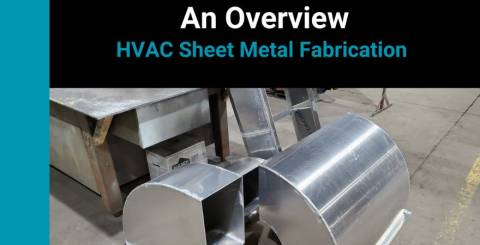
Sheet metal fabrication cuts across industries, including heating, ventilation, and air conditioning (HVAC). The design, cutting, forming, and joining of different sheet metal sizes and shapes are necessary steps because they build the ductwork.
Since sheet metal HVAC ductwork is normally not “one-size-fits-all,” a functional system depends on material choice, equipment type, and the manufacturer, among other issues.
For the end user or dealer, being knowledgeable about the requirements, material options, and fabrication methods is critical to identifying the right HVAC sheet metal fabrication company.
Here is an overview that provides the fundamentals of this service.
What is HVAC Sheet Metal Fabrication?
HVAC sheet metal fabrication refers to the process of transforming sheet metal into different parts of the HVAC system. Four main categories of processes are involved: designing, cutting, forming, and assembly.
Typically, metal fabrication is used to create crucial parts of the system, such as coils, ductwork, roof curbs, and refrigerant lines, and takes place in a fabrication shop.
Sheet Metal Fabrication Process for HVAC
The HVAC ductwork fabrication process starts with raw sheet metal, which is first designed for and cut to the required sizes and shapes before being assembled into ductwork or other HVAC components.
Here are these steps in brief.
CAD/CAM Design
The engineers first use CAD/CAM software to generate a comprehensive design of the air conditioning sheet metal ducting or any other section of the system. Key design considerations are the relevant building codes, pressure drops, and airflow characteristics.
Sheet Metal Cutting
The next step is to cut the raw sheet metal into blanks. There are many cutting methods in the industry, but the most commonly used ones are:
● CNC plasma cutting
● CNC waterjet cutting
● CNC laser cutting
● Shearing
● Chisels
Sheet Metal Bending and Forming
The next step is to bend and form the cut metal pieces into the designed shapes. Every piece of the HVAC ductwork has a specific function and thus should be bent and formed accordingly.
Features that are consistently incorporated into the pieces include elbows, ducts, and transitions. The main processes are roll forming and press brake forming.
Parts Assembly
The next step is to join and assemble the pieces to create the sheet metal HVAC ductwork. The specific method can vary depending on the application. Some HVAC assemblies are largely welding-based, while others require mechanical fasteners such as bolts and screws.
Finishing Stage
This stage is often necessary because there could be burrs, dirt, and a propensity to corrosion that requires addressing. Powder coating, blasting, and other techniques can be applied.
What Type of Sheet Metal is Used for HVAC?
The common materials for HVAC ductwork fabrication include the following;
Stainless Steel
Stainless steel is widely used in HVAC sheet metal fabrication, primarily due to its exceptional corrosion resistance and longevity. Stainless steel processing for HVAC applications maintains top performance even in areas exposed to chemicals, moisture, and other elements.
Aluminum
Aluminum is one of the most popular materials for sheet fabrication projects due to its high strength-to-weight ratio and corrosion resistance. It works exceptionally well for HVAC ductwork, whether in outdoor or indoor environments.
Another reason metal fabrication commercial projects opt for this material is that it is easy to form. Producing quality complex parts for diverse uses is often manageable.
Galvanized Steel
Equally common in the HVAC circles is this zinc-coated type of steel. The zinc layer protects the surface against corrosion, qualifying the material for diverse environments.
Given the nature of galvanized steel, sheet metal slitting and other operations on the material should be done by an experienced fabricator. The galvanized surface should not crack because that immediately exposes the steel underneath to corrosion.
Black Iron
Black iron is a heavy-gauge steel designed for high-temperature, greasy, and corrosive operating environments. It lasts long and complies with fire safety standards.
Adding these characteristics to low maintenance makes the material relatively cost-effective for heating and air conditioning sheet metal ducting.
Is HVAC Sheet Metal Aluminum?
HVAC sheet metal is not exclusively aluminum, although the material is very popular in this industry, mainly due to its corrosion resistance and high strength-to-weight ratio.
Other materials for HVAC sheet metal fabrication are copper, black iron, galvanized steel, and stainless steel.
Benefits of Sheet Metal Fabrication in HVAC Systems
Some of the notable benefits of sheet metal fabrication in HVAC applications are;
● High customization
● Cost-effectiveness
● Superior fire safety
● Durable components in the face of weather and pressure variations
● Energy efficiency
Limitations of HVAC Sheet Metal Fabrication
HVAC metal fabrication presents the following challenges;
● Typically, it is a labor-intensive process
● Thermal conductivity can lead to massive heat and cooling losses
● Installation complexity
In Conclusion
Investing in professional fabrication services for HVAC and sheet metal enhances system airflow, promotes durability, and saves costs. There are custom fabrication solutions, so businesses can choose what meets their needs.
Contact ProleanTech for reliable sheet metal services and witness your business transform with quality sheet metal HVAC ductwork and related parts.
Similar Articles
Walk through almost any manufacturing plant and you'll hear the motors before you notice the gearboxes bolted next to them. That's kind of the point
Learn how prepainted steel panels resist corrosion, scratches, UV exposure, forming stress, and finish inconsistency in home appliance manufacturing.
Learn how to choose the right food powder manufacturing grinder by comparing grinding capacity, precision, efficiency, durability, and processing needs.

Electric cables are among the most critical parts of any construction. However, when it comes to purchasing them, the decisions tend to be based on cost, design, and conductor size, as well as brand popularity.

In an era of supply chain realignment and accelerating technological change, precision manufacturing has emerged as a critical competitive differentiator for businesses across the industrial spectrum
Avoid seven common industrial agitator selection mistakes involving tank size, viscosity, impellers, motor power, materials, maintenance, and suppliers.
Pick a stainless steel pipe based on three things: the grade, the wall thickness, and the working environment. Get these three right, and the pipe lasts for decades.

The right pressure sensor matches four things: pressure range, media type, accuracy, and output signal. Get these four right, and the sensor will last for years.
Learn how to choose precision steel tubes for hydraulic, automotive, and industrial applications, including material grade, tolerance, surface treatment, strength, and supplier selection.