

Choosing Metal Testing Equipment: What to Consider Before You Buy
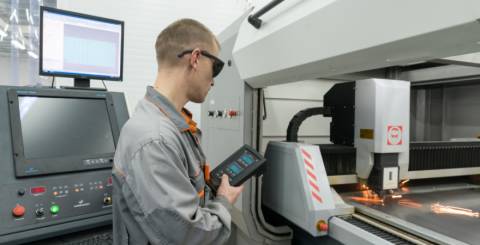
The right metal testing equipment depends less on the machine itself and more on the decisions you need data for. Start by defining which properties matter, such as hardness, yield strength or a full stress-strain curve, then consider where testing will happen, how many tests you’ll run, how much sample preparation you can handle and what the total cost will be over several years. A system that fits your workflow will be used daily and pay for itself, while an impressive machine that doesn’t fit will sit idle or create bottlenecks.
Asking the right questions before buying can save years of frustration.
Start With the Decisions You Need to Make
Testing equipment is a tool for answering questions. Before comparing specifications, it helps to be clear about what those questions are. Common examples include:
- Does this batch of material meet its specification?
- Has heat treatment produced the strength we expected?
- Are welds and heat-affected zones as strong as the base metal?
- Can this installed component stay in service safely?
- Which alloy or process setting performs best in development?
Each question points toward different requirements. Quality control might demand fast, repeatable checks on many samples, while research and development may need detailed stress-strain data on fewer specimens. Field inspections require portability, while laboratory work may prioritize precision and automation.
Know Which Properties You Need
Different tests measure different things, and not every method delivers every property:
| Property | What it tells you | Why it matters |
|---|---|---|
| Hardness | Resistance to surface indentation | Useful for quick comparisons and quality checks |
| Yield strength | Stress at which permanent deformation begins | Critical for structural design and safety margins |
| Tensile strength | Maximum stress before failure | Indicates overall load-bearing capacity |
| Ductility | Ability to deform without fracturing | Important for forming and impact resistance |
| Stress-strain curve | Full picture of how the metal behaves under load | Supports design, simulation and material comparison |
Hardness testing is fast and widely used, but hardness values don’t always translate directly into reliable strength data, particularly across different alloys and processing conditions. If engineering decisions depend on yield strength or tensile behavior, you’ll need equipment capable of measuring those properties more directly.
Consider Where Testing Will Happen
Location shapes almost every equipment decision. There are three common settings:
The laboratory. Controlled conditions suit detailed testing, research and qualification work. Space, power and sample preparation equipment are usually available.
The production floor. Here, speed and simplicity matter most. Equipment needs to be robust, easy to operate and quick enough to keep pace with production.
The field. Testing on pipelines, pressure vessels, structures or large components requires portable equipment that can be carried, set up and used on site, often in less than ideal conditions.
Many organizations need more than one setting. A manufacturer might test incoming material in a lab while also checking installed parts during maintenance. Choosing equipment that supports both can simplify training and keep results consistent.
Think About Sample Preparation and Throughput
Sample preparation is often the hidden bottleneck in metal testing. Traditional tensile tests require machined specimens with precise dimensions, which can take hours or days depending on workshop capacity.
When comparing options, consider:
- How large does the sample need to be?
- How much machining or polishing is required?
- Can tests be performed on finished parts or only on separate specimens?
- How long does each test take from start to result?
- How many tests can one operator complete in a shift?
Methods that need smaller samples and simpler preparation can dramatically increase the number of tests a team can run. Indentation-based approaches, for example, can produce stress-strain data from a small indent, and some suppliers offer both benchtop and portable versions within a single testing equipment range, so labs and field teams can work from the same method.
Ten Questions to Ask Suppliers
Before making a purchase, it helps to have a clear list of questions:
- Which properties does the system measure directly, and which are estimated?
- How have results been validated against conventional test methods?
- What sample size and preparation does each test require?
- How long does a typical test take?
- Which materials and alloys has the system been used with?
- Can it be used outside the lab, or only in controlled conditions?
- How are results stored, exported and traced?
- What training do operators need?
- How is calibration handled, and how often is it required?
- What support, servicing and software updates are included?
Calibration deserves particular attention. Results are only useful if they’re traceable and consistent over time. In the UK, the National Physical Laboratory is the national measurement institute, and many organizations look for calibration and measurement practices that link back to recognized standards.
Look at Total Cost of Ownership
The purchase price is only part of the picture. Over several years, the real cost of testing equipment includes:
- Sample preparation: Machining, cutting and polishing time or outsourcing costs
- Consumables: Indenters, grips, fixtures and other replaceable parts
- Calibration and maintenance: Regular checks, servicing and repairs
- Training: Time needed to bring operators up to speed
- Software: Licenses, updates and data management tools
- Downtime: Production delays while waiting for results
A cheaper machine that requires extensive preparation or frequent outsourcing may end up costing more than a higher-priced system that delivers faster results with less effort.
Common Mistakes When Buying Testing Equipment
Buyers often run into the same pitfalls:
- Choosing equipment based on specifications rather than real testing needs
- Underestimating sample preparation time
- Ignoring how results will be stored and shared
- Overlooking training and ease of use
- Buying for current needs without considering future growth
- Failing to test the system on their own materials before purchase
Requesting a demonstration or trial using your own samples is one of the best ways to avoid these mistakes.
Making a Confident Choice
The best metal testing equipment is the one that fits your materials, your workflow and the decisions you need to make. By defining your requirements clearly, considering where and how often you’ll test and looking beyond the purchase price, you can choose a system that delivers reliable data and genuine value.
Take time to compare options, ask detailed questions and test equipment on real samples. A careful decision today can improve quality, speed up development and support better engineering decisions for years to come.
Similar Articles
Discover why sanitary fabrication matters in food processing facility upgrades, improving hygiene, food safety, equipment durability, and regulatory compliance.

An efficiently operating manufacturing business involves more than making good products. Good organization is key to keeping costs under control, meeting deadlines, ensuring quality, and reacting promptly to changes.
Learn how to design closed die forging with the right parting lines, draft angles, and critical details to improve manufacturability, quality, and efficiency.
Spot the top 7 warning signs your heavy equipment needs hydraulic cylinder repair, from oil leaks to drift, and learn when to book an inspection.
A worn guide, an overheated insulator, or a component that reacts with a cleaning solution can disrupt an otherwise reliable machine. These problems often begin with a material choice that was reasonable during development but becomes unsuitable under actual operating conditions.
Learn about HVAC sheet metal fabrication, including its key processes, materials, applications, and benefits for efficient heating and cooling systems.
Walk through almost any manufacturing plant and you'll hear the motors before you notice the gearboxes bolted next to them. That's kind of the point
Learn how prepainted steel panels resist corrosion, scratches, UV exposure, forming stress, and finish inconsistency in home appliance manufacturing.
Learn how to choose the right food powder manufacturing grinder by comparing grinding capacity, precision, efficiency, durability, and processing needs.