

How Oxide Ceramics Help Engineers Solve Everyday Equipment Problems

A worn guide, an overheated insulator, or a component that reacts with a cleaning solution can disrupt an otherwise reliable machine. These problems often begin with a material choice that was reasonable during development but becomes unsuitable under actual operating conditions. Technical ceramics offer engineers another set of options when familiar metals and polymers reach their limits.
The useful question is not whether a ceramic is better than steel. It is which material can perform a particular job, in a particular environment, for an acceptable cost. Understanding that distinction makes ceramic selection more practical and prevents expensive substitutions that fail to address the original problem.
Start with the function of the part
Before comparing materials, describe what the component must do. A guide must maintain a path without damaging the product. An electrical spacer must separate conductors while supporting an assembly. A protective sleeve may need to survive heat and contact with a process fluid. Each task creates a different selection problem.
The family of Oxide Ceramics includes materials such as alumina and zirconia, but a family name is only the beginning of a specification. The engineer still needs the grade, relevant properties, geometry, surface condition, and operating limits. Two visually similar ceramic parts may behave differently because their compositions and manufacturing histories differ.
Translate failures into material requirements
A maintenance record can reveal more than a general request for a stronger component. If a guide loses its profile, the important issue may be wear. If a sleeve cracks immediately after installation, the cause may involve mounting stress. If performance changes after cleaning, chemical exposure deserves investigation. These observations help separate material limitations from assembly or process problems.
Photograph failed parts before discarding them and note where damage begins. Record operating temperature, load, cleaning products, and the sequence of events. A broken edge beside a clamp suggests a different investigation from gradual wear across a contact surface. Replacing the material without understanding this pattern can preserve the same failure mechanism.
Choose properties in combination
Material selection rarely depends on one impressive number. A component may need wear resistance and electrical insulation, yet also require a shape that can be manufactured economically. Another may need dimensional stability but face occasional accidental impacts. The successful choice balances the requirements that matter throughout the part's service life.
Published property tables help narrow the options, but they are not complete predictions of finished component performance. Ask how the values were measured and whether they apply at the intended operating temperature. Compare equivalent test conditions whenever possible. A room temperature value should not silently become a guarantee for a heated assembly.
Make the surrounding design suitable
A ceramic replacement needs a review of the interfaces around it. The retaining arrangement, contact points, nearby metal parts, and available clearance all affect performance. Copying the dimensions of an existing component may be convenient, but convenience does not establish that the new assembly distributes its loads appropriately.
Consider a guide insert held by a metal bracket. The design team should examine how the bracket locates the insert, how it is tightened, and whether debris can become trapped between contact surfaces. Assembly instructions should explain the intended sequence. A suitable material can still produce unreliable results when installation varies from one operator to another.
Prove the change with a focused trial
A useful trial compares the ceramic candidate with the existing component under similar conditions. Decide in advance what improvement would justify adoption. That might mean less profile loss, fewer replacements, more consistent product quality, or reduced intervention by operators. Measure the chosen outcome rather than relying on a favorable first impression.
Keep the trial limited enough that a failed candidate does not unnecessarily interrupt production. Inspect the component at planned intervals and document both performance and handling issues. If the part works well but is difficult to install without damage, the next development step may concern its geometry or packaging rather than its composition.
Evaluate the whole replacement process
Purchase price is only one part of the decision. Include inspection time, installation effort, stock availability, and the consequences of a failed component. An expensive part may be economical if its verified service life reduces costly interventions. Equally, a technically capable material may be unnecessary when a simpler redesign solves the problem.
Ask whether replacement parts will remain traceable to the approved grade and drawing revision. A successful prototype is not sufficient if future orders can arrive with ambiguous descriptions. Clear purchasing records make the improvement repeatable and allow maintenance teams to distinguish an approved replacement from a superficially similar alternative.
Oxide ceramics become useful when engineers connect material properties to observable equipment needs. The strongest projects begin with a specific failure, improve the surrounding design where necessary, and validate the result in service. That approach turns a promising material into a dependable component rather than an unsupported upgrade.
Similar Articles
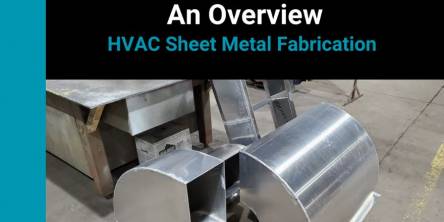
Learn about HVAC sheet metal fabrication, including its key processes, materials, applications, and benefits for efficient heating and cooling systems.
Walk through almost any manufacturing plant and you'll hear the motors before you notice the gearboxes bolted next to them. That's kind of the point
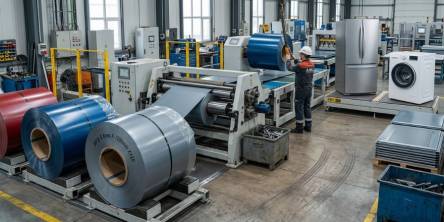
Learn how prepainted steel panels resist corrosion, scratches, UV exposure, forming stress, and finish inconsistency in home appliance manufacturing.
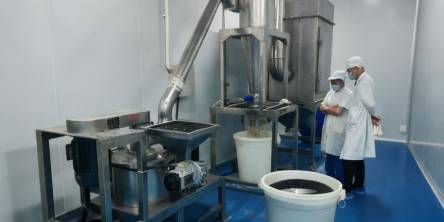
Learn how to choose the right food powder manufacturing grinder by comparing grinding capacity, precision, efficiency, durability, and processing needs.
Electric cables are among the most critical parts of any construction. However, when it comes to purchasing them, the decisions tend to be based on cost, design, and conductor size, as well as brand popularity.
In an era of supply chain realignment and accelerating technological change, precision manufacturing has emerged as a critical competitive differentiator for businesses across the industrial spectrum
Avoid seven common industrial agitator selection mistakes involving tank size, viscosity, impellers, motor power, materials, maintenance, and suppliers.
Pick a stainless steel pipe based on three things: the grade, the wall thickness, and the working environment. Get these three right, and the pipe lasts for decades.

The right pressure sensor matches four things: pressure range, media type, accuracy, and output signal. Get these four right, and the sensor will last for years.