

SaaS Migration Process for Existing Applications

The adoption of cloud technologies around the world has changed the way software is consumed. Organizations now care more about agility and systems that scale with their business. So, to remain competitive, switching on-premises apps to SaaS have become an imperative. And this transition always comes with technical and operational implications. What you must understand is that the migration process is not one that can or should be overnight. In this blog,
I will discuss the core steps about the SaaS migration process.
SaaS Migration Process: Moving From Conventional Software to SaaS
Migrating from conventional software to SaaS requires a structured roadmap that balances business continuity, data security, integration readiness, and user adoption. A well-planned SaaS migration process helps organizations modernize operations, reduce infrastructure dependency, and unlock scalable digital capabilities.
Listed below are the core steps;
- Assessments: The first step is an evaluation of your current app, infrastructure, etc. Understand the technical debt and architecture dependencies that could prevent parts of the application from scaling in the cloud. Assess your data mass, structure, etc. to guarantee it will fit industry regulations. Also take time to understand your current operating costs. You will need it to develop a realistic budget.
- Build roadmap: Now you will outline how your application will live in the cloud and how long it will take to get there. You'll select a migration strategy of either Rehost with lift-and-shift, Replatform with limited cloud optimizations, or refactor entirely into microservices. You'll also need to select your approach to multi-tenancy architecture with options of database-per-tenant for high isolation or shared database for high-cost efficiency with logical separation.
- Secure cloud environment: Before the app launch, provision the underlying cloud infrastructure. And this must be done with tight security. Implement IAM policies following least privilege so only authorized personnel have access. Network isolation via virtual private clouds, subnets, etc. will safeguard backend databases from the public internet.
- Migrate your data: This one can prove to be among the most challenging facets of the process. Why? Well, because there should be no data loss and/ or downtime. If one were switching from a relational database to a cloud-based managed service. Then, you'll need to map out how your data schemas convert to the new setup.
- Cloud deployment: Now that our infrastructure is locked down and data is ready, we deploy application code to the cloud. Application code is bundled into containers which behave consistently between development and production. Then this code is automatically deployed using CI/CD pipelines.
- Performance and security validation: Thoroughly test your entire cloud setup before sending real user traffic to it. Perform scalability testing. This helps make sure your autoscaling rules function properly under high load. It also seems to it that the site doesn't crash during peak traffic. And to find and remediate potential exploits against the cloud config and app code, you will need penetration testing, vulnerability scanning, etc.
- Switch traffic: This stage cuts over real users from the old system to the new SaaS application using a particular cutover technique. You may choose to perform a Canary deployment where you cut over a percentage of your user base initially to test stability. A blue-green deployment allows you to run two identical production environments and cut over all traffic at once by changing DNS. It is important to remember that you must continue replication from the legacy database to the cloud database till the point of cutover. This is the way to ensure that there is no data loss.
- Post-migration monitoring: Going cloud-native doesn't stop after cutover. That's the simple and truth about the process. The systems must continue to be managed and maintained. Then you configure centralized logging and monitoring solutions so you can receive alerts on memory usage, application error rates, etc. And don't forget about automated backups and cross-region replication. After all that is how you will ensure that data is not lost in case of an incident.
Final Words
The process may seem long and overwhelming at first. But with an experienced SaaS development consulting company by your side, the transition can be made quite simple and smooth.
Similar Articles

Running a restaurant involves much more than taking orders and serving food.

Field sales teams handle numerous responsibilities every day. Sales representatives travel between customer locations, conduct meetings, collect orders, record information, and report their activities to managers.
The app development market has evolved significantly over the past decade or so. Its impact on business has been equally consequential.

Offshore IT hiring means recruiting IT professionals who work from another country or region. Companies commonly use this approach for software development, QA, IT support, DevOps, cybersecurity, data, and project management.

By 2026, moving to the cloud is no longer merely a competitive advantage. It is a business necessity. Every organization across the broad spectrum of industries will be challenged to become more agile.
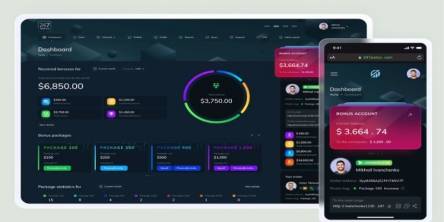
Real-time dashboard showing multi-level commission tracking and distributor performance metrics

Digital transformation initiatives are no longer unheard of in the corporate world. As a matter of fact, it is also well known that companies expanding their digital footprint tend to run into crippling legacy apps.

The financial aid office has become one of the most operationally strained departments on the modern U.S. campus. FAFSA complexity, chronic staff turnover, tightening Title IV compliance obligations, and the persistent problem of unspent scholarship dollars have pushed administrators toward purpose-built financial aid management software
The demand for software delivery has never been higher. Applications must be delivered faster and on a scale like never before.