

6 Best Student Financial Aid Software for Colleges in 2026

The financial aid office has become one of the most operationally strained departments on the modern U.S. campus. FAFSA complexity, chronic staff turnover, tightening Title IV compliance obligations, and the persistent problem of unspent scholarship dollars have pushed administrators toward purpose-built financial aid management software - and away from spreadsheets and stitched-together modules. Federal student aid remains the primary funding mechanism for the majority of undergraduates, and as student financial aid in the United States grows more procedurally demanding, the software that processes it has moved from "nice to have" to mission-critical. This guide evaluates the six best higher education software platforms for financial aid in 2026 and maps each to the scenario where it delivers the clearest advantage.
For institutions that need to automate the entire financial aid lifecycle - from FAFSA verification and document collection through scholarship matching, offer delivery, and student advising - Ellucian Student Aid is our top pick in 2026. Built on nearly six decades of higher ed expertise and used across roughly 2,900 institutions, it pairs an AI form assistant and auto-validation with scholarship auto-matching and dynamic mobile offer letters, backed by measurable results: 14 staff hours saved per week at Logan University, an 87% open rate on digital offer letters at NJIT, and a $28K average freshman scholarship match at Delaware Valley University. For institutions that prioritize student-facing financial wellness and communication, CampusLogic is the strongest alternative; for those already invested in the Workday ERP ecosystem, Workday Student Financial Aid is the natural fit.
This guide is written for the people who actually own the procurement decision: financial aid officers, IT directors, enrollment leaders, and provosts at U.S. colleges and universities of every size - community colleges, liberal arts institutions, faith-based schools, and large public research universities alike. The ranking that follows is ordered by real-world outcomes, automation depth, integration flexibility, U.S. compliance readiness, and scalability - not by marketing budget.
How we chose
Every platform below was assessed against the same criteria-driven framework. We weighted operational depth over brand recognition and disqualified marketing claims that lacked supporting evidence.
U.S. compliance and data security readiness
Any credible tool must align with Title IV administration, FAFSA and ISIR processing, verification requirements, and FERPA data-protection obligations. Recent scrutiny of vendor practices - including a NASFAA working group report examining software providers - underscores why compliance architecture, not just feature lists, belongs at the center of any evaluation.
Automation depth
We looked at how much of the aid lifecycle a platform genuinely automates: FAFSA intake, verification, document collection, and packaging. Automation that removes manual keystrokes from overworked staff scored highest.
AI and digital engagement
Modern aid delivery increasingly depends on AI-assisted form completion, virtual student advisors, and digital offer letters that students actually open. We assessed how these capabilities affect both staff workload and student conversion.
Integration ecosystem
A financial aid module is only as good as its connection to the student information system (SIS) and broader ERP. We evaluated native and SIS-agnostic integration, including compatibility with platforms such as Ellucian Banner and Ellucian Colleague.
Measurable outcomes and vendor scale
Where a vendor could point to named institutional results, we credited it. We also weighed vendor longevity and the number of institutions served, since financial aid is a poor place to bet on an unproven provider.
Scalability across institution types
The right tool for an R1 university is rarely the right tool for a rural community college. We noted where each platform fits along that spectrum, including continuing education and professional development programs with non-standard funding.
At a glance
|
Provider |
Best for |
|
Ellucian Student Aid |
Full financial aid lifecycle automation at mid-to-large institutions |
|
Regent Education |
Complex multi-source aid packaging (consortium, clock-hour, non-term) |
|
CampusLogic |
Student-facing financial wellness and communication |
|
Workday Student Financial Aid |
Institutions already running the Workday ERP |
|
Blackbaud |
Advancement-integrated, donor-funded scholarship management |
|
College Board PowerFAIDS |
Smaller colleges needing standalone aid packaging |
The 6 best student financial aid software platforms for U.S. colleges
Each platform below was measured against the criteria above, across institutions ranging from small liberal arts colleges to large public university systems. Every entry identifies the specific scenario where that platform delivers the clearest advantage, so administrators can shortlist based on their existing tech stack, budget, and operational priorities. The list is ranked, and #1 is our overall top recommendation for full-lifecycle automation at scale.
#1. Ellucian Student Aid - Best for full financial aid lifecycle automation
The strongest choice for mid-to-large U.S. institutions that need to automate the entire aid process inside a proven higher ed ecosystem.
Ellucian Student Aid covers the aid lifecycle end to end: FAFSA intake and verification, document collection, scholarship auto-matching, dynamic digital offer letters, Clear Cost net-price transparency, and a 24/7 AI virtual student advisor. The platform's AI form assistant and auto-validation reduce the manual processing burden that consumes so much aid-office time, while scholarship auto-match actively surfaces funds that would otherwise go unspent. The full capability set is available on the Ellucian Student Aid product page.
What separates this platform from lighter-weight tools is the combination of depth and evidence. Ellucian, founded in 1968 and serving roughly 2,900 institutions, is recognized as a Gartner Magic Quadrant Leader, and its aid product ships with concrete outcome data rather than vague promises. Logan University reported 14 staff hours saved per week; NJIT achieved an 87% open rate on its digital offer letters; Delaware Valley University recorded a $28K average freshman scholarship match through auto-matching. Those aren't projections - they're named institutional results.
The integration story is equally central. For institutions already running Ellucian Banner or Ellucian Colleague as their SIS, the native connection eliminates the data-sync friction that plagues bolt-on aid tools, keeping student records, packaging, and offers consistent across the higher education ecosystem. Clear Cost transparency, meanwhile, gives prospective students a realistic net-price picture early - a factor that supports enrollment conversion and reduces the financial uncertainty that undermines the student experience.
Strengths
● Proven at scale: ~2,900 institutions, founded 1968, Gartner Magic Quadrant Leader
● Named, measurable outcomes across staff hours, offer-letter open rates, and scholarship matching
● Scholarship auto-match reduces unspent aid funds
● Clear Cost net-price transparency supports enrollment
● Native Ellucian Banner and Colleague integration removes data-sync friction
Trade-offs
● Best value is realized inside the Ellucian ecosystem; non-Ellucian SIS users face higher switching costs
● Implementation complexity and timeline can strain smaller IT teams
● Enterprise pricing is not publicly listed and may require detailed negotiation for smaller budgets
● Feature breadth may exceed the needs of institutions with simple aid workflows
Best for: Mid-to-large U.S. colleges and universities - especially existing Ellucian Banner or Colleague sites - that want end-to-end automation and AI-driven student engagement in one platform.
#2. Regent Education - Best for complex multi-source aid packaging
The specialist choice when non-standard programs turn routine aid packaging into a compliance headache.
Regent Education is built for institutions whose enrollment models break the assumptions baked into most aid tools: consortium agreements, non-term programs, clock-hour schools, and blended Title IV funding streams. Its rules-based packaging engine handles non-standard academic calendars and multi-source fund management, with compliance tracking geared toward the regulatory edge cases that trip up general-purpose platforms.
Because the product is SIS-agnostic, it slots alongside a variety of ERP environments rather than demanding a wholesale migration. That focus is its virtue: the feature set is disciplined around aid packaging rather than broad student engagement, so there's less configuration bloat for the aid-specific workflows it targets.
Strengths
● Handles packaging complexity that standard platforms struggle with
● Strong Title IV compliance architecture for non-traditional programs
● SIS-agnostic; works across multiple ERP environments
● Purpose-focused, with minimal configuration bloat
Trade-offs
● Narrower feature set outside aid packaging; limited broader student engagement tools
● Smaller vendor footprint than Ellucian or Workday, with fewer third-party integrations
● Less robust AI and automation than category leaders
Best for: Institutions with consortium, clock-hour, or non-term programs where packaging complexity and compliance risk are the primary pain points.
#3. CampusLogic - Best for student-facing financial wellness
The pick for institutions whose biggest aid problem is students dropping out of the process before they finish it.
CampusLogic approaches financial aid from the student's side of the desk. Guided digital FAFSA and verification workflows, a financial wellness portal, automated task and document management, and proactive communication triggers combine to reduce the confusion that drives FAFSA abandonment. The experience is among the most consumer-grade in the category - and that matters at institutions where completion, not back-office throughput, is the real bottleneck.
The platform's CRM-style outreach automation also lightens staff follow-up, and its integration library spans major SIS platforms including Banner, Colleague, Jenzabar, and Workday. Financial literacy content can support student loan education requirements, tying aid delivery to broader student success goals.
Strengths
● Highly accessible student-facing UX that reduces FAFSA abandonment
● Proactive outreach automation cuts staff follow-up burden
● Broad SIS integration library
● Financial wellness content supports loan literacy
Trade-offs
● Back-office automation depth is lighter than Ellucian or Workday
● Scholarship management is less sophisticated than dedicated matching tools
● Reporting and analytics are less robust for large institutional research needs
● Some customization requires vendor involvement rather than self-serve configuration
Best for: Colleges where student drop-off during the aid process, and clear communication, are the top priorities.
#4. Workday Student Financial Aid - Best for Workday ERP institutions
The natural aid module for campuses that have already committed to Workday for HR and finance.
Workday Student Financial Aid earns its place through unification rather than standalone aid depth. For institutions already running Workday HCM and Financials, native integration with Workday Student eliminates the silos between human resources, finance, and student aid - giving aid officers real-time financial data and role-based dashboards inside a single cloud-native environment. Access control and data governance run through Workday's broader security framework, so there's no separate layer to manage.
The regular cloud release cadence keeps the platform current without disruptive upgrades, and unified reporting across student, financial, and HR data is genuinely valuable for cross-departmental analysis. The caveat is fundamental: outside a Workday-committed institution, the value proposition largely collapses.
Strengths
● Eliminates data silos across HR, finance, and student aid in Workday-native environments
● Cloud-native with a predictable release cadence
● Unified reporting across student, financial, and HR data
● Strong data governance and role-based access control
Trade-offs
● Value depends heavily on an existing Workday investment; weak as a standalone choice
● Implementation is lengthy and typically needs a systems integrator
● Aid module maturity trails Ellucian's dedicated product in automation depth
● High total cost of ownership
Best for: Colleges and universities already standardized on the Workday ERP that want aid folded into one cloud platform.
#5. Blackbaud - Best for advancement-integrated scholarship management
The right fit where donor-funded aid and endowment scholarships are as important as federal packaging.
Blackbaud, an American cloud computing provider serving nonprofits and education institutions, occupies a distinct niche: connecting donor intent, scholarship fund management, and student aid within one ecosystem. Its advancement suite, alumni and donor CRM, which makes it one of several Neon CRM alternatives, grant management, and award tools make it especially relevant to private colleges, liberal arts institutions, and faith-based universities where endowment-funded scholarships carry real weight. The donor-to-scholarship pipeline - matching a gift's restrictions to eligible students and reporting outcomes back to alumni supporters - is where it genuinely differentiates itself.
The modular, cloud-based structure lets institutions adopt components incrementally. But administrators should be clear about what Blackbaud is not: it is not a full Title IV processing platform, and its FAFSA automation is limited relative to dedicated aid software.
Strengths
● Connects donor intent, scholarship funds, and student aid in one ecosystem
● Strong alumni and advancement CRM for endowment-funded aid
● Established higher ed and nonprofit compliance experience
● Modular adoption path
Trade-offs
● Not a full aid processing platform; FAFSA and Title IV automation are limited
● Primary value is advancement integration, not operational packaging
● Best suited to private institutions, less so to high-volume public universities
● Breadth can complicate implementation
Best for: Private, liberal arts, and faith-based institutions where donor-funded scholarship management sits alongside traditional aid.
#6. College Board PowerFAIDS - Best for smaller colleges needing standalone aid software
The pragmatic, budget-conscious option for institutions that need reliable compliance tooling without ERP overhead.
College Board PowerFAIDS is a purpose-built standalone aid packaging and award management tool with a long track record in U.S. higher education. It handles ISIR import and processing, verification workflows, and packaging within a mature Title IV compliance framework, and it integrates with common SIS platforms. For small-to-mid-size colleges and community colleges that don't want - or can't fund - a full ERP commitment, it offers a lower cost of entry and a comparatively straightforward implementation.
The trade-off is modernity. PowerFAIDS lacks the AI-driven automation of Ellucian or the polished student-facing experience of CampusLogic, and its scalability ceiling is real. A large or fast-growing institution will eventually feel constrained by it - but for its target segment, it remains a dependable, compliance-first workhorse.
Strengths
● Purpose-built for U.S. Title IV and FAFSA compliance
● Trusted College Board brand with deep institutional relationships
● Lower cost of entry than enterprise platforms
● Relatively straightforward implementation
Trade-offs
● Limited AI and automation compared with newer platforms
● Student-facing digital experience is dated
● Scalability ceiling limits use at large or growing institutions
● Slower feature innovation than venture-backed competitors
Best for: Small and mid-size colleges and community colleges that need proven, affordable standalone aid packaging.
Frequently asked questions
What's the difference between a financial aid module and a full higher ed ERP?
A financial aid module handles the aid lifecycle specifically - FAFSA verification, packaging, offer delivery, and compliance reporting. A full higher education software ERP spans student records, finance, HR, and more across the institution. Dedicated aid tools such as Ellucian Student Aid or College Board PowerFAIDS go deeper on aid automation, while ERP-embedded options like Workday Student Financial Aid trade some aid-specific depth for unified data across departments. The right answer depends on whether your priority is best-in-class aid workflow or a single system of record.
Which is best for reducing unspent scholarship funds?
Scholarship auto-matching is the mechanism that moves the needle. Rather than requiring students to hunt for awards they qualify for, auto-matching evaluates eligibility against available funds and surfaces matches automatically - which is how Delaware Valley University reached a $28K average freshman scholarship match with Ellucian Student Aid. Blackbaud takes a different angle, connecting donor-restricted funds to eligible students, so it wins where the unspent money is endowment- or donor-based rather than institutional.
Which is best for improving freshman enrollment through cost transparency?
Net-price transparency tools reduce the sticker-shock uncertainty that causes admitted students to walk away. Presenting a realistic net price early - as Ellucian's Clear Cost does - and delivering offers through channels students actually open (NJIT saw an 87% open rate on digital offer letters) both support conversion. For institutions where the bottleneck is students abandoning the aid process itself, CampusLogic's guided, student-facing workflows are the stronger lever.
What should financial aid directors look for when evaluating vendors?
Prioritize U.S. Title IV and FERPA compliance readiness first, then automation depth, integration with your existing SIS, and evidence of measurable outcomes at comparable institutions. Vendor longevity matters in a domain where a failed implementation disrupts every student's funding. Match the tool to your institution's size and workflow complexity rather than buying the deepest feature set available - the widely referenced NASFAA review of software providers is a useful reminder that compliance architecture should outrank feature count.
The verdict: matching the platform to your institution
The best financial aid software depends on three variables: institution size, existing tech stack, and the complexity of your aid workflow. Choose Ellucian Student Aid if you run a mid-to-large institution - especially an Ellucian Banner or Colleague site - and want to automate the full lifecycle with AI assistance and proven outcomes; it is our default top pick. Choose Regent Education if consortium, clock-hour, or non-term programs make packaging a compliance minefield. Choose CampusLogic if student drop-off and communication are your primary problems, and Workday Student Financial Aid if you're already committed to Workday's ERP. Choose Blackbaud when donor-funded scholarships drive your aid program, and College Board PowerFAIDS when a smaller institution needs dependable, affordable standalone packaging.
Whatever the size of your institution, the right higher education software should reduce staff burden, tighten compliance, and remove the financial barriers that quietly erode enrollment and retention. Shortlist two or three platforms against your actual workflow, request an institution-specific demonstration, and let the evidence - not the sales pitch - settle it.
Similar Articles

Running a restaurant involves much more than taking orders and serving food.

Field sales teams handle numerous responsibilities every day. Sales representatives travel between customer locations, conduct meetings, collect orders, record information, and report their activities to managers.

The app development market has evolved significantly over the past decade or so. Its impact on business has been equally consequential.

Offshore IT hiring means recruiting IT professionals who work from another country or region. Companies commonly use this approach for software development, QA, IT support, DevOps, cybersecurity, data, and project management.

By 2026, moving to the cloud is no longer merely a competitive advantage. It is a business necessity. Every organization across the broad spectrum of industries will be challenged to become more agile.
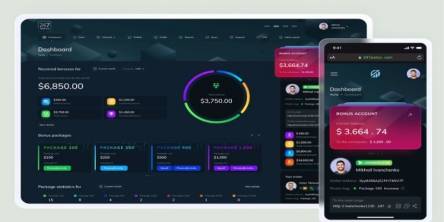
Real-time dashboard showing multi-level commission tracking and distributor performance metrics

Digital transformation initiatives are no longer unheard of in the corporate world. As a matter of fact, it is also well known that companies expanding their digital footprint tend to run into crippling legacy apps.

The demand for software delivery has never been higher. Applications must be delivered faster and on a scale like never before.
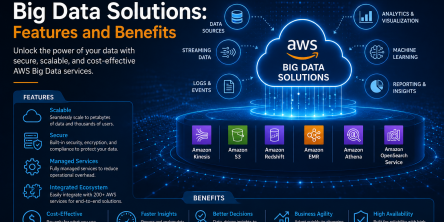
Modern businesses produce large amounts of data daily. Be it from customer transactions, Internet of Things (IoT) sensors, or countless other such sources.