

Why Observability Is Critical for Successful Site Reliability Engineering?
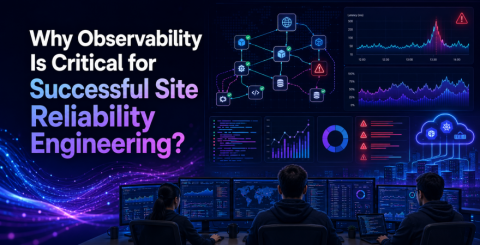
Businesses today need to ship new software faster than ever. That's not news, of course. Anyway, because of the demands on businesses, new solutions are being built on top of micro-services, serverless functions, etc. This new architecture helps businesses rapidly develop software to scale globally. However, these advancements come at the cost of complexity. Ten-plus moving pieces may work together to execute a single service call. When performance starts to degrade, it’s hard to tell which cog is responsible for the slowdown.
And I don't have to tell you the toll slow or failing systems take on an organization’s bottom line. And there are also the customers: they expect businesses to have highly available systems at all times. Traditional approaches to application management are no longer sufficient. Alerts based on the basic run book of your systems with pre-configured dashboards only tell you your systems are down. It doesn’t tell you why. Engineers need visibility in their systems with granular enough data that they can debug new and unique issues in real-time. That is observability. Site Reliability Engineering teams are constantly being asked to ship more features while keeping their production environments green. Shift-lifting observability into your SRE practices allows you to evolve past traditional monitoring and make decisions based on data.
In this blog post, I’ll discuss why observability is critical for successful site reliability engineering,
Observability in the Cloud Era
Monitoring involves setting up alerts for failure cases you already know about. Observability, or High Cardinality Observability, means capturing logs, metrics, etc. All these factors enable engineering teams to slice and dice through the inner workings of your system to answer questions they didn't know they had. On a scale, modern apps are increasingly reliant on micro-services and short-lived infrastructure. This makes observability key to debugging failures. DevOps teams can achieve insights from petabytes of telemetry data. So, no more blindly troubleshooting when something goes wrong.
Why Observability Is Critical For Successful Site Reliability Engineering?
Observability is a foundational pillar of successful SRE, enabling teams to gain deep visibility into system behavior, identify performance bottlenecks, and resolve issues proactively. By leveraging real-time insights, organizations can improve reliability, reduce downtime, and deliver consistent user experiences across complex digital environments.
- Enhanced app performance and visibility: It collects granular metrics at every level of the stack. This means everything from micro-services down to your database and external network dependencies. Observability provides so much insight into your app that engineers can follow a single request as it travels through your system and sees exactly where problems occur. Say your service is slow or running out of memory. So, your team no longer must speculate about which dependency is at fault. You'll know immediately whether it's a specific service, database query, or something else. Then the code and infrastructure can be accurately tuned for optimal performance and resource use.
- QA and system reliability support: Observability closes the loop between development and operations. After code reaches production, developers want to see if this latest release is performing as expected. Especially when subjected to traffic in production. If you break something or introduce unexpected side effects with your deployment, observability offers telemetry. You can use it to measure your system against prior performance benchmarks. QA and SRE teams are also able to catch problems that were missed by integration tests.
- Early detection of issues: Another common problem with traditional monitoring is that alerts typically after something has failed or some threshold has been breached. Observability lets you see symptoms that indicate your system is trending toward failure: a slight uptick in error rate or maybe some shift in the response time distribution that isn't quite bad enough to trip a hard threshold. If you spot those things before they snowball into something bigger, you can fix the little tech debt items before they cause outages. To put it another way, you can dramatically lower your mean time to detect.
Final Words
As modern applications become increasingly distributed and complex, observability has emerged as a critical capability for Site Reliability Engineering. By providing deep, real-time insights into system behavior, it empowers teams to detect issues earlier, accelerate troubleshooting, improve application performance, and ensure reliable digital experiences while supporting continuous innovation at scale. Ready to integrate observability into your SRE? Then I recommend that you start looking for a trusted SRE consulting partner ASAP.
Similar Articles

Field sales teams handle numerous responsibilities every day. Sales representatives travel between customer locations, conduct meetings, collect orders, record information, and report their activities to managers.
The app development market has evolved significantly over the past decade or so. Its impact on business has been equally consequential.

Offshore IT hiring means recruiting IT professionals who work from another country or region. Companies commonly use this approach for software development, QA, IT support, DevOps, cybersecurity, data, and project management.

By 2026, moving to the cloud is no longer merely a competitive advantage. It is a business necessity. Every organization across the broad spectrum of industries will be challenged to become more agile.
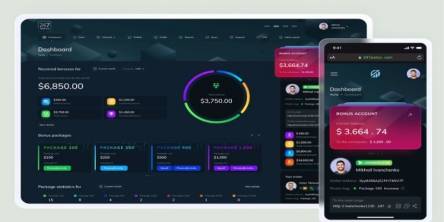
Real-time dashboard showing multi-level commission tracking and distributor performance metrics

Digital transformation initiatives are no longer unheard of in the corporate world. As a matter of fact, it is also well known that companies expanding their digital footprint tend to run into crippling legacy apps.

The financial aid office has become one of the most operationally strained departments on the modern U.S. campus. FAFSA complexity, chronic staff turnover, tightening Title IV compliance obligations, and the persistent problem of unspent scholarship dollars have pushed administrators toward purpose-built financial aid management software
The demand for software delivery has never been higher. Applications must be delivered faster and on a scale like never before.
Modern businesses produce large amounts of data daily. Be it from customer transactions, Internet of Things (IoT) sensors, or countless other such sources.