

Why Kubernetes Has Become Essential for Cloud-Native Apps
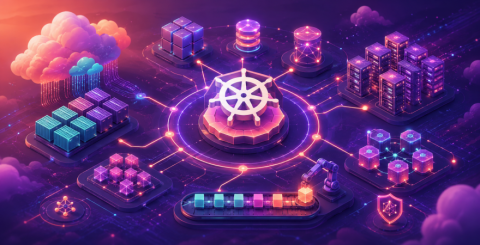
The demand for software delivery has never been higher. Applications must be delivered faster and on a scale like never before. This is driving enterprises away from monolithic apps. They are, instead, embracing distributed cloud-native architectures. But to what end, you ask. That would be to continuously update features, accommodate spikes in web traffic and rollout software to different public and private clouds with zero localized downtime.
But scaling to hundreds of distributed application components running across multiple environments also creates significant operational complexity. Teams pushing to release new microservices, automate CD pipelines, and scale data intensive workloads need one central control plane to manage all these assets. How do we manage all these components running across multiple environments? Enter container orchestration. Kubernetes is the go-to system for automating deployment and management of containerized applications.
In this blog, I will discuss and demonstrate why Kubernetes is the future of cloud-native applications.
Kubernetes 101: Evolution of Container Orchestration
It became the standard in this regard because it effectively abstracts the deployment and management of applications across any infrastructure. Kubernetes is an open-source project backed by many of the largest tech companies in the world. The system provides an extremely reliable foundation for automating container scheduling, load balancing, and so much more.
Why Kubernetes Is The Future Of Cloud-Native Applications
Kubernetes is shaping the future of cloud-native applications by enabling scalability, automation, portability, and resilience across complex environments. As businesses modernize infrastructure, Kubernetes helps teams deploy faster, manage workloads efficiently, and build applications ready for dynamic digital demands.
Listed below are some of the important factors;
- Orchestration at scale: Traditional applications used to be made up of a single large codebase that could be managed manually. As applications move to hundreds of microservices, this approach is rendered unviable. Kubernetes orchestrates the entire lifecycle of distributed components at scale. It constantly watches app traffic and automatically deploys more instances of containerized applications in case of increased demand. Kubernetes even scales those instances back down when traffic subsides. Kubernetes also assigns each container its own IP address and a single DNS name for the application. Incoming network traffic is distributed across those containers to keep services stable. All of this is done using declarative configuration.
- Adaptability: Since Kubernetes runs atop physical hardware and virtualized resources, it offers the same experience across every industry and environment. You can move workloads between environments without changing your app code or deployment manifests. Kubernetes' hybrid portability also applies to environments at the edge. Companies in manufacturing, retail, etc. have deployed Kubernetes on edge devices to gain centralized management of workloads running closest to their data.
- Better developer productivity: Kubernetes keeps application development and infrastructure management different. This is meant to enable development teams can focus only on writing and shipping code. By the way, you also ship faster with Kubernetes' automated rollout and rollback functionality. You see, Kubernetes slowly rolls out new code to a few containers. It simultaneously conducts health checks. Kubernetes automatically rolls back to the last known good configuration If and when a bug is found.
- Disaster recovery: Kubernetes is engineered to scan the health of containers. It then automatically restarts them if they fail. If a whole physical machine fails, Kubernetes automatically restarts those containers on another machine. Automated storage orchestration allows applications to automatically mount network, cloud, or local storage systems when they start. Storage volumes can be set up to reconnect persistent data even when containers are restarted on different machines.
Final Words
That about sums it up, folks. As you can see, Kubernetes is a mighty tool for this looking to run cloud apps. Now, if you too wish to put this nifty tool to work for your organization, I'd advise that you first look for an experienced Kubernetes consulting services company.
Similar Articles

Field sales teams handle numerous responsibilities every day. Sales representatives travel between customer locations, conduct meetings, collect orders, record information, and report their activities to managers.

The app development market has evolved significantly over the past decade or so. Its impact on business has been equally consequential.

Offshore IT hiring means recruiting IT professionals who work from another country or region. Companies commonly use this approach for software development, QA, IT support, DevOps, cybersecurity, data, and project management.

By 2026, moving to the cloud is no longer merely a competitive advantage. It is a business necessity. Every organization across the broad spectrum of industries will be challenged to become more agile.

Real-time dashboard showing multi-level commission tracking and distributor performance metrics

Digital transformation initiatives are no longer unheard of in the corporate world. As a matter of fact, it is also well known that companies expanding their digital footprint tend to run into crippling legacy apps.

The financial aid office has become one of the most operationally strained departments on the modern U.S. campus. FAFSA complexity, chronic staff turnover, tightening Title IV compliance obligations, and the persistent problem of unspent scholarship dollars have pushed administrators toward purpose-built financial aid management software
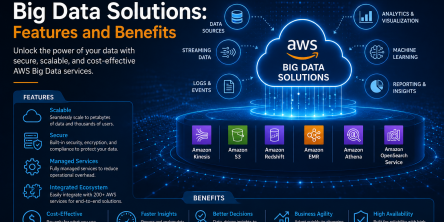
Modern businesses produce large amounts of data daily. Be it from customer transactions, Internet of Things (IoT) sensors, or countless other such sources.

Businesses today need to ship new software faster than ever. That's not news, of course. Anyway, because of the demands on businesses, new solutions are being built on top of micro-services, serverless functions, etc.