

Business Value of Cloud Managed Services Providers

Business success has become reliant on efficiency and agility of the underlying technology infrastructure. Clearly, companies now depend on cloud computing to provide seamless services while managing exponential data growth. However, as cloud environments expand, the workload on internal IT teams also grows significantly. Managing this digital infrastructure demands specialized knowledge and frequent security updates to name a couple of things. Anyway, this pressure may divert in-house resources away from core business functions and strategic expansion initiatives. This is where the role of a cloud managed services provider becomes critical. Organizations can transform their operations by outsourcing the daily complexities of cloud management to a team of dedicated experts. The transfer of operational overhead is the key factor driving this shift.
In this blog, I will discuss some of the vital benefits of cloud managed services to help you better understand their potential.
Benefits of a Cloud Managed Services Provider
Cloud Managed Services Providers deliver cost efficiency, scalability, and robust security while ensuring 24/7 monitoring and compliance. They simplify IT management, enable faster deployments, and provide expert support for optimized performance. With proactive maintenance and disaster recovery, businesses achieve resilience, agility, and predictable cost, empowering growth without operational complexity.
Listed below are core benefits;
- On-demand access to expertise: An MSP keeps a large team of specialists with current certifications. These teams also have extensive operational experience with multiple cloud platforms and complex compliance frameworks. This collective knowledge pool is instantly available to your organization. So, you can use specialized skills for complex project deployments, advanced troubleshooting, etc. All of this without the lengthy and costly process of hiring and training an equivalent in-house team.
- Cost savings: MSPs properly size your services to ensure accurate provisioning. They automate the shutdown of non-essential resources during off-peak hours and effectively manage discount purchasing options such as Reserved Instances. Aside from resource optimization, using an MSP saves significant operational costs associated with recruiting, salaries, and so on for a specialized, in-house cloud operations team.
- Business agility: MSPs use sophisticated automation and deployment tools to handle provisioning and application rollouts. This significantly reduces the launch time for new services or entry into new markets. The optimized management structure enables rapid scaling of cloud resources. This allows the company to respond quickly and effectively to market shifts, competitive pressures, etc.
- Automatic updates: The MSP takes full responsibility for all critical tasks necessary to keep the cloud environment operational and secure. This critical maintenance includes timely application of security patches, operating system updates, etc. on across the entire cloud footprint. As a result, the risk of exploiting security vulnerabilities and causing system instability is greatly reduced.
- Disaster recovery and business continuity: MSPs' strategies include maintaining strong data backup protocols and implementing continuous data replication to begin with. They ensure that mission critical apps and data can be recovered quickly and reliably following a major disruptive event. This reduces critical metrics such as recovery time and data loss.
- Enhanced cloud security: MSPs provide a strong security posture through continuous, proactive security monitoring. They use advanced tools for real-time threat detection and comprehensive intrusion prevention, among other things. They also actively manage and enforce industry specific and regional compliance mandates.
- Seamless scalability: The MSP manages and optimizes the fundamental advantage of cloud computing: elasticity. This ensures that the infrastructure scales up in response to unexpected or anticipated peak operational loads and scales down precisely when demand decreases. This automated capability fully supports significant business growth without requiring manual intervention or large, unexpected capital expenditures for new hardware capacity.
- 24/7 support: The MSP continuously monitors the entire cloud infrastructure, keeping a close eye on system performance and potential security issues. Using globally distributed teams, they can immediately address and resolve operational incidents regardless of the client's time zone. The result is continuous system stability and business continuity.
- Improved response times: An MSP can proactively detect and address potential infrastructure issues. This impact is achieved by combining continuous 24/7 monitoring and high-level automation. MSPs also agree to stringent Service Level Agreements (SLAs) that specify guaranteed uptime as well as precise and timely response and resolution timelines for any reported incident.
Final Words
Cloud managed services are no longer optional; they’re essential for businesses seeking agility, security, and cost efficiency. By outsourcing cloud management to experts, organizations free internal teams for strategic growth while ensuring resilience and scalability. This partnership transforms IT from a burden into a competitive advantage, driving sustainable success. Managed cloud services are making a lot more sense now, aren't they? So, go and look for a provider ASAP.
Similar Articles

The app development market has evolved significantly over the past decade or so. Its impact on business has been equally consequential.

Offshore IT hiring means recruiting IT professionals who work from another country or region. Companies commonly use this approach for software development, QA, IT support, DevOps, cybersecurity, data, and project management.

By 2026, moving to the cloud is no longer merely a competitive advantage. It is a business necessity. Every organization across the broad spectrum of industries will be challenged to become more agile.

Real-time dashboard showing multi-level commission tracking and distributor performance metrics

Digital transformation initiatives are no longer unheard of in the corporate world. As a matter of fact, it is also well known that companies expanding their digital footprint tend to run into crippling legacy apps.

The financial aid office has become one of the most operationally strained departments on the modern U.S. campus. FAFSA complexity, chronic staff turnover, tightening Title IV compliance obligations, and the persistent problem of unspent scholarship dollars have pushed administrators toward purpose-built financial aid management software

The demand for software delivery has never been higher. Applications must be delivered faster and on a scale like never before.
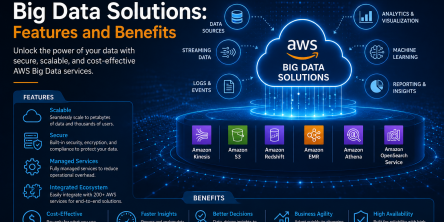
Modern businesses produce large amounts of data daily. Be it from customer transactions, Internet of Things (IoT) sensors, or countless other such sources.

Businesses today need to ship new software faster than ever. That's not news, of course. Anyway, because of the demands on businesses, new solutions are being built on top of micro-services, serverless functions, etc.