

Why Fintech Web Apps Struggle in New Markets Without Proper Translation

Most fintech products don’t fail because the technology is bad. In fact, most teams do a solid job on security. The backend usually works exactly as it should. The features look impressive in demos. Failures often start in subtle, easily overlooked areas. A screen that doesn't feel right. A sentence that sounds wrong. A button label that creates hesitation instead of confidence.
In financial products, language isn’t just a nice extra. It’s part of the foundation of the product. When translation is treated as a superficial task, problems appear fast, especially in web apps that cross borders overnight.
When “It Works” Is Not Enough
A fintech web app can technically function in a new market and still fail there. Pages load. Transactions go through. Numbers add up. Yet users hesitate. Sign-ups stall. Support tickets increase. And drop-off rates rise without much warning. The reason is often invisible to engineering dashboards. Language can seem unnatural. Instructions may read like literal translations rather than clear guidance. Legal disclaimers may confuse instead of providing reassurance. Error messages feel blunt or unclear. In finance, even small uncertainty feels risky. Users don’t stop to analyze why they feel uneasy. That’s how fully functional apps fail without anyone noticing the real reason.
Trust Is Built Sentence by Sentence
Trust around money is fragile. People tend to be far less forgiving when money is involved. A poorly phrased confirmation message can raise more concern than a slow-loading screen. An awkwardly translated warning can feel like a red flag.
Top fintech teams understand that trust is built through tone, not just security badges. Clear wording and familiar phrasing. Language that sounds like it belongs to the market.
Direct translations rarely convey the right tone. They can come across as stiff and formal or too casual in inappropriate contexts. Either way, they erode trust. When users sense that language was added as an afterthought, confidence drops. And once trust is lost, it rarely returns.
Compliance Language Is Not Marketing Language
Many fintech failures start with compliance issues. Not because regulations were ignored, but because they were translated poorly. Legal and regulatory text carries weight. In some markets, a single misinterpreted term can trigger audits, fines, or forced shutdowns. In others, unclear risk disclosures can invalidate user consent entirely.
Industry discussions keep pointing to the same problem. Many teams simply translate English compliance text directly. While it may appear correct internally, local regulators often interpret it differently, exposing companies to risk. Local regulators read differently. Proper translation adapts compliance language without diluting its legal meaning. That balance requires specialized expertise, not generic language handling.
UX Breaks When Language Does Not Match Behavior
Designers spend months refining flows. Fewer clicks, clear hierarchy, and logical steps. Then translation starts to disrupt the experience. Text expands unexpectedly. Important labels become vague. Call-to-action buttons lose urgency. Small bits of helper text lose their meaning. This is where many fintech web apps stumble. The design was built in one language. When translation is added late, compromises are inevitable: fonts become cramped, layouts overcrowded, and essential messages get lost below the fold. The issue isn’t poor design. It’s a mismatch between language and design. Successful products treat language as part of UX from the start. Translation is not layered on top. It is woven into the experience.
Cultural Nuance Shapes Financial Decisions
How people think about money depends heavily on culture. Risk tolerance varies. Authority is perceived differently. Even the way interest rates are explained can influence adoption. Several fintech case studies show strong adoption in one region and sudden rejection in another, despite similar economic conditions. Language was often a major factor.
Some cultures prefer formal reassurance. Others respond better to plain explanations. Some expect detailed breakdowns. Others want simplicity. Literal translations miss these cultural nuances, providing words without the meaning behind them. When fintech teams overlook cultural context, users feel misunderstood. The app still feels foreign, even when it appears localized.
Customer Support Reveals Translation Gaps Fast
Support teams often become the first to notice localization failure. Repetitive questions. Confusion over basic actions. Misunderstandings about fees or limits.
These issues are rarely product flaws. They are language flaws. As support volume rises, resolution times lengthen and costs climb, all while users grow increasingly frustrated. Well-translated apps reduce support load naturally. Clear language answers questions before they are asked. Poor translation turns support into damage control. This pattern appears consistently across fintech platforms expanding into new regions.
Why Generic Translation Fails Fintech Products
General translation approaches focus on accuracy, not responsibility. In fintech, responsibility matters more. A single ambiguous term can misrepresent financial risk. A poorly adapted phrase can change how users interpret obligations. A mistranslated disclaimer can expose the company legally.
This is why fintech leaders increasingly rely on specialized web app translation services rather than general providers. The difference is not volume. It is judgment. Understanding financial logic, regulatory sensitivity, and user psychology cannot be automated or rushed.
The Role of Strategic Localization Partners
Successful fintech expansion often includes a long-term relationship with a software localization agency that understands both technology and finance. Such partners do not simply translate content. They question the wording. They flag cultural mismatches. They collaborate with product and legal teams.
This relationship shapes product decisions. Language choices influence UX, onboarding, and even feature prioritization. Fintech companies that treat localization as a strategy, not a cost, tend to scale more smoothly across regions.
Building Products That Travel Well
Fintech products that succeed globally share a mindset. They assume language will shape behavior. They plan for it early. They respect local reading habits.
Translation becomes part of product quality, not an external task. Localization is tested alongside features. Language is reviewed with the same seriousness as security. This approach does not guarantee success. But it removes one of the most common, preventable reasons for failure.
Conclusion
Technology is one thing, but trust comes from language. Fintech teams focus heavily on creating innovative products, securing them well, and creating user-friendly interfaces, but at the core, they can come down to a single factor: understanding. The words, phrases, and messages all have a huge impact. When language feels natural, users feel confident. Even fully functional apps can lose trust if communication is awkward. Fintech failures rarely happen overnight; they often unfold slowly, reflected in rising drop-offs and muted engagement, quietly eroding opportunities. In a world in which trust is what moves the global market, silence is never as loud as a failed application, and translation is not just a feature; it is essential infrastructure.
Similar Articles

Field sales teams handle numerous responsibilities every day. Sales representatives travel between customer locations, conduct meetings, collect orders, record information, and report their activities to managers.

The app development market has evolved significantly over the past decade or so. Its impact on business has been equally consequential.

Offshore IT hiring means recruiting IT professionals who work from another country or region. Companies commonly use this approach for software development, QA, IT support, DevOps, cybersecurity, data, and project management.

By 2026, moving to the cloud is no longer merely a competitive advantage. It is a business necessity. Every organization across the broad spectrum of industries will be challenged to become more agile.
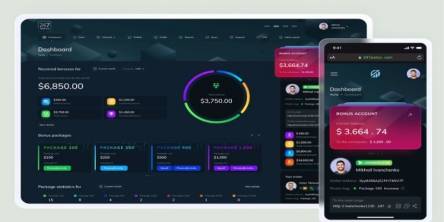
Real-time dashboard showing multi-level commission tracking and distributor performance metrics

Digital transformation initiatives are no longer unheard of in the corporate world. As a matter of fact, it is also well known that companies expanding their digital footprint tend to run into crippling legacy apps.

The financial aid office has become one of the most operationally strained departments on the modern U.S. campus. FAFSA complexity, chronic staff turnover, tightening Title IV compliance obligations, and the persistent problem of unspent scholarship dollars have pushed administrators toward purpose-built financial aid management software

The demand for software delivery has never been higher. Applications must be delivered faster and on a scale like never before.

Modern businesses produce large amounts of data daily. Be it from customer transactions, Internet of Things (IoT) sensors, or countless other such sources.