

Key Benefits of Using AI Agents for Fraud Detection

It has been for everyone to see that the modern digital economy is distinguished by high volume, real-time financial transactions. This shift has been fueled by ecommerce and mobile payments. Despite its enormous convenience for customers, this connectivity also creates an exponentially expanding attack surface. Attackers use sophisticated technologies to create deepfakes and complex schemes that quickly outperform traditional security systems. So as global fraud losses continue to rise, they put the spotlight on a critical gap in legacy defenses. These defenses are reactive and frequently flag legitimate customer activity as fraud. In such a threat landscape, businesses must switch to proactive defense. This is where AI Agents step in, redefining security. AI Agents are self-directing systems that can analyze data streams in real time. This allows them to detect subtle anomalies and quickly coordinate actions.
In this blog, I will discuss some of the more compelling advantages of using AI agents for fraud detection.
Fraud Detection + AI Agents: An Introduction
It is a software system that interacts with its digital environment and collects data. This information is then put to work for the AI agent to autonomously pursue and achieve specific, predetermined goals. And all of this is done without continuous human intervention. An AI agent's primary functions are to gather data as well as reason and plan an optimal course of action using internal logic and models.
Fraud Detection: Key Benefits of Using AI Agents
AI agents revolutionize fraud detection by analyzing vast datasets in real time, identifying anomalies, and predicting suspicious patterns with high accuracy. They reduce false positives, enhance security, and adapt to evolving threats. Businesses benefit from faster detection, improved compliance, and cost savings, ensuring robust protection against financial fraud.
Listed below are the core benefits;
- Better accuracy: AI agents overcome the limitations of traditional systems through sophisticated ML models. Think stuff such as Deep Learning and Graph Neural Networks to analyze large datasets in real time. This allows the system to detect even subtle patterns that human analysts and simpler algorithms would likely miss. A critical factor in this increased accuracy is the significant reduction in false positives; by understanding nuances, AI agents minimize disruption to genuine customer activity.
- Cost efficiency: The use of AI agents aids in this effort through two primary mechanisms: loss prevention and operational automation. Since they work at boggling speeds, they can detect and block fraudulent transactions. And do this before such transactions are completed. In terms of operations, AI agents automate repetitive tasks associated with fraud detection. This way companies can devote human resources to confirmed fraud investigations.
- Predictive capabilities: AI agents are designed to be proactive. To that end, they use continuous learning and predictive analytics. They anticipate and detect emerging fraud tactics to retrain and update their detection models automatically. This is how AI agents recognize new attack vectors and shifts in criminal behavior. The AI agents establish a baseline for normal customer behavior, and any unexpected deviation results in a high-risk score. This predictive risk scoring enables the company to take preemptive measures.
- Regulatory compliance: Mighty useful tools in this field, AI agents automate continuous transaction monitoring to detect suspicious activity. You know, the kind that may indicate money laundering and such. This way the relevant protocols are followed consistently. Advanced AI agents are also able to automatically generate audit trails and compliance reports. This functionality is critical for demonstrating transparency and diligence to regulatory bodies.
- Data analysis: AI agents' core strength is their ability to process and synthesize large amounts of disparate data at the same time. They can even apparently unrelated data points allow these AI agents to detect complex fraud rings and coordinated criminal activity. The continuous analysis and synthesis of this massive data flow ensures that the detection system is constantly updated to reflect the ever-changing threat landscape.
Final Words
In an era of escalating digital threats, AI agents offer a proactive, intelligent approach to fraud detection. By combining real-time analysis, predictive capabilities, and automation, they close critical gaps in legacy systems. Businesses adopting AI-driven security gain resilience, compliance, and cost efficiency ensuring trust and protection in today’s connected economy. Ready to put AI agents for fraud detection to work for your organization? Then, I recommend that you start looking for a trusted service provider at the earliest.
Similar Articles

Field sales teams handle numerous responsibilities every day. Sales representatives travel between customer locations, conduct meetings, collect orders, record information, and report their activities to managers.

The app development market has evolved significantly over the past decade or so. Its impact on business has been equally consequential.

Offshore IT hiring means recruiting IT professionals who work from another country or region. Companies commonly use this approach for software development, QA, IT support, DevOps, cybersecurity, data, and project management.

By 2026, moving to the cloud is no longer merely a competitive advantage. It is a business necessity. Every organization across the broad spectrum of industries will be challenged to become more agile.
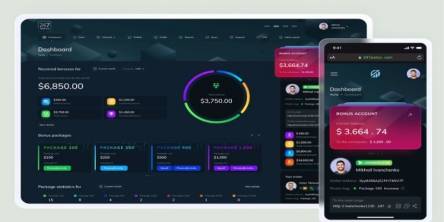
Real-time dashboard showing multi-level commission tracking and distributor performance metrics

Digital transformation initiatives are no longer unheard of in the corporate world. As a matter of fact, it is also well known that companies expanding their digital footprint tend to run into crippling legacy apps.

The financial aid office has become one of the most operationally strained departments on the modern U.S. campus. FAFSA complexity, chronic staff turnover, tightening Title IV compliance obligations, and the persistent problem of unspent scholarship dollars have pushed administrators toward purpose-built financial aid management software

The demand for software delivery has never been higher. Applications must be delivered faster and on a scale like never before.
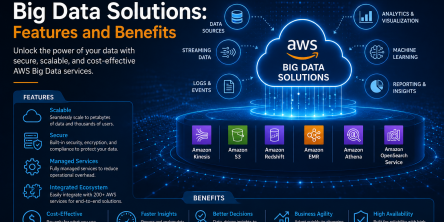
Modern businesses produce large amounts of data daily. Be it from customer transactions, Internet of Things (IoT) sensors, or countless other such sources.