

Advantages of Digital Product Development

Digital technologies are changing the world. It has become a cornerstone of success for businesses and individuals alike. The change is reflected not only in what digital products can do but also in how they are designed and how companies manage and support their development. Whether you're an established corporation, a startup entrepreneur, or a creative innovator, the benefits of crafting and launching digital products are too compelling to ignore. The advantages are manifold, from enhancing customer experiences to unlocking new revenue streams.
With product features progressing from the hardware to the digital aspect, customers experience enhanced capabilities to enjoy profoundly different and better user experiences. At the same time, product capabilities are no longer fixed during the production stage, as new features can now be added over time using software upgrades. This evolution has prompted companies to adopt feature-based development approaches, where the development of digital products continues throughout their lifecycle.
With this blog, I'll explore the myriad benefits of developing digital products, shedding light on why they have become a driving force in today's digital economy. So, let's dive in and discover how embracing the digital realm can be a game-changer for your endeavors.
What is Digital Product Development?
Digital product development enhances digital products to give users a superior experience. It employs an agile development methodology that enables companies to establish their presence in the market early on by delivering new products and services to the market at speed (STM).
The stages of digital product development are;
- Idea generation or discovery
- Concept development or ideation
- Design and prototyping
- Testing and iteration
- Agile implementation for STM
- Launch
- Post-launch evaluation
Benefits of Digital Product Development
- Faster time to market: Launching a well-designed product when the market is ready ensures businesses stay competitive and gain market share. Digital product development drives efficiency throughout the product cycle. Leveraging the various phases of digital product development, companies can now skillfully design, develop, test, and deploy products that meet market requirements. This enables early identification of product concerns and helps ensure the launch meets customer expectations. Digital product development enables businesses to remain agile in adapting to customer requirements.
- Superior user experience: User-centric designs ensure that user experience is positive and crucial for product success. It is leveraging advanced technologies such as artificial intelligence and natural language processing (NLP) smart digital products that can improve efficiency over time by adapting to user feedback. Digital product development allows optimization of product capabilities that enhance user experience and customer satisfaction.
- Increase ROI and reduce operational costs: Leveraging advanced technologies such as AI and digital product engineering, businesses can anticipate customer requirements and preferences to develop digital products as per market needs. The result is faster resolution of customer queries while providing a more efficient method of managing operations that reduces overhead and operational costs. The impact of digital product development is optimizing resources, investments, and workflow efficiency, which results in increased ROI.
- Using AI and other innovative products to retain competitiveness: Digital product engineering, when paired with AI, NLP, and ML technologies, can enable businesses to create smarter, more innovative products that allow companies to provide more personalized experiences and services that are tailored to customer's needs. The benefit of using digital product engineering ensures that businesses can scale operations smoothly and rapidly.
- Increased collaboration: Dependency on legacy systems can cause inefficiencies and reduce business cooperation. Legacy products developed using old processes typically cannot interface with modern techniques. This leads to teams working in silos which is detrimental to business progress and stifles development. This is especially true for product engineering, where teams from different areas must come together for product development. Using Agile processes for working with emphasis on communication and collaboration can break down silos and increase project transparency, enabling teams to work together at every stage of product development.
- Scalability: Developing digital products is a scalable process that helps companies keep up with and adapt to the ever-changing consumer and market requirements. This inherent scalability allows companies to deliver products that meet user requirements successfully and stay ahead of the competition.
Closing thoughts
Some key takeaways -
- Product development is not linear and involves seven distinct steps to achieve it.
- A strong strategy can guide the vision or ideation for the product. It's crucial to figure out what to develop and how to measure its effectiveness.
- Create prototypes. Prototypes help refine the final product and ensure product development moves in the right direction.
- Collaboration and communication are the keys to driving an effective product development cycle. The tools and the teams must support these.
- Iteration resolves challenges that come along and helps balance requirements and critical objectives.
Businesses are embarking on a digital transformation journey to be in sync with and meet customer requirements and market demands. Digital product development drives innovation and harnesses the agility required to stay ahead of the competition. Adopting digital product development enables scalability and adaptability, resulting in better revenue generation. It allows for more effective resource management and realistic effects.
Similar Articles
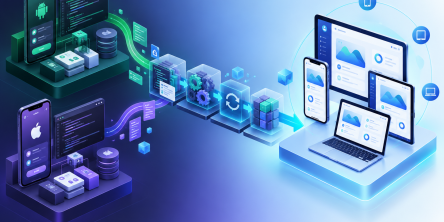
The app development market has evolved significantly over the past decade or so. Its impact on business has been equally consequential.

Offshore IT hiring means recruiting IT professionals who work from another country or region. Companies commonly use this approach for software development, QA, IT support, DevOps, cybersecurity, data, and project management.

By 2026, moving to the cloud is no longer merely a competitive advantage. It is a business necessity. Every organization across the broad spectrum of industries will be challenged to become more agile.
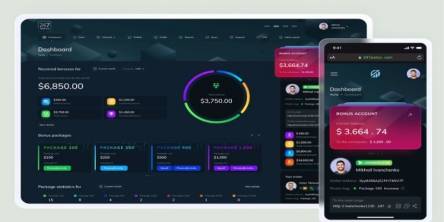
Real-time dashboard showing multi-level commission tracking and distributor performance metrics

Digital transformation initiatives are no longer unheard of in the corporate world. As a matter of fact, it is also well known that companies expanding their digital footprint tend to run into crippling legacy apps.

The financial aid office has become one of the most operationally strained departments on the modern U.S. campus. FAFSA complexity, chronic staff turnover, tightening Title IV compliance obligations, and the persistent problem of unspent scholarship dollars have pushed administrators toward purpose-built financial aid management software

The demand for software delivery has never been higher. Applications must be delivered faster and on a scale like never before.

Modern businesses produce large amounts of data daily. Be it from customer transactions, Internet of Things (IoT) sensors, or countless other such sources.

Businesses today need to ship new software faster than ever. That's not news, of course. Anyway, because of the demands on businesses, new solutions are being built on top of micro-services, serverless functions, etc.