

Native to Flutter: A Guide to Making the Transition

The app development market has evolved significantly over the past decade or so. Its impact on business has been equally consequential. Today speed to market is the number one consideration for mobile-first businesses as they race to ship new features and updates their users. Be it across Android or iOS. Years ago, developing native apps was a terrific way to ensure performance.
But with growing digital products, the need to maintain two separate codebases had started to create friction. So, companies then looked for single-codebase solutions, such as cross platform app development, to cut costs and time to market. And all of this is without compromising on app quality or even the user experience. While native development had proven to be a mighty solution at one point, more companies are now turning to Flutter. What if I already have a native app, one may wonder. Then you migrate the existing codebase to Flutter. But know that you must ensure zero downtime and no data loss for your current users during the process. This is made possible via strategic steps to facilitate the move away from your native codebases and into Flutter.
In this blog, I will discuss step-by-step migration strategy from Native to Flutter while assessing the Native App’s Architecture and Roadmap and deciding the right Migration Strategy.
Native App Migration to Flutter: Steps You Ought to Know
Migrating a native application to Flutter can simplify development, improve cross-platform consistency, and reduce long-term maintenance. However, successful migration requires more than rewriting code. A structured approach helps teams assess compatibility, plan the transition, preserve functionality, and minimize disruption throughout the process.
Listed below are some of the vital steps you must consider;
- Native app assessment: You need to analyze your existing iOS and Android codebases. Audit their architecture, state management approaches, etc. Then map out how the migration plan will fit with your product roadmap to identify features or modules that can be ported over without stopping feature development.
- Choose migration strategy: Decide if you want to rewrite your app from scratch or instead migrate it module by module. Rewriting means developing the whole app in Flutter and then swapping with the native apps. But rewriting also prevents the release of new features. So, you could opt for the alternate process, i.e. incremental migration. It lets you introduce Flutter into your existing native codebase, and your team can continue shipping features. Though the app will now include both Flutter and native screens.
- Configure Flutter in native app: When you migrate incrementally, you can add the Flutter module as a dependency to the existing native apps. An instance of FlutterEngine early in the app's launch process should be prewarmed. This helps reduce memory footprint as well as deliver seamless page transitions for end users.
- Rebuild UI: Flutter allows you to reimagine the app's interface. You can do so by using the Flutter declarative widget library to reproduce existing design languages, typography, etc. Then port the native apps layouts' libraries to Flutter's Material or Cupertino libraries.
- Reuse existing APIs and backend integrations: Now it is time to connect your Flutter module to the existing backend REST or GraphQL APIs, authentication mechanisms, etc. You must also manage user state or session tokens in database across platforms. Pass necessary params when running in hybrid mode between native code and Flutter.
- Bridge native app code: Hook up platform APIs to Flutter over native channels. You can use MethodChannel to send basic calls or use Pigeon to generate type-safe bindings in Swift, Kotlin, etc. You can also keep functionality of heavier native view classes by nesting them within Flutter's view hierarchy through PlatformView implementation.
- Test, benchmark, and launch: At this stage you validate the application's functionality with unit tests, full app integration testing, etc. Then verify that performance metrics are equivalent to or better than the original native app. Now release the update to production via the Apple App Store and Google Play Store. Finally, you must now monitor crash analytics and telemetry.
Concluding Thoughts
Migrating a native app to Flutter is not simply a technology shift—it is a strategic move toward faster development, consistent cross-platform experiences, and easier maintenance. With careful assessment, incremental migration, robust testing, and thoughtful integration of existing systems, businesses can modernize their apps while minimizing disruption, protecting user data, and maintaining continuous product evolution. Ready to get started? Then you best start looking for a trusted Flutter app development services company.
Similar Articles

Choosing the right electronic health record (EHR) system is an important decision for any medical practice. The right platform can simplify patient documentation, appointment scheduling, insurance claims, billing, and daily administrative tasks.

Running a restaurant involves much more than taking orders and serving food.

Field sales teams handle numerous responsibilities every day. Sales representatives travel between customer locations, conduct meetings, collect orders, record information, and report their activities to managers.

Offshore IT hiring means recruiting IT professionals who work from another country or region. Companies commonly use this approach for software development, QA, IT support, DevOps, cybersecurity, data, and project management.

By 2026, moving to the cloud is no longer merely a competitive advantage. It is a business necessity. Every organization across the broad spectrum of industries will be challenged to become more agile.
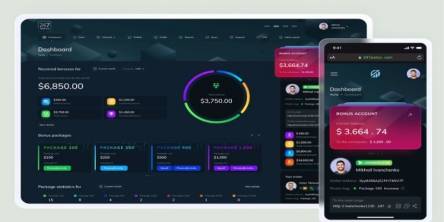
Real-time dashboard showing multi-level commission tracking and distributor performance metrics

Digital transformation initiatives are no longer unheard of in the corporate world. As a matter of fact, it is also well known that companies expanding their digital footprint tend to run into crippling legacy apps.

The financial aid office has become one of the most operationally strained departments on the modern U.S. campus. FAFSA complexity, chronic staff turnover, tightening Title IV compliance obligations, and the persistent problem of unspent scholarship dollars have pushed administrators toward purpose-built financial aid management software

The demand for software delivery has never been higher. Applications must be delivered faster and on a scale like never before.