

Swiss Precision Machining: The Strategic Manufacturing Advantage in a Transforming Industrial Landscape

In an era of supply chain realignment and accelerating technological change, precision manufacturing has emerged as a critical competitive differentiator for businesses across the industrial spectrum. Among the advanced manufacturing processes driving this transformation, Swiss machining stands apart. Originally developed for the watchmaking industry, Swiss-type turning has evolved into a cornerstone of modern production, delivering the micron-level tolerances, complex geometries, and production consistency that aerospace, medical, automotive, and electronics sectors demand.
The scale of this transformation is substantial. The precision turned product manufacturing market continues to expand at a steady pace, driven by demand for high-tolerance components across multiple industries. The Swiss screw machining service market reflects a fundamental shift: manufacturers are increasingly recognising that precision is not merely a technical specification but a strategic business asset that directly impacts product performance, regulatory compliance, and ultimately, market position.
The Technical Foundation of a Strategic Advantage
What distinguishes Swiss machining from conventional CNC turning is the guide bushing, a support mechanism that holds the workpiece immediately adjacent to the cutting tool. This design eliminates the deflection and vibration that plague conventional lathes, enabling manufacturers to hold tolerances that would otherwise be impossible on long, slender parts. The result is components with superior concentricity, straightness, and surface finish, produced consistently across production runs of hundreds of thousands of units.
The business implications are straightforward. For companies developing next-generation medical devices, Swiss machining delivers the burr-free surfaces and micron-level accuracy that regulatory bodies demand. For aerospace manufacturers, it provides the lightweight, high-strength components that fuel efficiency initiatives require. For automotive suppliers navigating the transition to electrification, it enables the production of battery connectors, sensor housings, and thermal management components with the repeatability that high-volume production demands. For electronics manufacturers, Swiss machining produces the miniature pins, connectors, and housings that make modern devices possible. These capabilities are precisely what a provider of Swiss machining services delivers to clients across these demanding sectors.
Industry 4.0: The Digital Transformation of Precision Manufacturing
The integration of digital technologies is reshaping how Swiss machining operates. Digital twin technology, virtual replicas of physical machines and processes, is revolutionising CNC machining by enhancing efficiency, flexibility, and the ability to anticipate manufacturing trends. These digital models enable engineers to simulate machining operations before the first chip is cut, identifying potential problems and optimising parameters without interrupting production.
The adoption of automation is equally transformative. Robot-tended CNC cells, automated bar feeders, and in-process probing systems are becoming standard practice in advanced Swiss machining facilities. The goal is lights-out machining, continuous, unattended production supported by smart scheduling and remote monitoring. For manufacturers, this translates into higher productivity, lower labour costs, and more consistent quality across production runs.
Data-driven process control is another critical element of Industry 4.0. AI-driven machining uses real-time sensor feedback to adjust feeds, speeds, and toolpaths automatically in response to vibration, load, or temperature changes. Predictive maintenance algorithms analyse vibration patterns and power consumption to flag potential failures before they happen, reducing downtime and extending equipment life. For customers, this means fewer delays and more predictable delivery schedules.
Why Swiss Machining Matters for Your Supply Chain
The reshoring and supply chain diversification trends of recent years have made partner selection more consequential than ever. Companies are bringing production closer to end markets, but they are discovering that domestic capacity for high-precision Swiss machining is not unlimited. The shops that have invested in advanced equipment, skilled workforces, and documented material processes are the ones capturing the most demanding programmes.
For procurement professionals, the assessment criteria have sharpened accordingly. Equipment matters: multi-axis Swiss turning centres with live tooling, automated bar feeders, and in-process probing are now the baseline for serious work. Quality infrastructure matters: certifications such as ISO 13485 for medical components and AS9100 for aerospace require documented processes, internal audits, and continuous improvement. Material traceability matters: full documentation from incoming certification to finished component provides the audit trail that regulated industries demand. This is why many engineering teams turn to a shop that produces high-quality Swiss-machined components when their specifications demand the highest level of precision and repeatability.
Perhaps most importantly, experience with specific materials matters. A shop that has produced tens of thousands of components across different alloys understands the subtle behaviours that separate reliable production from costly scrap. This accumulated knowledge cannot be replicated by simply purchasing new equipment; it must be built over years of practical experience.
The Business Case for Swiss Machining
For companies that manufacture or source precision components, the choice of Swiss machining partner has direct implications for cost, quality, and speed to market. Shops that have invested in advanced equipment can achieve cycle times that were unthinkable a generation ago. This translates directly to lower per-part costs and faster delivery schedules. Quality infrastructure ensures consistent output, reducing scrap and rework. Material traceability provides the documentation that regulated industries require.
Manufacturing strategy itself is becoming a core business function. The next twelve to eighteen months will likely determine which manufacturing partnerships deliver durable advantages. Demand signals are clear: precision components are moving toward tighter tolerances, more exotic materials, and higher production volumes. The reshoring trajectory is measurable, with manufacturers expecting activity to rise further. The technology required to meet today's specifications is well understood, but it requires sustained capital investment and process discipline.
Looking Ahead
The shops that have made those investments, those that have built their operations around multi-axis Swiss turning, automated quality control, and a stable, skilled workforce are positioned to capture the most demanding programmes. For customers, that translates into predictability, which in today's uncertain environment is worth more than a small discount on the unit price.
Companies that secure partnerships with such suppliers early will be better equipped to handle product complexity, respond to demand fluctuations, and navigate trade uncertainty. In an era where every component matters, the strategic importance of precision machining has never been clearer. The right partner brings not just equipment but decades of accumulated knowledge about how materials behave under cutting forces, knowledge that translates directly to consistency, reliability, and peace of mind for the companies that rely on them.
Similar Articles
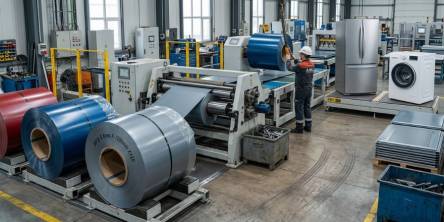
Learn how prepainted steel panels resist corrosion, scratches, UV exposure, forming stress, and finish inconsistency in home appliance manufacturing.

Learn how to choose the right food powder manufacturing grinder by comparing grinding capacity, precision, efficiency, durability, and processing needs.

Electric cables are among the most critical parts of any construction. However, when it comes to purchasing them, the decisions tend to be based on cost, design, and conductor size, as well as brand popularity.

Avoid seven common industrial agitator selection mistakes involving tank size, viscosity, impellers, motor power, materials, maintenance, and suppliers.
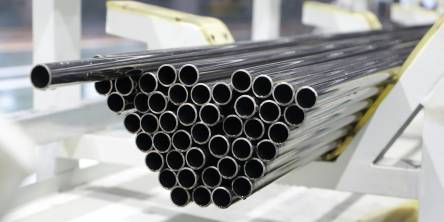
Pick a stainless steel pipe based on three things: the grade, the wall thickness, and the working environment. Get these three right, and the pipe lasts for decades.

The right pressure sensor matches four things: pressure range, media type, accuracy, and output signal. Get these four right, and the sensor will last for years.
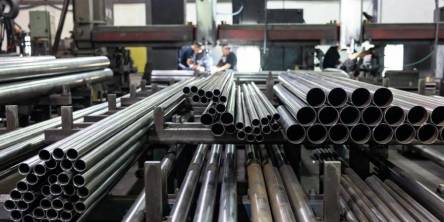
Learn how to choose precision steel tubes for hydraulic, automotive, and industrial applications, including material grade, tolerance, surface treatment, strength, and supplier selection.
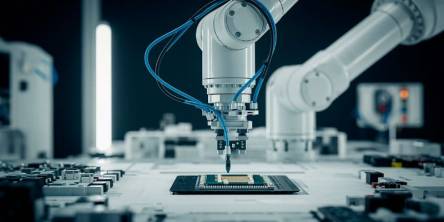
The printed circuit board industry is undergoing one of the most transformative periods in its history
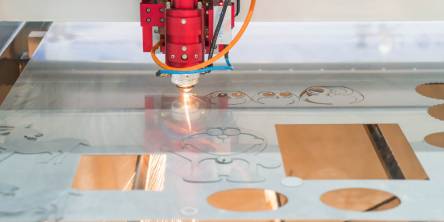
Laser marking systems have emerged as an essential tool for modern manufacturing processes, driving efficiency and enhancing production throughput. As industries adopt Industry 4.0 technologies, the need for faster, more accurate, and more reliable marking solutions becomes increasingly important.