

Sales Funnel Optimization: Where a Quiz Belongs for Maximum ROI
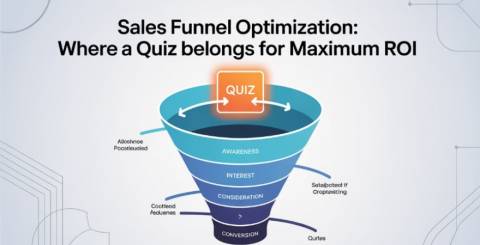
Every sales funnel has one core goal: turn attention into revenue as efficiently as possible. Yet many funnels leak value at critical stages—visitors bounce, leads go cold, and sales teams chase prospects who were never a good fit.
This is where interactive quizzes shine. When placed correctly in your sales funnel, a quiz doesn’t just capture leads—it qualifies, segments, and accelerates conversions, delivering a measurable return on investment (ROI).
Let’s break down where a quiz belongs in your sales funnel and how to use it for maximum impact.
Understanding the Modern Sales Funnel
Before placing a quiz, it’s important to understand the main stages of a sales funnel:
- Awareness – Users discover your brand
- Interest – They engage with your content
- Consideration – They compare solutions
- Decision – They’re ready to buy
- Retention – Post-purchase engagement
A quiz can add value at multiple stages—but one placement usually delivers the highest ROI.
The Highest-ROI Placement: Middle of the Funnel (MOFU)
The Middle of the Funnel (Consideration stage) is where quizzes perform best.
At this point, users:
- Understand their problem
- Are exploring solutions
- Need clarity, not sales pressure
A quiz acts as a guided decision tool, helping prospects self-identify the right solution while providing your business with rich qualification data.
Why MOFU Quizzes Work So Well
- Visitors are already engaged
- Intent is higher than top-of-funnel traffic
- Sales teams get actionable insights
- Leads feel helped, not sold to
This is the sweet spot for ROI.
How Quizzes Fit into Each Funnel Stage
1. Top of Funnel (TOFU): Awareness & Lead Capture
Best use: Engagement and list growth
At the top of the funnel, quizzes work as:
- “Find out…” or “Which solution is right for you?” content
- Social media and ad landing experiences
- Blog content upgrades
Example quiz:
“What’s Your Biggest Conversion Block?”
ROI impact:
High engagement and lower cost per lead—but limited buying intent.
2. Middle of Funnel (MOFU): Qualification & Segmentation (Best ROI)
Best use: Lead qualification and sales acceleration
Here, quizzes:
- Replace static lead forms
- Score and segment leads
- Route hot leads to sales
- Nurture cold leads automatically
Example quiz:
“Is Our Platform the Right Fit for Your Business?”
ROI impact:
Higher close rates, shorter sales cycles, and fewer wasted sales calls.
3. Bottom of Funnel (BOFU): Decision Support
Best use: Objection handling and deal closing
At the bottom of the funnel, quizzes can:
- Reinforce buying confidence
- Personalize demos or offers
- Recommend specific plans or packages
Example quiz:
“Which Plan Fits Your Needs Best?”
ROI impact:
Faster decisions and higher average order value (AOV).
Where NOT to Place a Quiz
To avoid poor performance:
❌ Don’t gate high-intent demo or pricing pages with long quizzes
❌ Don’t over-qualify cold traffic too early
❌ Don’t use quizzes without a clear next step
A quiz should guide, not block, the buyer journey.
How Quizzes Improve Funnel ROI
When placed correctly, quizzes improve funnel efficiency by:
- Increasing lead quality
- Reducing sales team workload
- Improving personalization
- Lowering cost per acquisition (CPA)
- Increasing lead-to-customer conversion rates
Instead of guessing buyer intent, your funnel adapts in real time.
Best Practices for Maximum Quiz ROI
To get the most out of your quiz:
- Keep it between 5–8 questions
- Ask intent-based, not demographic-only questions
- Show personalized results instantly
- Integrate with CRM and email automation
- Align quiz outcomes with funnel stages
Platforms like Quizify make it easy to place quizzes anywhere in the funnel and connect them directly to sales and marketing workflows.
Final Takeaway
A quiz isn’t just a lead magnet—it’s a conversion accelerator.
While quizzes can support every stage of your funnel, the middle of the funnel delivers the highest ROI by qualifying leads, personalizing journeys, and helping sales teams focus on buyers who are ready to move forward.
If your funnel is generating traffic but not revenue, the problem may not be volume—it’s a lack of clarity. And that’s exactly what a well-placed quiz solves.
Similar Articles

Field sales teams handle numerous responsibilities every day. Sales representatives travel between customer locations, conduct meetings, collect orders, record information, and report their activities to managers.

The app development market has evolved significantly over the past decade or so. Its impact on business has been equally consequential.

Offshore IT hiring means recruiting IT professionals who work from another country or region. Companies commonly use this approach for software development, QA, IT support, DevOps, cybersecurity, data, and project management.

By 2026, moving to the cloud is no longer merely a competitive advantage. It is a business necessity. Every organization across the broad spectrum of industries will be challenged to become more agile.
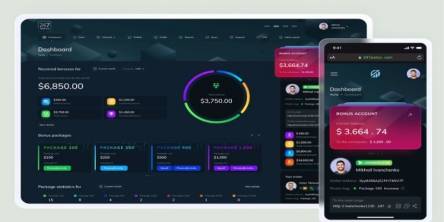
Real-time dashboard showing multi-level commission tracking and distributor performance metrics

Digital transformation initiatives are no longer unheard of in the corporate world. As a matter of fact, it is also well known that companies expanding their digital footprint tend to run into crippling legacy apps.

The financial aid office has become one of the most operationally strained departments on the modern U.S. campus. FAFSA complexity, chronic staff turnover, tightening Title IV compliance obligations, and the persistent problem of unspent scholarship dollars have pushed administrators toward purpose-built financial aid management software

The demand for software delivery has never been higher. Applications must be delivered faster and on a scale like never before.
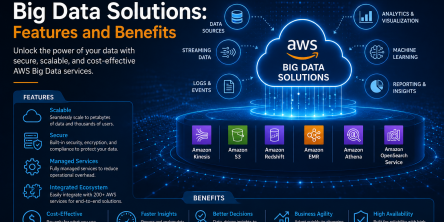
Modern businesses produce large amounts of data daily. Be it from customer transactions, Internet of Things (IoT) sensors, or countless other such sources.