

How Xamarin And Azure Are Changing The Landscape For Cross-platform App Development?

Cross-platform app development frameworks are becoming more common, and organizations utilizing it to ensure their applications guarantee high performance and usability. Therefore, keeping up with business needs by making regular updates and upgrades is crucial.
The perfect solution would be to create cloud-connected mobile applications which can easily sync additional upgrades to mobile applications.
Cloud-connected mobile apps developed using Microsoft Azure, and Xamarin mobile app development services are easier to update and iterate as they are hosted on a centralized server where the application's content is managed.
This article will explain how Xamarin Azure revolutionized the cross-platform app development market.
How is the Mobile App Development Market evolving?
Multiple-platform app development can be made easier with cross-platform mobile development. According to recent reports, developers are increasingly using third-party cross-platform tools to perform analytics, testing, and crash reporting.
Cross-platform tools and mobile apps have become increasingly popular in the past year. With Xamarin and Azure, you can update and iterate the app more easily since the app content is centralized, you don't have to worry about application downtime, you can scale the app automatically, it's easier to maintain, and you can respond to market changes more quickly and easily.
When you hire Xamarin developers, you can stay on top of the development trends and stay in growing mode.
In what ways Xamarin and Azure are transforming the app development landscape?
Mobile has grown rapidly in recent years. Cross-platform mobile apps that perform multiple functions are becoming increasingly common. Thus, the demand to hire cross-platform app developers continues to rise. Here are some reasons why Xamarin and Azure dominate the cross platform app development market.
Decreased development time
Mobile app developers today have so many cross-platform app development platforms.
With Xamarin, Microsoft claims they can reduce the development time for native mobile apps by almost 60% while sharing almost 75% of the code between people using the same device.
This system has a common core logic, and you can share components across multiple platforms, including business objects, logic within the app, data access layers, etc.
A greater focus on new features
Due to its compatibility with some of the latest SDKs, the Xamarin mobile app development framework is future-ready.
Moreover, it tightly binds SDKs and APIs from multiple platforms together, enabling developers to develop high-quality applications and support new features as soon as they are integrated with the OS.
An enhanced environment for developing mobile apps
The Xamarin platform by Microsoft provides deeper integration with the Azure cloud.
It thus enables developers to develop rich mobile apps and provide comprehensive business solutions, thereby helping app developers to build rich mobile apps or applications.
Besides being scalable, on-demand, high-availability, and cost-effective, Azure also provides excellent support.
Enhanced security for apps
The Xamarin and Azure platforms simplify navigating app and data security minefields. Apps are infinitely more secure on the Azure cloud because the connections between components are encrypted.
Further, Azure offers HTTP certificates for secure communication between the mobile application and the backend and 24-hour threat management protection for the hosted resources to ensure they remain malware-free.
Azure authentication services can also be used by developers to securely integrate social media logins into their backends and mobile applications.
Scalability
Apps should be scalable to meet sudden business needs. A traditional hosting model may need more resources to run an application. AWS Services enable the app to be auto-scaled on-the-fly as and when the need arises.
Deploy mobile DevOps systems and processes.
With the help of robust mobile DevOps processes, tools, and systems, you can significantly reduce the time it takes for your app to reach the market by integrating a mobile DevOps solution.
With Azure, Xamarin Test Cloud, Visual Studio, and HockeyApp, you can streamline the quality control and efficiency of your developed apps.
Secures data storage
The Azure Cloud Services allow users to store any data in the cloud regardless of whether it is a file, a structured data set, or even data that has been generated using a query.
As a result of the standard SMB 2.1 protocol, they can share this data among virtual machines via SMB 2.1.
Conclusion
By combining the Xamarin framework with Microsoft Azure, enterprises can develop cross-platform mobile apps faster than ever. Using Xamarin and Azure, they can deploy mobile apps powered by the cloud without worrying about heavy investments in infrastructure requirements, app user interfaces, maintenance, etc. Talk to the experts if you plan on using Xamarin and Azure services to develop mobile apps to make your business more successful.
Similar Articles

Real-time dashboard showing multi-level commission tracking and distributor performance metrics

Digital transformation initiatives are no longer unheard of in the corporate world. As a matter of fact, it is also well known that companies expanding their digital footprint tend to run into crippling legacy apps.

The financial aid office has become one of the most operationally strained departments on the modern U.S. campus. FAFSA complexity, chronic staff turnover, tightening Title IV compliance obligations, and the persistent problem of unspent scholarship dollars have pushed administrators toward purpose-built financial aid management software

The demand for software delivery has never been higher. Applications must be delivered faster and on a scale like never before.
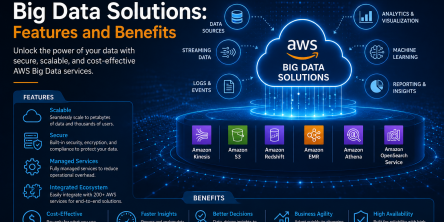
Modern businesses produce large amounts of data daily. Be it from customer transactions, Internet of Things (IoT) sensors, or countless other such sources.

Businesses today need to ship new software faster than ever. That's not news, of course. Anyway, because of the demands on businesses, new solutions are being built on top of micro-services, serverless functions, etc.

Cybersecurity has become an essential concern for groups, companies, and as well as people. As cyber threats enhance, security systems also become more sophisticated.

Enterprise workplaces today handle a massive volume of incoming packages, internal deliveries, courier shipments, and employee parcels every day

The adoption of cloud technologies around the world has changed the way software is consumed. Organizations now care more about agility and systems that scale with their business.