

The Impact of Building Layout on Customer Flow and Hospitality Success

Many hospitality operators view their building layout as something that should look good. It's an operational strategy. The width of every corridor, the clustering of every table, the sightline from the host stand to the kitchen exit - these are all operational variables which determine how fast tables turn, how many steps servers take in a shift, even whether the customer orders a second round or asks for the bill.
Commercial building design in hospitality is one of the few areas where a single physical change made once can affect revenue every service for the next ten years. This is something that's worth taking seriously at the planning stage, rather than retrofitting everything on wheels around an existing space post-opening.
The decompression zone is doing more work than you think
Customers do not just come in and sit down. They come in from a street, a car park, a busy day. The entry space - which designers like to call the decompression zone - is where that occurs. A well-designed entry slows people down, gives their eyes somewhere to land, and immediately signals the price point of the experience ahead.
So they get that wrong and you get customers who feel rushed and disoriented from the moment they walk in. Get it right and they've already adjusted their expectations upward before they've seen a menu. The density of furniture, the lighting level, the materials used at eye height - all of it communicates service level faster than any signage can.
The tactile transition from arriving to ordering
Once a guest is physically with you, there's a moment that's easy to underplay: the transition from "I'm here" to "I'm engaging with this experience." This is where the physical objects in the vicinity perform. Table settings, the feel of the surfaces, and more than anything the menu directly communicate whether the rest of the room has delivered on the promise of the entranceway.
This is where customised menu covers for your restaurant move from being a decorative nice-to-have to an actual part of your operations. A menu that feels out of place in a room never failed to make a guest have that "something's not quite right here" thought. They notice. The tactile branding at the point of order serves to reinforce the promise of the rest of the design, rather than diminish it.
Eliminating collision points between front and back of house
The dining room isn't just for your customers to sit in; it's also where your kitchen staff transport product from production to service. These two groups - humans who are stationary or move slowly, and humans who move quickly while carrying plates and platters - must inevitably share the same floor space. And, when their paths cross poorly, your entire dining room experience falls apart.
Dead zones form when a high-traffic kitchen exit opens into a corridor that doubles as the main path to the seats. Servers collide, customers feel cramped, and the pace of service is thrown off. The solution is to simply direct the first six feet of staff travel toward a wall or buffer before the dining room space is reached. Neat in theory. Often overlooked in reality.
Table pitch is also crucial. Cornell researchers found that optimizing table density and appropriately correlating party size to table design could boost revenue by 10% to 20% even if you don't change the menu or pricing. A tighter arrangement doesn't necessarily mean more money. An optimal pitch keeps service flowing while preventing diners from feeling like they're being packed.
The golden triangle and natural wayfinding
There is a useful framework in hospitality planning called the golden triangle: the relationship between the entrance, the bar or service hub, and the restrooms. When guests can intuitively locate all three, they feel oriented. When they can't, even a well-decorated room starts to feel uncomfortable, and dwell time drops.
Wayfinding in a well-designed building isn't signage - it's architecture. A slight change in ceiling height draws attention to a transition between zones. A change in flooring texture signals a different function. The bar positioned in the sightline from the entrance invites a drink before being seated. None of this requires a sign that says "bar this way." The layout tells the story.
POS placement is part of this too. Payment hubs positioned in the natural flow of a high-traffic corridor create bottlenecks that frustrate both guests and the staff managing them. Moving the POS to a secondary position - visible but off the main artery - removes a recurring friction point.
Flexibility without sacrificing flow
A layout that exclusively caters to tables of four will not suffice on busy Friday evenings or during weekend lunch rushes. Modular furniture and varied seating heights including banquettes for two or six, high-tops for walk-ins, flexible tables along the perimeter, will easily allow the room to adjust to real demand without blocking intersections.
The test is simple: can the room be reconfigured in under ten minutes without moving anything into a corridor? If not, the flexibility is theoretical.
A floor plan that passes that test, and that positions every element from the entry to the POS with the guest's physical movement in mind, isn't just a well-designed room. It's a better-performing business.
Similar Articles

Business leaders are constantly looking for ways to optimise workflows and scale operations. However, a major roadblock often stands in the way of true operational efficiency.
Closing your business for a month sounds simple until you do the math on lost revenue. For most business owners, that math doesn't work. So the renovation has to happen around the business, not instead of it.
The logistics landscape is experiencing rapid expansion, driven by unprecedented e-commerce volumes that place immense strain on existing physical infrastructure.
Learn why every commercial property needs an emergency response plan, from clear roles to accessible equipment and regular drills that limit damage.

Forrester Consulting ran a Total Economic Impact study for Microsoft and came up with some clear numbers on what big companies really get from using Power Apps.
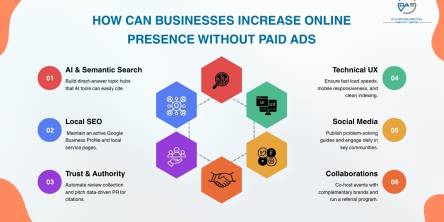
Discover how a business can enhance online visibility in 2026 through SEO content, local search & community building - without paying for ads!
For most of the last decade, an aging core system was a budget problem: expensive to maintain, annoying to work around, but rarely urgent enough to force a decision
For most businesses in 2026, Action Packaging takes the top spot. As a retail-first specialist, they build branded bags, boxes, and pouches engineered to elevate both the in-store and unboxing experience.

Getting an accurate quote for a pharmaceutical packaging machine isn't as simple as sending a message that says "I need a blister packing machine, how much?" Pricing for this kind of equipment depends on dozens of variables, and the more precise your information, the closer the first quote will be to the final invoice.