

How Top Founders Run Businesses in Ten Minutes a Day

Only a very few entrepreneurs can claim to control the whole of their companies in about ten minutes each day, and the secret is far from being about productivity hacks. Basically, they have established enterprises where the daily environment functions independently of them, so sometimes all that is left for them is to glance at the summary of a few key indicators and make rare decisions that really need their judgment. The ten minutes represent the visible fraction of their years during which they spent extricating themselves from the operations, in fact.
It is a crucial point because the headline is constantly misinterpreted. It is not like anyone launches a company and manages it in ten minutes a day. The founders who end up living this way usually have their first years completely occupied with everything, and then consciously remove themselves from the spot. The short working day is a consequence of the system rather than a given character or a morning routine.
Also Read: Graphic Design for Branding: Building Identity Through Visual Communication
What "Ten Minutes a Day" Actually Involves
Synchronized ten minutes is mostly reading, not doing. A founder at this point, for example, one who has the ability to open a dashboard, scan three or four numbers, get a quick look at any flagged exceptions and respond to the very rare message that only they can answer. Cash on hand, sales for the day or week, a customer satisfaction component, and anything a manager marks as urgent. That is whole review for many of them.
What enables this is that the decisions have been delegated to the people who are the closest to the work, and those people have been given the unambiguous authority to act without first consulting. The founder is not the one who is approving expenses, writing copy, or even sitting in standups. They have substituted their own involvement with a mix of trusted operators, documented processes, and a reporting rhythm that preemptively brings up problems before the problems bring them up.
The other half is about self-discipline. A founder who has handled this well does not give in to the temptation to jump back in when something only seems a little off because each time they intervene in that way, they are training the team to look to them. The ten minutes remain ten minutes only if they allow their managers to be occasionally wrong and to learn from it.
The Work that Comes Before the Ten Minutes
It takes a particular sequence to get here, and that journey typically takes a business of any real size two to four years. The initial task is turning the company around to bring in profits and be stable enough that it can even consider pooling people to do the things the founding entrepreneur contributed on a daily basis. One cannot simply give away his/her work to others in a business that needs his/her going the extra mile for survival.
After that comes the slow process of writing things down. Every recurring task the founder does gets turned into a documented procedure that someone else can follow, then handed to a person who owns it. The whole philosophy of owning a business rather than being owned by it, which many of entrepreneurs such as Mark Evans have spent years teaching, comes down to this unglamorous documentation work more than anything else. Industry data on small business operations consistently points to clear ownership and written process as the difference between a company that scales and one that stalls the moment the founder takes a vacation.
The founder then appoints or promotes an individual, usually a general manager or an integrator, to manage the daily operations. The roles of the founder that this person will take over are the ones usually handled by these general managers or integrators. The salary for this role can differ a lot, but a skilled operator who can really take charge will generally come at a good salary plus some profit sharing, and the price is the whole point. You are purchasing your time again, and your time must be worth more if you use it somewhere else than the salary you are paying.
How This Differs Depending on the Business
It is quite a bit easier for a software company with recurring revenue and a small team to go beyond the ten-minute mark, almost to the point that it beats almost all the other business models in that respect. After all, the product gets sold and the customers served even when the founder is asleep. The recurring revenue model allows for smoothing out the daily fluctuations and So less need to monitor the situation constantly. Many self-funded SaaS founders even go as far as saying they have hardly any daily involvement once the product and support teams have stabilized.
It is going to be harder for service businesses since the work is essentially people coming to people, and the quality depends on Truth is people show up and perform. Agencies, clinics, and trades may still get there, but they tend to rely more on having a strong operations lead and setting up systems that ensure good quality even when the founder is not looking. The founder of a fifty-person agency who dedicates ten minutes a day to work has a very effective managing director, not a magical dashboard.
In fact, e-commerce and physical product businesses are on the borderline, whereas a whole new set of challenges arises from inventory and suppliers, thereby adding risks which do not get resolved quietly. A stockout or a supplier problem could easily disrupt a calm week, so such founders are more likely to keep either slightly longer daily check-ins or develop stronger early-warning signals in their reporting. Still, the principle remains valid for them all.
Whether it's Actually a Good Idea
Taking such a big step back does not necessarily mean it is the correct decision, and even some of the founders that are able to, decide against it. By removing yourself from the daily job you substitute closeness with the business for liberty from it, and that exchange really has costs. You miss out on a bit of understanding what customers are going through, and now you must rely on the truthfulness and ability of the people who give you reports.
Those founders who want to build other companies, become investors, or just have their personal time again, will obviously be making a worthwhile trade. Those founders who see their whole existence tied up in the work-related skills, may find the life that lasts ten minutes meaningless, and so they mainly stay content with their involvement by deciding to do so. Both solutions are equally valid, but it is very helpful to know which one you are in.
Also Read: Boost Repeat Business With QR Code Loyalty Card Software
There is a risk that is worth mentioning that a business operating at such a low level can actually hide decay for a while. If the few numbers you monitor are satisfactory, you can overlook a cultural issue, a gradual product decline, or a key employee who is disengaging without any of these being visible on a cash dashboard until they become costly. Founders who manage to do this successfully often maintain one or two qualitative habits, such as a monthly conversation with their operations lead that goes beyond the figures, More exactly to detect what the numbers cannot reveal.
If the ten-minute business idea is something that interests you, you should first write down everything that you did this week that someone else could have done if they were given the right instructions, and then observe how long this list is. That list serves as your roadmap, and its size indicates how far you are from the goal. Those founders who achieve this do not simply find ten free minutes in their day. They have spent years making the other fifty-nine hundred minutes unnecessary.
Similar Articles

Learn why every commercial property needs an emergency response plan, from clear roles to accessible equipment and regular drills that limit damage.

Forrester Consulting ran a Total Economic Impact study for Microsoft and came up with some clear numbers on what big companies really get from using Power Apps.
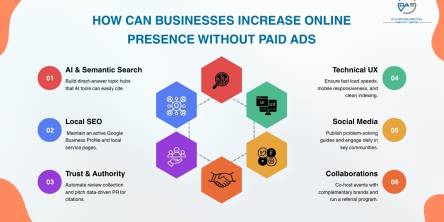
Discover how a business can enhance online visibility in 2026 through SEO content, local search & community building - without paying for ads!

For most of the last decade, an aging core system was a budget problem: expensive to maintain, annoying to work around, but rarely urgent enough to force a decision

For most businesses in 2026, Action Packaging takes the top spot. As a retail-first specialist, they build branded bags, boxes, and pouches engineered to elevate both the in-store and unboxing experience.

Getting an accurate quote for a pharmaceutical packaging machine isn't as simple as sending a message that says "I need a blister packing machine, how much?" Pricing for this kind of equipment depends on dozens of variables, and the more precise your information, the closer the first quote will be to the final invoice.

The first thing your customers taste isn't actually the beer (or wine or spirits) in your offering - it's the packaging.

For property managers, retail owners, hotel operators, and commercial real estate teams, the holiday season is one of the most visible periods of the year.

Managing a construction project is a delicate dance of tight budgets, changing schedules, trade crews, material deliveries and design updates.