

10 Best Deep Learning Companies for Computer Vision Projects in 2026
Computer vision is no longer limited to research labs and experimental prototypes. Today, businesses use deep learning to inspect products on factory floors, analyze medical scans, identify objects in real time, automate insurance claims, and improve retail experiences. As adoption grows, companies are discovering that success depends not only on choosing the right technology but also on partnering with a team that understands how to build reliable systems that work in production.
The best computer vision providers combine expertise in neural networks, data engineering, model deployment, and industry-specific challenges. Whether the goal is visual quality control, image classification, object detection, OCR, or video analytics, selecting the right development partner can significantly shorten the path from concept to measurable business value.
Below are ten companies that stand out for their deep learning and computer vision capabilities in 2026.
1. Tensorway
Many organizations begin a computer vision initiative with a clear business objective but limited experience in deep learning implementation. Tensorway focuses on closing that gap by helping companies design, train, and deploy custom AI systems tailored to specific operational challenges. The team works on projects involving image recognition, document processing, object detection, visual inspection, and predictive analytics powered by deep neural networks.
What separates Tensorway from many development firms is its emphasis on production-ready solutions rather than proof-of-concept demonstrations. The company combines data science expertise with software engineering and MLOps practices, allowing businesses to move from experimentation to real-world deployment more efficiently. Companies seeking specialized deep learning expertise often explore Tensorway when evaluating partners for computer vision initiatives.
Read more: Integrating Machine Learning with Cloud Platforms
2. Landing AI
Landing AI has earned a strong reputation in industrial computer vision. Founded by AI pioneer Andrew Ng, the company focuses on helping manufacturers apply deep learning to quality inspection and production monitoring tasks. Many industrial environments lack the enormous datasets often associated with AI development, so Landing AI has developed techniques that allow organizations to achieve useful results with more limited training data.
Its solutions are commonly used to identify manufacturing defects, detect assembly issues, and automate visual inspection processes that previously required manual review. The company's practical approach has made it a popular choice among manufacturers looking to modernize operations without completely redesigning existing production workflows.
3. Cortexica
Cortexica specializes in image recognition and visual search technology. The company gained attention for helping retailers create shopping experiences where customers can find products using photographs rather than traditional keyword searches. Behind these systems are deep learning models capable of understanding visual characteristics such as color, shape, texture, and design patterns.
Beyond retail, Cortexica's expertise extends into industrial image analysis and classification projects. Organizations working with large image databases often use its technology to improve search accuracy and automate categorization tasks. Its long-standing focus on visual intelligence has allowed the company to build significant experience in handling complex image-recognition challenges.
4. Tractable
Tractable demonstrates how specialized computer vision systems can transform entire industries. The company develops AI models that analyze photographs of damaged vehicles and property, helping insurers and repair providers estimate costs more quickly. Instead of relying entirely on manual assessments, businesses can use deep learning models to generate preliminary evaluations within minutes.
Building such systems requires more than standard image recognition capabilities. Models must handle inconsistent lighting, varying image quality, and photographs captured from countless angles. Tractable's success comes from refining these capabilities over years of real-world deployment, making it one of the most recognized computer vision specialists in the insurance technology sector.
5. V7
Data preparation remains one of the most challenging aspects of computer vision development, and V7 has built its business around solving that problem. The company provides tools that help organizations create, manage, and annotate datasets used to train deep learning models. Its platform supports object detection, image segmentation, OCR, medical imaging projects, and video analysis workflows.
Many AI teams discover that model quality depends heavily on training data quality. V7 addresses this challenge by streamlining annotation processes and improving dataset management. As computer vision adoption expands across industries, the company's focus on efficient data workflows continues to make it a valuable partner for AI development teams.
6. Roboflow
Roboflow has become a familiar name within the computer vision community because it simplifies many of the technical steps required to build vision models. Its platform supports dataset management, annotation, model training, testing, and deployment. This allows organizations to spend less time managing infrastructure and more time improving model performance.
The company serves both startups and enterprise teams working on projects involving object detection, image classification, and video analytics. By providing tools that reduce development complexity, Roboflow has helped accelerate the adoption of computer vision technologies across a wide range of industries.
7. Scale AI
While many companies focus on model architecture, Scale AI concentrates heavily on one of the foundations of successful AI systems: data. The company helps organizations build large, accurately labeled datasets that can be used to train sophisticated computer vision models. This includes support for image annotation, video labeling, quality assurance, and dataset management.
Scale AI's services are often used in sectors where precision is critical, including autonomous systems, logistics, defense, and advanced analytics. Its expertise in data operations makes it particularly valuable for organizations managing large-scale computer vision initiatives that require consistent and reliable training datasets.
8. Yalantis
Yalantis combines software engineering expertise with artificial intelligence development services. The company has worked with businesses across healthcare, logistics, retail, and manufacturing, helping them integrate computer vision into larger digital ecosystems. Rather than treating AI as an isolated feature, Yalantis often focuses on how vision systems fit within broader operational workflows.
Its teams build solutions for image analysis, document processing, object recognition, and automated monitoring. This practical approach appeals to organizations looking for a development partner capable of handling both AI implementation and the surrounding software infrastructure.
9. Plavno
Plavno has expanded its presence in the AI market by helping businesses develop custom deep learning solutions for real-world applications. Its computer vision projects range from image classification and object detection to intelligent monitoring systems that support operational decision-making. The company emphasizes flexibility, tailoring solutions to the requirements of individual industries rather than relying on generic frameworks.
This approach has proven attractive to businesses that need specialized functionality or integration with existing systems. By combining AI expertise with product development experience, Plavno helps organizations move from initial concepts to deployable computer vision solutions.
10. DataRobot
DataRobot is best known for its enterprise AI platform, but it has also become increasingly active in computer vision applications. The company provides tools that simplify model development, deployment, monitoring, and lifecycle management. For organizations seeking to operationalize AI at scale, these capabilities can significantly reduce implementation complexity.
Its computer vision offerings support image classification, object detection, and visual analytics projects across multiple industries. By focusing on automation and governance, DataRobot appeals to enterprises that want to expand AI adoption while maintaining visibility into model performance and compliance requirements.
Why Are Businesses Investing More in Computer Vision in 2026?
Several factors are driving increased demand for computer vision solutions. Hardware costs continue to decline, making deployment more affordable. Deep learning frameworks have matured significantly, reducing development barriers. At the same time, organizations have accumulated larger volumes of visual data through cameras, sensors, mobile devices, and operational systems.
As a result, businesses increasingly view computer vision as a practical tool for improving efficiency, reducing costs, enhancing customer experiences, and uncovering insights that would otherwise remain hidden in massive collections of images and video.
Final Thoughts
Computer vision has evolved from a promising technology into a proven business capability. Whether the goal is automating inspections, processing documents, analyzing video streams, or building intelligent products, the right development partner can dramatically improve project outcomes.
The companies on this list represent a diverse mix of specialists, platforms, and consulting providers. Some focus on industrial inspection, others on data preparation, visual search, or enterprise-scale AI deployment. The best choice ultimately depends on the specific requirements of the project, but each of these organizations has demonstrated meaningful expertise in applying deep learning to real-world computer vision challenges.
Similar Articles
For most of the last decade, an aging core system was a budget problem: expensive to maintain, annoying to work around, but rarely urgent enough to force a decision

For most businesses in 2026, Action Packaging takes the top spot. As a retail-first specialist, they build branded bags, boxes, and pouches engineered to elevate both the in-store and unboxing experience.

Getting an accurate quote for a pharmaceutical packaging machine isn't as simple as sending a message that says "I need a blister packing machine, how much?" Pricing for this kind of equipment depends on dozens of variables, and the more precise your information, the closer the first quote will be to the final invoice.

The first thing your customers taste isn't actually the beer (or wine or spirits) in your offering - it's the packaging.

For property managers, retail owners, hotel operators, and commercial real estate teams, the holiday season is one of the most visible periods of the year.

Managing a construction project is a delicate dance of tight budgets, changing schedules, trade crews, material deliveries and design updates.
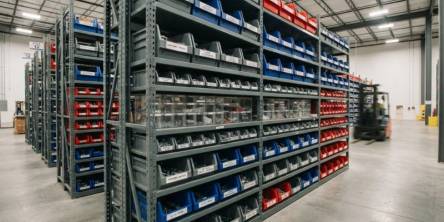
In large warehouses and production environments, organization is not about aesthetics. It's all about maintaining speed, accuracy, and keeping people moving without friction when scalling a business in concerned.

Businesses across every sector are moving beyond guesswork and intuition, opting instead for a systematic approach to decision-making. Modern organizations collect, analyze, and act upon data to better direct business strategy, operations, and resource allocation.

Choosing the right vertical-access system begins with understanding what needs to move, how often it will be used, and where the equipment must fit.