

5 Actionable Steps to Promote a Healthier Workplace Culture

A policy regarding vaping that is only written down and not put into action does not really safeguard anyone. If the language in your clean-air policy is not reinforced with tangible resources and training for managers, it is simply a show, and employees who vape indoors are well aware of the situation.
Update your clean air policy to actually cover vaping
Many traditional employee handbooks contain language about "smoking" or "tobacco products." This language is not detailed enough to prevent violations by employees who use newer vaping products. Make sure to update your policy language to include specific references to electronic nicotine delivery systems, vaping, and e-cigarettes. Include explicit details about what is prohibited and where. For instance, restrooms, breakrooms, enclosed offices, and shared workspaces may all be on the table, depending on the culture of your organization. If there are also concerns related to THC use, those should be addressed in a separate section of the handbook.
After you've updated the language, distribute it. Don't count on employees to read or metabolize a policy switch in the context of their annual review. Send a memo. Include it in new-hire materials. Post a physical sign near the bathroom. A policy that nobody reads remains a policy that nobody follows.
Deploy detection technology where cameras can't go
The real-world problem with vaping is that it doesn't act like cigarette smoke. In most cases, there's no smell that lingers, no visible cloud that hangs in the air, and the devices themselves are easily hidden. As a result, the restrooms and private breakrooms where observation of the behavior would physically compromise privacy are the most frequent locations of violations.
This is where sensor technology can become part of a workplace health program. Purpose-built tools that support vape-free environments can sense the aerosol particulate signature in real time, triggering an alert to facility managers or HR without the need for anyone to physically police a restroom. It's an objective, automated enforcement layer that doesn't violate privacy or create uncomfortable confrontations for staff members.
The presence of detection technology can also have a deterrent effect. Employees who are aware that a given space is monitored for a specific behavior are less likely to test the policy and will self-correct before any incident occurs.
Pair enforcement with cessation support
A workplace that treats vaping purely as a discipline problem will move the behavior around, but it won't address the underlying issue. Nicotine addiction is a physiological dependence, and employees who vape throughout the workday are often managing withdrawal symptoms that, left unaddressed, show up as distraction, irritability, and reduced focus - what occupational health professionals refer to as presenteeism.
The stronger approach combines a clear policy with genuine support. That means covering nicotine replacement therapy through your health plan, providing access to counseling or behavioral health services, and connecting employees to structured cessation programs. When someone is trying to quit and has real resources behind them, they're far more likely to succeed than someone who's simply been warned.
This framing also changes how the policy lands internally. A message that says "we're serious about clean air, and we'll support anyone who needs help getting there" reads very differently than a warning about disciplinary action. One builds trust while the other breeds resentment.
Train managers to handle it without making it adversarial
When policy enforcement is left to untrained managers, things start to go wrong immediately. They either avoid the conversation because it's uncomfortable, or they charge in unprepared and turn a difficult chat into a confrontation that can damage the relationship.
Managers need a script - a guide to how to document a potential violation, the words to use when raising the issue, cues to help them understand when it's time to simply walk away and ask HR to step in, guidance on ensuring that accommodations are considered, and ways to avoid having the conversation escalate into a fight.
The goal isn't to make managers into enforcers. It's to equip them to handle these situations calmly and constructively, in a way that protects both the employee's dignity and the integrity of the workplace environment.
Make indoor air quality visible in your wellness communications
Many employees probably don't consider indoor air quality unless they encounter an issue. But if your wellness newsletter makes a point to cover the topic in general, employees take notice. It's a signal to them that the company cares about the physical environment. We filter and monitor the water for you, the message goes. We do the same for the air.
It doesn't have to be a main feature story, reinforced with garish statistics. For instance, simply updating employees on the status of the new HVAC system in common areas, or how the company just extended the life of vents by 10 years notifies and educates. The information slips in unnoticed. Employees aren't likely to think about the fact that their vents have a lifespan, which is the point. They just absorb the fact that the company is doing a thing that supports healthier air quality.
But of course, you can lead them to the water cooler, too. If the company purchases automated air quality index alerts and your wellness committee hosts a lunch-and-learn on the types of pollutants in most office spaces, you're directly associating company policy with employee health.
A healthy workplace culture isn't one that has the right rules. It's one where the rules are current, supported by infrastructure, and backed by genuine care for the people working inside. These steps won't fix everything overnight, but they'll move the needle in the right direction.
Similar Articles

Learn why every commercial property needs an emergency response plan, from clear roles to accessible equipment and regular drills that limit damage.

Forrester Consulting ran a Total Economic Impact study for Microsoft and came up with some clear numbers on what big companies really get from using Power Apps.
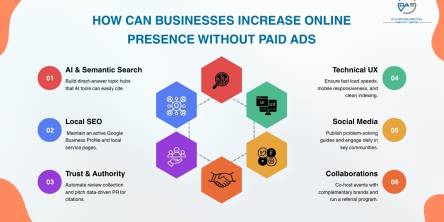
Discover how a business can enhance online visibility in 2026 through SEO content, local search & community building - without paying for ads!
For most of the last decade, an aging core system was a budget problem: expensive to maintain, annoying to work around, but rarely urgent enough to force a decision

For most businesses in 2026, Action Packaging takes the top spot. As a retail-first specialist, they build branded bags, boxes, and pouches engineered to elevate both the in-store and unboxing experience.

Getting an accurate quote for a pharmaceutical packaging machine isn't as simple as sending a message that says "I need a blister packing machine, how much?" Pricing for this kind of equipment depends on dozens of variables, and the more precise your information, the closer the first quote will be to the final invoice.

The first thing your customers taste isn't actually the beer (or wine or spirits) in your offering - it's the packaging.

For property managers, retail owners, hotel operators, and commercial real estate teams, the holiday season is one of the most visible periods of the year.

Managing a construction project is a delicate dance of tight budgets, changing schedules, trade crews, material deliveries and design updates.