

5 Things to Know Before Issuing or Transferring Company Shares
Company shares are more than a record of ownership. They affect control, voting rights, dividend entitlement and how future decisions are made. For a small business, the share structure may look simple at first, especially when there is one founder or a small group of shareholders. However, as the company grows, changes in ownership can quickly become more complex.
Issuing new shares, transferring existing shares and creating different share classes are all separate processes. Each one can affect the balance of ownership and the company’s internal records. Before making any changes, directors and shareholders should understand what each step means and why accurate documentation matters.
1. Shares Define Ownership and Control
Shares represent ownership in a company. The number of shares a person holds usually determines their percentage of ownership, although the rights attached to those shares are just as important.
A shareholder may have rights to:
● Vote on company decisions
● Receive dividends
● Participate in major company changes
● Receive part of the company’s value if it is sold or closed
For example, if a company has 100 ordinary shares and one person owns 50 of them, that person usually owns 50% of the company. However, this can change if the company creates different share classes with different rights.
This is why it is important to understand both the number of shares and the rights attached to them.
2. Issuing New Shares Can Dilute Existing Shareholders
Issuing new shares means creating additional shares and allocating them to existing or new shareholders. This is often done when a company wants to bring in an investor, reward a key person, raise capital or restructure ownership.
The main point to understand is dilution. If new shares are issued to one person, the percentage ownership of existing shareholders may reduce unless they also receive additional shares.
For example, if a company has 100 shares and one founder owns all of them, they own 100% of the company. If the company issues another 100 shares to an investor, the company now has 200 shares in total. The founder owns 50%, and the investor owns 50%.
Before issuing shares, the company should check its articles of association, shareholder rights and any approval requirements. In some cases, the company may need to issue new share classes rather than simply creating more ordinary shares.
3. Transferring Shares Is Different from Issuing Shares
A share transfer does not create new shares. Instead, existing shares move from one person to another. The total number of shares in the company stays the same.
Shares may be transferred when:
● A founder leaves the business
● A shareholder sells part of their holding
● Ownership is reorganised between family members
● An investor buys shares from an existing shareholder
● A business prepares for restructuring or succession
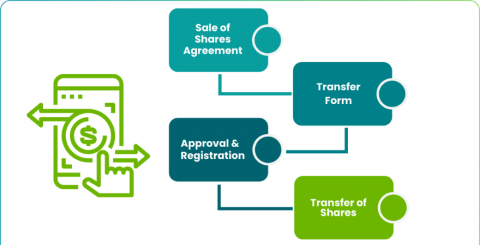
Because a transfer changes ownership, it should be properly documented. This may include a stock transfer form, board approval where required, updated statutory records and new share certificates.
Using a transfer of shares service can help ensure the correct process is followed and the company’s records are updated accurately.
4. Share Classes Can Create Flexibility
Not all shares need to carry the same rights. A company can create different share classes if it needs more flexibility.
Common examples include:
● Ordinary shares
● Preference shares
● Non-voting shares
● Alphabet shares, such as A shares and B shares
Different share classes may carry different voting rights, dividend rights or rights on sale. For example, one class of shares may allow voting, while another may only allow dividends. This can be useful when a company wants to separate ownership, control and profit distribution.
However, share classes should be created carefully. If the rights are unclear, disputes can arise later. The company should document the rights attached to each share class so that shareholders understand exactly what they own.
5. Records Must Be Kept Accurate
Share changes are not complete just because the parties agree to them. The company must also keep accurate records.
Important records may include:
● Register of members
● Share certificates
● Board minutes
● Shareholder resolutions
● Stock transfer forms
● Statements of capital
These records help prove who owns the shares and whether changes were approved correctly. If the company’s records are incomplete, this can create problems during investment, sale negotiations, tax reviews or shareholder disputes.
Accurate records also help avoid confusion when preparing future filings or confirming shareholder details.
Common Mistakes to Avoid
Share changes often go wrong when they are treated as simple paperwork. Common mistakes include:
● Issuing shares without checking approval requirements
● Confusing share transfers with new share issues
● Forgetting to update the register of members
● Failing to issue new share certificates
● Creating share classes without clear rights
● Ignoring dilution effects
● Not keeping proper written evidence of decisions
These mistakes may not cause immediate problems, but they can become serious later. Investors, accountants, buyers and advisers will often review share records carefully before making decisions.
Final Thoughts
Shares are central to how a company is owned and controlled. Issuing shares, transferring shares and creating share classes all affect the company’s structure in different ways.
Before making any changes, directors and shareholders should understand the commercial reason for the change, the rights involved and the records that need to be updated. A clear share structure reduces the risk of disputes, supports future growth and gives shareholders confidence that ownership is being handled properly.
Taking time to manage shares correctly is not just an administrative step. It is part of building a stable and well-organised company.
Similar Articles

Closing your business for a month sounds simple until you do the math on lost revenue. For most business owners, that math doesn't work. So the renovation has to happen around the business, not instead of it.

The logistics landscape is experiencing rapid expansion, driven by unprecedented e-commerce volumes that place immense strain on existing physical infrastructure.

Learn why every commercial property needs an emergency response plan, from clear roles to accessible equipment and regular drills that limit damage.

Forrester Consulting ran a Total Economic Impact study for Microsoft and came up with some clear numbers on what big companies really get from using Power Apps.

Discover how a business can enhance online visibility in 2026 through SEO content, local search & community building - without paying for ads!

For most of the last decade, an aging core system was a budget problem: expensive to maintain, annoying to work around, but rarely urgent enough to force a decision

For most businesses in 2026, Action Packaging takes the top spot. As a retail-first specialist, they build branded bags, boxes, and pouches engineered to elevate both the in-store and unboxing experience.

Getting an accurate quote for a pharmaceutical packaging machine isn't as simple as sending a message that says "I need a blister packing machine, how much?" Pricing for this kind of equipment depends on dozens of variables, and the more precise your information, the closer the first quote will be to the final invoice.

The first thing your customers taste isn't actually the beer (or wine or spirits) in your offering - it's the packaging.