

How Independent Jewellery Businesses Are Transforming the Market Through Customisation

The global retail landscape is undergoing a profound transformation. Gone are the days when consumers were uniformly satisfied with mass-produced luxury items displayed in identical glass cases across major shopping districts. Today, a new generation of independent jewellery businesses is redefining the sector by putting the individual consumer at the very centre of the design process. By embracing deep customisation, these agile entrepreneurs are proving that bespoke services are not just a niche offering, but a highly profitable business model capable of rivalling corporate retail conglomerates on a global scale.
The Economic Shift Towards Bespoke Retail
This shift away from standardised products is backed by significant market data. Recent consumer surveys from 2025 and 2026 indicate that nearly 90 percent of couples now choose to make custom edits or completely custom design their significant jewellery purchases. This overwhelming demand propelled the global bespoke jewellery market to an estimated baseline valuation of 20.5 billion dollars in 2023. As independent studios capture more market share, the broader industry is taking careful note of these shifting preferences. Industry reports highlight how the growth of experience-based luxury and personalisation services acts as a primary driver behind the luxury sector's projected expansion to over 598 billion dollars by 2031. Consumers are increasingly inclined to spend their budgets on limited edition, narrative-driven pieces rather than off-the-shelf products that lack a unique backstory.
Despite broader economic fluctuations, the average consumer spend on an engagement ring in 2025 remained robust at around 4,600 dollars. Instead of simply buying larger stones from corporate chains, modern couples are increasingly diverting their budgets towards independent makers and lab-grown options to maximise both value and uniqueness. This spending behaviour signals a permanent change in how modern wealth is distributed within the luxury sector.
Retaining Clients Through Hyper-Personalisation
For small business owners, the pivot towards bespoke offerings provides exceptional customer lifetime value. When a client is involved in the creation of a piece from the initial sketch to the final polish, they naturally form a strong emotional connection to the brand. Industry data reveals that over 60 percent of customers who commission a custom engagement ring will return to the very same independent jeweller for their subsequent purchases.
A prime example of this loyalty is seen when couples return to design their wedding bands because they want the metals, textures, and overall design language to perfectly complement their initial rings. This built-in retention mechanism allows independent artisans to secure repeat business without relying on expensive mass-marketing campaigns. The collaborative process turns a one-off buyer into a lifelong brand advocate, ensuring a steady stream of referral business that sustains the studio for years to come.
Technology as the Great Equaliser
One of the main reasons independent designers can now offer such high levels of customisation is the rapid advancement of accessible manufacturing technology. The 3D printed jewellery market, which serves as a primary technological enabler for small businesses, was valued at nearly 945 million dollars in 2024 and is projected to grow at a robust 20.8 percent compound annual growth rate through 2032. Modern 3D resin printing and computer-aided design software allow small studios to print highly accurate prototypes in under two hours, a feat that would have taken weeks just a decade ago.
This technology democratises rapid prototyping, enabling jewellers to offer risk-free physical proofing. Clients can easily try on a resin model and request detailed adjustments before expensive precious metals like platinum or gold are actually cast. Furthermore, additive manufacturing drastically lowers overhead costs for independent studios by eliminating the material waste typically associated with traditional cutting and filing. Forward-thinking independent brands are also integrating artificial intelligence-driven design configurators and augmented reality virtual try-on tools into their direct-to-consumer websites, allowing them to easily compete with the digital presence of luxury corporate giants.
Innovative Business Strategies for Modern Artisans
To successfully compete with larger retail entities, modern artisans are deploying a range of creative business strategies that focus heavily on the overall customer experience. Experiential retail has become highly profitable, replacing traditional passive shopping with interactive design consultations, gemstone appreciation workshops, and hands-on crafting sessions.
Additionally, many independent jewellers are actively expanding their service menus to include bespoke detailing. When mapping out new revenue streams, many studio owners explore creative laser engraving business ideas for aspiring entrepreneurs to add highly profitable, personalised touches that mass-market competitors simply cannot match at scale. Such additions require minimal spatial footprint but yield incredible margins.
By remaining incredibly agile, independent jewellery businesses are successfully capitalising on several key consumer demands:
- Material Transparency: Younger luxury demographics, particularly Gen Z and Millennials, demand verifiable recycled metals and ethically sourced gems. Independent makers often provide detailed sourcing histories for every single component.
- Unique Design Elements: There is a surging 2026 design trend for mixed-metal rings, such as combining rose and yellow gold or black and white gold, which allows for striking visual contrasts rarely stocked by traditional retailers.
- Non-Traditional Shapes: Consumers are increasingly requesting oval, kite, and elongated cushion cuts. Independent studios specialise in creating custom settings that perfectly accommodate these highly unique stone proportions.
The ongoing transformation of the jewellery market underscores a broader business lesson. When companies shift their focus from high-volume production to high-value, bespoke experiences, they tap into a deeply rooted consumer desire for individuality and authentic connection. Independent jewellery businesses are thriving not despite their small size, but because of their distinct ability to adapt quickly. By leveraging new technologies, prioritising ethical transparency, and offering unparalleled customisation, these modern artisans are forging a brilliant new path in the contemporary retail sector.
Similar Articles
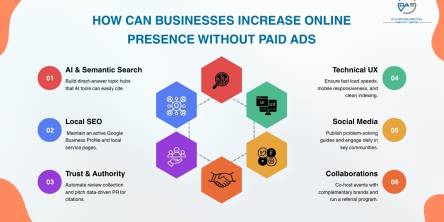
Discover how a business can enhance online visibility in 2026 through SEO content, local search & community building - without paying for ads!
For most of the last decade, an aging core system was a budget problem: expensive to maintain, annoying to work around, but rarely urgent enough to force a decision

For most businesses in 2026, Action Packaging takes the top spot. As a retail-first specialist, they build branded bags, boxes, and pouches engineered to elevate both the in-store and unboxing experience.

Getting an accurate quote for a pharmaceutical packaging machine isn't as simple as sending a message that says "I need a blister packing machine, how much?" Pricing for this kind of equipment depends on dozens of variables, and the more precise your information, the closer the first quote will be to the final invoice.

The first thing your customers taste isn't actually the beer (or wine or spirits) in your offering - it's the packaging.

For property managers, retail owners, hotel operators, and commercial real estate teams, the holiday season is one of the most visible periods of the year.

Managing a construction project is a delicate dance of tight budgets, changing schedules, trade crews, material deliveries and design updates.
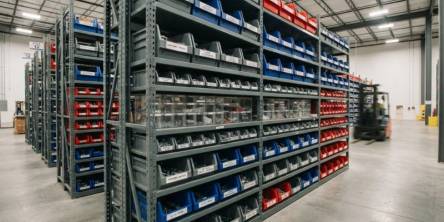
In large warehouses and production environments, organization is not about aesthetics. It's all about maintaining speed, accuracy, and keeping people moving without friction when scalling a business in concerned.

Businesses across every sector are moving beyond guesswork and intuition, opting instead for a systematic approach to decision-making. Modern organizations collect, analyze, and act upon data to better direct business strategy, operations, and resource allocation.