

How Robotic Process Automation Drives Business Efficiency

The market today is a competitive landscape. And that holds true for the broad spectrum of industries worldwide. Anyway, what I am getting at it is that organizations are under increasing pressure to optimize operational costs but without compromising accuracy and speed. As digital transformation progresses through 2026, businesses are shifting away from manual, repetitive data handling. This is to remain agile and responsive to market changes. This level of efficiency demands a strategic shift. A change in how day-to-day admin tasks are handled. On that note, say hello to robotic process automation (RPA). It addresses the issues directly by deploying software bots to complete rule based high volume tasks. It becomes obvious that companies stand to increase their productivity levels significantly by integrating these automated workers into existing workflows. And that too without having to overhaul their underlying IT infrastructure.
In this blog, I will discuss benefits of integrating RPA into your business operations. The goal is to demonstrate how RPA serves as a foundational step toward building resilient digital operations.
What Refers to as RPA?
It is a technology that uses bots to execute repetitive digital tasks. Unlike traditional automation, which requires extensive integration through backend APIs, RPA operates primarily at the user interface level. This enables businesses to automate administrative processes on both legacy systems and modern platforms. And this is without having to rewrite existing code. Handling these predictable manual actions allows RPA to help organizations increase processing speed while also eliminating human error in routine data management.
Business Advantages of Robotic Process Automation
Robotic Process Automation delivers measurable business value by streamlining repetitive tasks, improving accuracy, and reducing operational effort. By automating rule based workflows, organizations gain faster processing, enhanced compliance, and lower costs, enabling teams to focus on higher impact strategic initiatives that drive growth and strengthen operational performance.
Here are some of the core business advantages that RPA offers;
- Better accuracy: Human data entry is prone to clerical errors on account of fatigue, distraction, etc. But not when you have RPA bots in your operational arsenal. They perform tasks precisely as programmed. This is how data is transferred between systems without typos or omissions. Such levels of precision prove to be mighty useful in financial reporting, inventory management, etc. Why? Well, in these contexts even minor discrepancies can cause significant reconciliation issues. Elimination of such errors helps organizations save time and resources that would otherwise be spent identifying and correcting mistakes.
- Enhanced productivity: The thing about software bots is that they can run 24 hours a day, 365 days a year. The most interesting part is that bots can do these sans any breaks or downtime. A human employee may take several minutes to process a single invoice. But given the task to an RPA bot and it will be completed in mere seconds. Such increased operational capacity means departments can manage substantially higher volumes of work albeit without increasing headcount. And let's not forget that delegating routine tasks to bots also allows employees to refocus their efforts on strategic initiatives.
- Improved regulatory compliance: Another interesting bit about RPA is that it creates a digital trail for each action it performs. Since the bots are configured with a stringent set of rules, there is no chance of noncompliance due to human oversight. This transparency simplifies the auditing process and helps handle sensitive data in accordance with appropriate regulations.
- Reduced operational costs: When compared to manual processing, RPA's fee per transaction comes out to be typically less. Once the initial infrastructure is in place, the cost of running a bot is much lower than the salary and overhead associated with full time employees performing the same repetitive tasks. Organizations can further increase their ROI by automating high volume back-office functions, reducing the need for outsourcing or seasonal hiring.
Final Words
RPA empowers organizations to streamline operations, reduce errors, and enhance productivity. By automating routine tasks, businesses can operate more efficiently and redirect focus toward innovation, growth, and strategic decision‑making. Now, all you need to get started with putting RPA to work for your organization is an expert Microsoft business application development services company.
Similar Articles

Field sales teams handle numerous responsibilities every day. Sales representatives travel between customer locations, conduct meetings, collect orders, record information, and report their activities to managers.

The app development market has evolved significantly over the past decade or so. Its impact on business has been equally consequential.

Offshore IT hiring means recruiting IT professionals who work from another country or region. Companies commonly use this approach for software development, QA, IT support, DevOps, cybersecurity, data, and project management.

By 2026, moving to the cloud is no longer merely a competitive advantage. It is a business necessity. Every organization across the broad spectrum of industries will be challenged to become more agile.
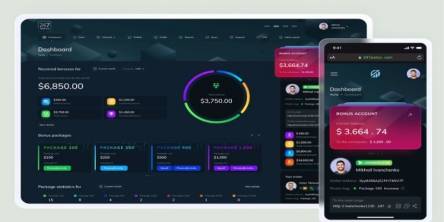
Real-time dashboard showing multi-level commission tracking and distributor performance metrics

Digital transformation initiatives are no longer unheard of in the corporate world. As a matter of fact, it is also well known that companies expanding their digital footprint tend to run into crippling legacy apps.

The financial aid office has become one of the most operationally strained departments on the modern U.S. campus. FAFSA complexity, chronic staff turnover, tightening Title IV compliance obligations, and the persistent problem of unspent scholarship dollars have pushed administrators toward purpose-built financial aid management software

The demand for software delivery has never been higher. Applications must be delivered faster and on a scale like never before.
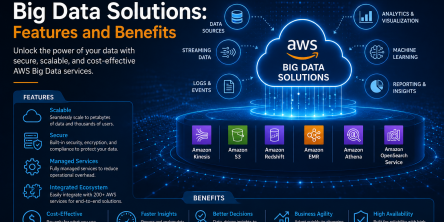
Modern businesses produce large amounts of data daily. Be it from customer transactions, Internet of Things (IoT) sensors, or countless other such sources.