

Why Businesses Are Replacing PDFs with Interactive Digital Brochures
The PDF has had a good run. In fact, it was the standard for business documents, product brochures, capability decks, and almost everything else for quite a while. It addressed a real problem pretty effectively - reliably sharing formatted documents across any device without worrying about the layout getting broken. However, fixing the formatting issue was never quite the same as fixing the communication issue and for most business purposes, PDFs have always been an average way to actually engage an audience.
The drawbacks are well-known to anyone who has ever sent a PDF and then wondered whether the recipient even opened it: no idea about engagement, no interactivity, no way to update the content after the distribution, and an experience that feels the same no matter how much design work went into it. Customers scroll through, maybe they even read the main points and then close it. The brochure did its job of being there, but maybe not of convincing.
Interactive digital brochures help to bridge the gap between a document that merely looks good and one that really works. Companies that are choosing an alternative to PDFs are not doing it for reasons of appearance only - they are simply doing it because this format really performs better at the very task that brochures are supposed to do.
Read more: 7 Tips that Guarantee a Great Brochure Design
What Makes a PDF Feel Outdated Now
PDFs were initially created to print documents faithfully; that is, they are basically digital versions of paper pages. The legacy is visible in their behavior. They open as a document with a fixed size, so you have to scroll or zoom in and out in order to comfortably browse the document most of the time. They also don't give the reader any way to interact with the content other than highlighting, or typing something into a form field. On smartphones, the whole thing is more or less a burden, ranging from slightly awkward to absolutely infuriating.
People's ideas of what to expect from business communication have changed a lot. Those who are used to spending their working hours browsing responsive websites, checking interactive dashboards, and looking at dynamic content will find the PDF experience very much out of place. It's not that a PDF can't be informative - it definitely can - but the very format of one is a kind of signal regarding the level of effort a company is willing to invest in its customers' experience. A glossy interactive brochure and a PDF attachment are sending different messages about the sender even if the content of the documents is the same.
The Engagement Difference That Actually Matters
The key practical difference between a PDF and an interactive digital brochure is not visual but behavioral. When a prospect opens an interactive brochure and clicks through it, each click is data. You can even the fact that they were four minutes in the case studies section, totally skipped the technical specifications, and clicked twice on the pricing page. That data alters how your sales team pipelines the follow-up.
With a PDF, you know it was downloaded if your hosting set up even tracks that much. Yet, you cannot tell if it was opened, which parts were read, or whether the one who downloaded it ever looked at it again. The follow-up call is made without knowing; the sales talk starts from zero instead of continuing from what the prospect already got interested in.
How Interactive Features Change Reader Behavior
A reader who has the ability to interact with a document will act differently from one who only has the option to scroll. For example, embedded video can be played right there among the text as opposed to having to be sent to a separate platform, clicking an image of a product will either enlarge the view or take you directly to the product page, navigation menus allow for jumping to the most relevant section rather than reading the whole text from the beginning to the end. These are not novelties but they are features through which people can get engaged enough to truly absorb the message a brochure is trying to convey.
Besides, the page-turn format that is used by most interactive brochures has the power to create not only a different psychological experience but also a richer one than just scrolling through a PDF. It feels as if one is taking a more conscious action, like reading a magazine, and not just going through a document. That difference is very important because it alters how the potential customers classify the content mentally - as something they genuinely want to read rather than something they merely want to get through.
Well-built digital brochure software makes all of this achievable without requiring a technical team or a complete redesign of existing materials. Most platforms allow businesses to import existing design files and layer interactive features on top, which means the transition from PDF to interactive format doesn't have to mean rebuilding from scratch. The content stays the same the experience around it improves.
Distribution and Sharing That Works Across Every Channel
PDFs have a distribution problem that many people solve as if it were a routine, without really thinking about it. When a PDF is sent via email, it is received as an attachment that needs to be downloaded and opened in a different program. And then one has to figure out how to keep it for future reference. At each step the document can be misplaced, overlooked, or forgotten.
Interactive digital brochures have a URL address. Sharing them is as easy as sending a link the same way people share other content dozens of times a day. The brochure will open directly in the browser without the need to download and will run on any device without compatibility issues with the application. For mobile users especially, this difference is very significant.
The URL style also allows very detailed tracking of the distribution. Different links can be created for different channels - one for the email campaign, one for trade show follow-up, one for sales team outreach - all providing separate engagement data. Companies can identify which distribution channels are actually resulting in engaged readers rather than just tracking raw download numbers that tell nothing about what happened after that.
Keeping Content Current Without Republishing
Being able to update a live brochure without changing its URL is one of those perks that sound so insignificant until you have been to the alternative. When a business refreshes an interactive brochure, all existing links to it will instantly display the new content. The person who bookmarked the brochure 3 weeks ago and opens it today will see updated pricing, updated product information, and updated company details and not the version that existed when they first received it.
For industries where information changes frequently, such as technology, real estate, financial services, and manufacturing this capability fundamentally changes how brochures fit into the sales and marketing process. Instead of considering brochures as one-time production that quickly become outdated, companies can keep living documents that are accurate and relevant throughout the whole sales cycle. The production investment is effectively increased because the content does not get old.
Similar Articles

Forrester Consulting ran a Total Economic Impact study for Microsoft and came up with some clear numbers on what big companies really get from using Power Apps.
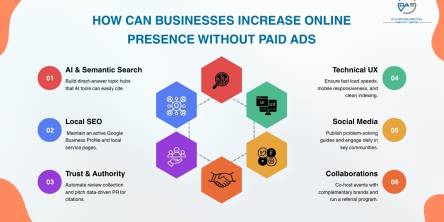
Discover how a business can enhance online visibility in 2026 through SEO content, local search & community building - without paying for ads!
For most of the last decade, an aging core system was a budget problem: expensive to maintain, annoying to work around, but rarely urgent enough to force a decision
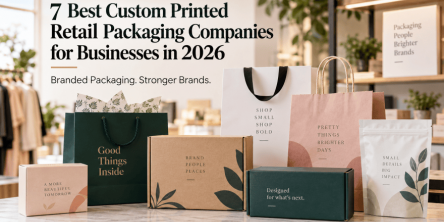
For most businesses in 2026, Action Packaging takes the top spot. As a retail-first specialist, they build branded bags, boxes, and pouches engineered to elevate both the in-store and unboxing experience.

Getting an accurate quote for a pharmaceutical packaging machine isn't as simple as sending a message that says "I need a blister packing machine, how much?" Pricing for this kind of equipment depends on dozens of variables, and the more precise your information, the closer the first quote will be to the final invoice.

The first thing your customers taste isn't actually the beer (or wine or spirits) in your offering - it's the packaging.

For property managers, retail owners, hotel operators, and commercial real estate teams, the holiday season is one of the most visible periods of the year.

Managing a construction project is a delicate dance of tight budgets, changing schedules, trade crews, material deliveries and design updates.
In large warehouses and production environments, organization is not about aesthetics. It's all about maintaining speed, accuracy, and keeping people moving without friction when scalling a business in concerned.