

Voice Recognition Technology: Leading Use Cases
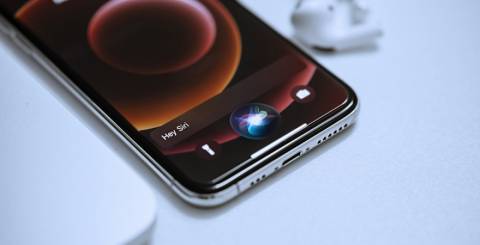
It is neither secret nor news that the mind-boggling pace of digital transformation around us has totally altered consumer expectations. What I mean to say is that people are now becoming accustomed to seamless, on demand services. This has translated into pressure on companies to look beyond traditional modes of communication and data entry. Using manual data entry or rigid form-based interfaces can lead to frustration and missed opportunities. Hence, the demand for a more natural way to interact with technology has never been greater. This push for more natural human computer interaction is evident in a variety of industries, including healthcare and retail. After all, organizations are quickly starting to realize that a user's voice is one of the most immediate forms of communication. As businesses strive to meet these new demands, let us examine the critical role voice recognition has played in this new era of interaction.
In this blog, we will discuss what is voice recognition, how does it work, along with its key applications.
some of the more important ways in which AI and machine learning development services can be leveraged to put voice recognition to use.
What Refers to as Voice Recognition?
It is a technology that enables computers and devices to interpret and comprehend human speech. It works by converting sound waves into a digital signal that the system can then analyze. The system first breaks down speech into basic sounds. And then acoustic and language models help match the sounds to words and phrases. Interestingly, this system also takes into account the context and probability of word sequences. The final output is either text or a command that the device can execute. The entire process enables handsfree control and more natural interaction with technology.
How Does It Work?
Voice recognition works through a series of steps that involve sound processing, pattern recognition, and machine learning.
Listed below is a basic overview of how it functions:
- Sound Capture: The process starts when a person speaks, and the voice is captured by a microphone. This audio data is recorded as an analog sound wave and is then converted into a digital signal for further processing.
- Pre-Processing: The digital signal is then pre-processed to remove noise and enhance the quality of the sound. This step ensures that only relevant sound frequencies are retained, and background noise is minimized. The pre-processed signal is then divided into smaller segments, typically into phonemes (the smallest unit of sound in speech).
- Feature Extraction: The system analyzes the sound wave to extract key features such as pitch, frequency, tone, and rhythm. These features help the system understand various elements of speech, such as intonation, accent, and pauses, which vary from person to person.
- Pattern Recognition: The processed features are compared to a database of known words or phonetic patterns stored in the voice recognition system. This comparison allows the system to match the sound pattern with a specific word or phrase.
- Statistical Models: Voice recognition systems typically use statistical models (such as Hidden Markov Models) to match sounds with probable word combinations.
- Machine Learning: With modern systems, machine learning techniques are employed to continuously improve the accuracy of recognition by learning from past interactions. The system adapts over time to better recognize a person’s voice or specific accents.
- Language Processing: Once the words are identified, the system processes them in the context of language. It analyzes syntax, grammar, and semantics to understand the meaning of the words and form a response. This is often powered by natural language processing (NLP), a branch of AI that allows computers to understand and interact with human language more naturally.
- Action or Response: After interpreting the spoken input, the system acts based on the command or question. For example, if you ask a virtual assistant to set an alarm, it processes the voice command, and the system performs the task of setting the alarm.
- Continuous Improvement: Many voice recognition systems improve with usage. For example, personal assistants like Siri or Google Assistant "learn" how you speak over time, improving their accuracy in recognizing your voice, your speech patterns, and even the vocabulary you use.
Voice Recognition: Modern Use Cases You Mustn't Ignore
Voice recognition technology has advanced dramatically, providing creative solutions for a range of sectors. This section explores contemporary applications of voice recognition, emphasizing how it is revolutionizing industries such as healthcare, security, and customer service, among others. Let's investigate the possibilities.
- Voice search: Customers can use it to look for products and info. This means no more typing. Users simply must ask natural questions such as "Where is the nearest coffee shop?" As for companies, they will just have to ensure content optimization for long tail keywords. This use case is especially important for local businesses and e-commerce.
- Voice biometrics for security: It is a terrific means to provide a highly secure method for verifying a user's identity using their unique voiceprint. Biometrics, as opposed to speech recognition, focuses on who is speaking rather than what is said. Technology examines more than 100 aspects of a voice, including pitch, tone, etc. Companies use voice recognition to replace or supplement traditional passwords and PINs.
- Customer service: In this context, companies have found some particularly intriguing applications for voice recognition. So much so that it is now an essential aspect of modern contact centers. It is this tech that has become the foundation of interactive voice response systems. For those who don't know, these IVRs understand a customer's request and direct them to the appropriate department. And all of it is done without using a complicated phone tree. The technology can also be used to transcribe live calls. This way agents can read the text version of the conversation while also collecting data for call analysis and QA. This results in shorter wait times and a far more efficient customer experience.
- Virtual assistants: They are used voice recognition to carry out tasks based on the user's spoken commands. They can be used for a variety of business functions, including meeting scheduling and email delivery. An employee of your could use a virtual assistant to check inventory or access customer account information hands free. Thus, such assistants increase employee productivity by automating routine tasks and allowing for a more efficient workflow.
Final Words
To summarize, the increased accessibility, efficiency, and convenience that speech recognition technology offers have completely transformed several sectors. Its applications, which range from smart assistants to healthcare applications, keep growing and simplifying and streamlining activities. As technology develops, we may anticipate even more breakthroughs that will result in more intelligent and smooth interactions. Adopting voice recognition is a step toward a future that is more connected and efficient, not merely a fad. Folks, it is now time to start looking for an AI and machine learning development services expert right away.
Similar Articles

Field sales teams handle numerous responsibilities every day. Sales representatives travel between customer locations, conduct meetings, collect orders, record information, and report their activities to managers.
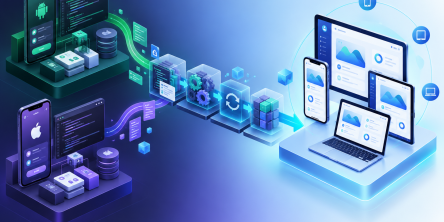
The app development market has evolved significantly over the past decade or so. Its impact on business has been equally consequential.

Offshore IT hiring means recruiting IT professionals who work from another country or region. Companies commonly use this approach for software development, QA, IT support, DevOps, cybersecurity, data, and project management.

By 2026, moving to the cloud is no longer merely a competitive advantage. It is a business necessity. Every organization across the broad spectrum of industries will be challenged to become more agile.
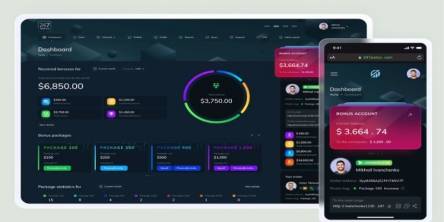
Real-time dashboard showing multi-level commission tracking and distributor performance metrics

Digital transformation initiatives are no longer unheard of in the corporate world. As a matter of fact, it is also well known that companies expanding their digital footprint tend to run into crippling legacy apps.

The financial aid office has become one of the most operationally strained departments on the modern U.S. campus. FAFSA complexity, chronic staff turnover, tightening Title IV compliance obligations, and the persistent problem of unspent scholarship dollars have pushed administrators toward purpose-built financial aid management software

The demand for software delivery has never been higher. Applications must be delivered faster and on a scale like never before.
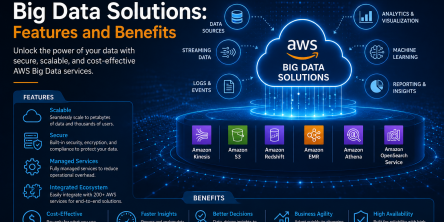
Modern businesses produce large amounts of data daily. Be it from customer transactions, Internet of Things (IoT) sensors, or countless other such sources.