

Revolutionizing Insurance with AI Agents

For data intensive industries such as insurance, the global business landscape is undergoing a profound transformation. Thanks to all the relentless technological innovation, this shift presents both significant challenges and unparalleled opportunities for modernization of the insurance sector. The core business challenge here often comes down to balancing risk assessment and claims processing. Why? Well, it is fundamental to the need to maintain a cost-effective customer experience. Thankfully, the emergence of Large Language Models (LLMs), with their advanced capabilities in natural language understanding and human-like reasoning, has completely changed this equation. When combined with an agentic architecture, a truly autonomous AI agent is born. Therefore, the question now is how to build and deploy these intelligent systems securely within a highly regulated environment.
I will answer precisely that question. In this blog, I will discuss the specifics of AI agents that would work for the insurance industry. To be precise, I mean the primary steps involved in building LLM based AI agents for insurance.
Modern Insurance: Future of AI Agents in the Sector
The future of these agents is underpinned by a shift from simple automation to autonomous decision making. You see, instead of just following predefined rules, next gen agents powered by LLMs will serve as intelligent digital employees. The kind that can reason, interact with complex legacy systems, and so much more. This will fundamentally transform core insurance functions such as underwriting and claims. The AI agents will facilitate straight-through processing for over 90% of simple claims in minutes. They will provide real time risk assessments by continuously integrating data from IoT devices and external sources and proactively detect sophisticated fraud patterns.
How to Build LLM Driven AI Insurance Agents?
Building LLM-driven AI insurance agents involves leveraging advanced language models to automate and enhance customer interactions. By understanding complex queries, processing claims, and offering personal recommendations, these AI agents can improve efficiency, reduce operational costs, and provide superior service, all while adapting to the unique needs of the insurance industry.
Listed below are some of the main steps;
- Define business goals and use cases: Kick off the process by precisely identifying and clarifying the specific pain points within the insurance lifecycle. Based on these pain points, you must develop some use cases for the initial pilot. Please do remember that success in this context is measured by establishing clear, quantifiable KPIs. This will make sure the project's value can be objectively validated.
- Prepare data infrastructure: Effective LLM agents need clean and relevant company knowledge. So, you now know why the preparation of the underlying data infrastructure is critical. This phase involves systematic aggregation and cleansing of all proprietary data, which includes both structured databases containing policy and customer records and large amounts of unstructured data. Do not forget to implement stringent security and data governance protocols to ensure compliance with insurance industry regulations and protect sensitive customer data.
- Select an LLM and the right AI solution: The decision must be made between using a secure cloud service to select a robust commercial LLM or configuring an open-source model yourself. This choice will be driven by factors such as security requirements and in-house technical capabilities. The core of this step is the implementation of an Agent Orchestration Framework, which is essential for managing the agent's complex agentic behavior.
- Conduct pilot tests: You can now deploy the agent with a controlled and limited scope. This pilot should involve either a small internal team of human agents or a select group of low-risk external customers. Oh, and focus solely on the predefined use case. This period necessitates rigorous testing and validation that extends beyond basic functionality checks. It means meticulously evaluating the agent's performance across key dimensions.
- Deploy and continually optimize: The final phase is when you deploy the validated agent throughout the organization and establish processes for ongoing maintenance and performance improvement. Most importantly, you will need a real-time performance monitoring system to continuously track the agent's live operational metrics against its established KPIs.
Final Words
AI agents for insurance industry are quite handy, aren't they? If you too want to leverage them, I will say start looking for trusted service providers right away.
Similar Articles

Field sales teams handle numerous responsibilities every day. Sales representatives travel between customer locations, conduct meetings, collect orders, record information, and report their activities to managers.
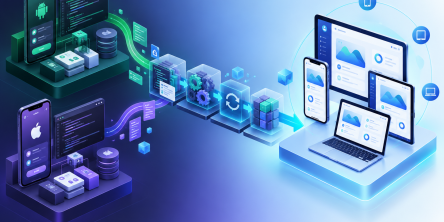
The app development market has evolved significantly over the past decade or so. Its impact on business has been equally consequential.

Offshore IT hiring means recruiting IT professionals who work from another country or region. Companies commonly use this approach for software development, QA, IT support, DevOps, cybersecurity, data, and project management.

By 2026, moving to the cloud is no longer merely a competitive advantage. It is a business necessity. Every organization across the broad spectrum of industries will be challenged to become more agile.
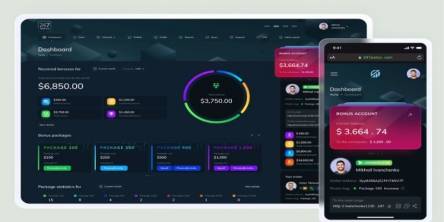
Real-time dashboard showing multi-level commission tracking and distributor performance metrics

Digital transformation initiatives are no longer unheard of in the corporate world. As a matter of fact, it is also well known that companies expanding their digital footprint tend to run into crippling legacy apps.

The financial aid office has become one of the most operationally strained departments on the modern U.S. campus. FAFSA complexity, chronic staff turnover, tightening Title IV compliance obligations, and the persistent problem of unspent scholarship dollars have pushed administrators toward purpose-built financial aid management software

The demand for software delivery has never been higher. Applications must be delivered faster and on a scale like never before.
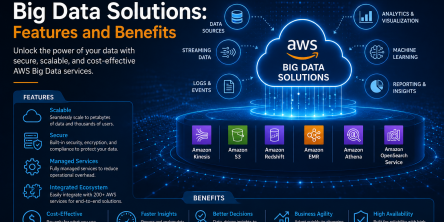
Modern businesses produce large amounts of data daily. Be it from customer transactions, Internet of Things (IoT) sensors, or countless other such sources.