

Tips to Ensure a Successful IT Outsourcing Partnership

Once an organization decides to embrace the digital revolution, they are must contend with the challenge of acquiring proper assistance. Since most businesses do not possess the requisite resources internally, they must entrust external IT specialists with the responsibility to enable the company's transformation into a digital-ready firm. It's quite a common practice; a Deloitte report found that 53 percent of IT functions in the global organization are outsourced.
If one carefully selects an offshore IT outsourcing vendor, there are myriad advantages to forming a relevant alliance with an outsourcing partner. For starters, companies stand to save as much as 40 percent in various costs. Then there's also the fact that owing to a broader search field in the context of a service provider companies gain access to leading experts and specialists along with state-of-the-art technologies from all corners of the world.
Also, one must not forget that sustaining and maintaining robust outsourcing partnerships over a period can prove to be a tricky endeavor. So, here are some ways firms can ensure that their collaboration with an external IT team is successful and pleasant throughout.
1. Clarity: Before you even start looking for partners, make sure you have absolute clarity about precisely what processes you want to outsource and why. Also, draw up a list of relevant goals and timelines along with the functionalities you expect the product to offer.
2. Communication: The company must ensure that their outsourcing partner completely understands their requirements. The partner must understand not just the scope of the project, but also the target audience the firm intends to engage and the business objectives it wants to achieve.
3. Verify credentials: Because the world is brimming with IT service providers, it is essential to verify your partner's credentials and expertise. Start with a quick Google search, check out their website, take a look at their portfolio, see what they specialize in, and a wary glance at the team's members as well as their credentials.
4. Spell out the details: It is crucial to define in extensive detail exactly how every part of the process will operate. The company must ensure that all the tasks involved in the outsourcing partnership, such as scheduled calls, planning, meetings, estimation, metrics, and more., are precise and both parties are in agreement about the associated terms and conditions. Moreover, it is before the partnership even begins.
5. Quality assurance: While this one may seem obvious to the point of being redundant, but the truth is that it is an often-overlooked part of outsourcing partnerships. So, ask the IT partner about things like automated testing, continuous integration and continuous deployment (CI/CD), test-driven development. Moreover, don't forget to inquire about the maintenance and support services on offer.
6. Security is of paramount importance: One of the biggest concerns of practically any effort endeavor in this digital age is security. So, make sure that the partner you choose is up-to-date on data compliance as well as security measures.
7. Leverage the available expertise: The core purpose of establishing an outsourcing partnership is to harness the benefits proffered by the partner's knowledge and abilities. These people are consummate IT experts who are professionally trained to work with the latest and most innovative technologies available in the market. Moreover, that's not all; they are also expert in efficiently managing offshore projects to help and leverage their expertise, even if it may initially seem beyond the scope of the agreement.
An outsourcing partnership with software partners is just like any other relationship: it needs efforts. So, put these practices above to use to ensure that you enjoy a long and healthy association with the IT partner of your choice.
Similar Articles

Running a restaurant involves much more than taking orders and serving food.

Field sales teams handle numerous responsibilities every day. Sales representatives travel between customer locations, conduct meetings, collect orders, record information, and report their activities to managers.

The app development market has evolved significantly over the past decade or so. Its impact on business has been equally consequential.

Offshore IT hiring means recruiting IT professionals who work from another country or region. Companies commonly use this approach for software development, QA, IT support, DevOps, cybersecurity, data, and project management.

By 2026, moving to the cloud is no longer merely a competitive advantage. It is a business necessity. Every organization across the broad spectrum of industries will be challenged to become more agile.
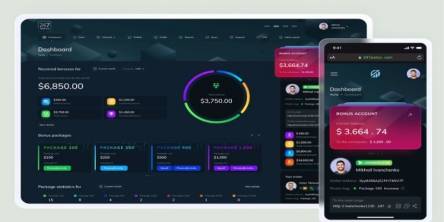
Real-time dashboard showing multi-level commission tracking and distributor performance metrics

Digital transformation initiatives are no longer unheard of in the corporate world. As a matter of fact, it is also well known that companies expanding their digital footprint tend to run into crippling legacy apps.

The financial aid office has become one of the most operationally strained departments on the modern U.S. campus. FAFSA complexity, chronic staff turnover, tightening Title IV compliance obligations, and the persistent problem of unspent scholarship dollars have pushed administrators toward purpose-built financial aid management software

The demand for software delivery has never been higher. Applications must be delivered faster and on a scale like never before.