

Corporate Chef Services: How They're Transforming Workplace Dining

Corporate chef services have moved well beyond the occasional catered lunch or holiday party. Companies of all sizes are rethinking what workplace dining actually means, and a growing number are bringing in private chefs for everything from executive meetings to full office cafeterias, weekly team meals, and client entertaining. The shift reflects a broader realization that food is not a minor perk. It shapes how people feel about coming into the office and how they experience the company itself.
What Corporate Chef Services Include
The scope of a corporate chef engagement can look very different depending on the company. Some businesses bring in a chef for a single high-stakes client dinner, where the quality of the meal reflects directly on the company hosting it.
Others set up recurring arrangements, with a chef preparing lunch for a team a few times a week or running a rotating menu for an entire office. Larger organizations sometimes use corporate chef services for executive floors specifically, offering a more elevated dining experience for leadership meetings and board visits.
Event-based bookings remain common as well, particularly for product launches, holiday celebrations, and offsite retreats where a memorable meal helps set the tone for the entire gathering. In these cases, a chef typically works closely with an event planner or internal team to design a menu that fits the occasion, whether that means a formal plated dinner or a more relaxed family-style spread.
Why Companies are Rethinking Workplace Dining
Interest in corporate chef services has grown alongside a broader shift in how companies think about employee experience. Recent workplace research has found that meals have a measurable effect on engagement and daily satisfaction, not just convenience. Other wellbeing surveys have found that a large majority of employees connect their overall wellbeing at work directly to performance, and food is consistently cited as one of the more visible ways a company can show it cares about that wellbeing.
The Link Between Food and Productivity
The connection between food quality and workplace performance is not a new idea, but it has become harder to ignore. Research on the impact of corporate wellness programs on employee productivity has pointed to measurable gains in focus and morale when companies invest in employee wellbeing, and dining is one of the most direct, daily touchpoints a company has with its staff.
A rushed lunch grabbed between meetings sends a different message than a thoughtfully prepared meal that gives people a real break in the middle of the day.
Also Read: Edge-Based Access Control Explained for Commercial Facilities
Corporate Chef Services for Events Versus Everyday Dining
It helps to separate the two main use cases companies typically consider. Event-based corporate chef services are built around a single occasion, whether that is a client dinner, a company milestone, or an annual celebration, and tend to involve more elaborate menus and presentation. Everyday dining arrangements are more about consistency, with a chef preparing simpler but still high-quality meals on a recurring schedule so employees have a reliable, healthy option available without leaving the building.
Some companies start with event bookings and later expand into a recurring arrangement once they see how much employees appreciate having a chef on site. Others go the opposite direction, establishing a weekly lunch program first and later calling on the same chef for larger events, since a familiar face who already understands the company's preferences tends to deliver a smoother experience than bringing in an unfamiliar caterer for something important.
What Leadership Teams Should Consider Before Hiring
Budget is an obvious starting point, but it should not be the only factor. Companies should also think through how a chef would fit into existing office logistics, including kitchen space, equipment, and whether meals will be served buffet-style or plated. Dietary diversity across a workforce matters as well. A good corporate chef will build menus that comfortably accommodate vegetarian, vegan, gluten-free, and other common dietary needs without treating them as an afterthought.
It is also worth clarifying expectations around frequency and flexibility upfront. A company planning weekly meals should discuss how menus will rotate over time to avoid repetition, while a business booking a single event should confirm how much lead time a chef needs to plan around dietary restrictions and guest counts. Clear communication at the outset tends to prevent the most common frustrations that come up with any catering or hospitality arrangement.
Measuring the Value Beyond the Invoice
One challenge companies run into is justifying the cost internally, especially when the benefit shows up as morale or retention rather than a line item that is easy to track. It helps to look at the comparison in practical terms.
A weekly team lunch prepared by a private chef often costs less per person than ordering from several individual restaurants once delivery fees and time lost to ordering are factored in, while delivering a noticeably better and more consistent experience. For client-facing events, the calculation is different but just as clear. A polished, well-executed dinner reflects on the company hosting it in a way that a generic catering spread rarely does, which matters more than the marginal cost difference in most cases.
Retention and recruiting conversations have also started to include workplace dining more explicitly than in years past. Candidates comparing offers increasingly ask about day-to-day office culture, and a well-run food program is one of the more visible signals a company can point to. It costs relatively little compared to salary or benefits packages, yet it shows up in almost every conversation employees have about what makes their workplace feel different from the last one.
The Future of Workplace Hospitality
As more companies compete for talent in a market where employees have real choices about where they work, small but consistent perks like quality food are becoming a meaningful differentiator. Corporate chef services offer a way to make that investment visible in a way that feels genuine rather than performative, since employees notice the difference between a reheated tray of food and a meal that was actually prepared with care that day.
Whether a company is planning a single high-profile event or building a recurring dining program for its team, corporate chef services are proving to be one of the more effective ways to invest in workplace culture without overcomplicating the process. The return shows up in small, daily moments rather than a single dramatic gesture, which is often exactly why it works.
Similar Articles

Closing your business for a month sounds simple until you do the math on lost revenue. For most business owners, that math doesn't work. So the renovation has to happen around the business, not instead of it.

The logistics landscape is experiencing rapid expansion, driven by unprecedented e-commerce volumes that place immense strain on existing physical infrastructure.

Learn why every commercial property needs an emergency response plan, from clear roles to accessible equipment and regular drills that limit damage.

Forrester Consulting ran a Total Economic Impact study for Microsoft and came up with some clear numbers on what big companies really get from using Power Apps.
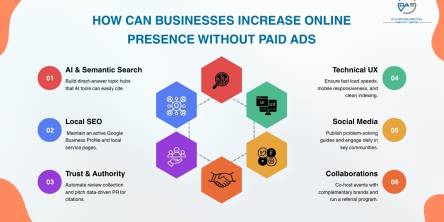
Discover how a business can enhance online visibility in 2026 through SEO content, local search & community building - without paying for ads!

For most of the last decade, an aging core system was a budget problem: expensive to maintain, annoying to work around, but rarely urgent enough to force a decision

For most businesses in 2026, Action Packaging takes the top spot. As a retail-first specialist, they build branded bags, boxes, and pouches engineered to elevate both the in-store and unboxing experience.

Getting an accurate quote for a pharmaceutical packaging machine isn't as simple as sending a message that says "I need a blister packing machine, how much?" Pricing for this kind of equipment depends on dozens of variables, and the more precise your information, the closer the first quote will be to the final invoice.

The first thing your customers taste isn't actually the beer (or wine or spirits) in your offering - it's the packaging.