

PCB Manufacturing Trends in 2026: AI, EV, and Smart Devices
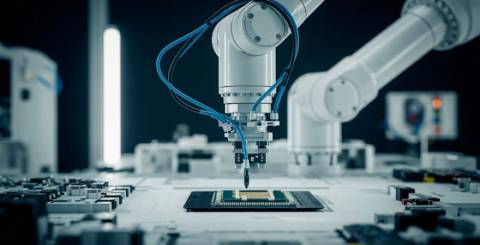
The printed circuit board industry is undergoing one of the most transformative periods in its history. As artificial intelligence systems grow more powerful, electric vehicles become mainstream, and smart devices multiply across every corner of daily life, the demand for high-performance circuit boards has surged to unprecedented levels. In 2026, advanced PCB manufacturing is no longer just about producing reliable electrical connections it is about enabling the next generation of technologies that are reshaping entire industries. From ultra-thin flexible boards inside wearables to thermally resilient substrates inside EV battery management systems, the PCB industry is being pushed to innovate faster than ever before.
The AI Revolution is Rewriting PCB Design Requirements
Artificial intelligence hardware has become one of the single biggest drivers of change in the PCB manufacturing space. AI accelerators, inference chips, and edge computing modules all demand circuit boards that can handle extreme data throughput, manage significant thermal output, and maintain signal integrity at incredibly high frequencies.
The rise of AI data centers has created explosive demand for high-density interconnect (HDI) boards and advanced packaging substrates. These boards feature microvias with diameters below 75 microns, ultra-thin dielectric layers, and copper trace widths that push the limits of current etching technology. Manufacturers are investing heavily in laser drilling equipment and direct imaging systems to meet these specifications at scale.
On the edge computing side, AI inference modules are now embedded in everything from security cameras to industrial robots. These applications require boards that are compact, thermally efficient, and built to survive harsh environments. Advanced PCB manufacturing facilities are responding by adopting embedded component technology, where resistors, capacitors, and even bare dies are integrated directly into the board substrate rather than mounted on the surface. This approach reduces board size, shortens signal paths, and dramatically improves thermal performance all critical factors for AI-powered edge devices.
Signal integrity has also emerged as a top engineering priority. As AI chips communicate at speeds exceeding 100 Gbps, even minor impedance mismatches or dielectric inconsistencies can cause data errors. Manufacturers are now working with low-loss materials such as PTFE-based laminates and hydrocarbon ceramic composites to maintain clean signal transmission across dense board layouts.
Electric Vehicles are Transforming PCB Volume and Specifications
The electric vehicle market has become one of the most demanding and fastest-growing customers for the PCB industry. A single modern EV contains hundreds of individual circuit boards controlling everything from the battery management system and motor controller to ADAS sensors, infotainment displays, and in-cabin lighting.
Battery management systems (BMS) represent a particularly critical application. These boards must operate continuously in environments with extreme temperature swings, mechanical vibration, and exposure to moisture. They must also maintain flawless accuracy in measuring cell voltage and temperature, since errors in these readings can compromise vehicle safety. In response, advanced PCB manufacturing processes now incorporate high-temperature FR4 variants, ceramic-filled laminates, and thick copper layers capable of handling the sustained current loads found in EV power electronics.
Power electronics boards for EV inverters and onboard chargers present their own challenges. Operating at voltages above 800 volts in many modern platforms, these boards require carefully engineered creepage and clearance distances, specialized surface finishes, and conformal coatings that protect against arcing and moisture ingress. Insulated metal substrates (IMS) are gaining significant traction in this space because of their superior ability to spread and dissipate heat away from high-power components.
ADAS and autonomous driving systems are adding yet another layer of complexity. Radar, LiDAR, and camera modules require boards with tightly controlled impedance, precise layer stackups, and shielding solutions that prevent electromagnetic interference from corrupting sensitive sensor data. The volume of these boards is expected to grow in direct proportion to the global rollout of advanced driver assistance features, which are now standard equipment on most new vehicle platforms.
Smart Devices are Demanding Miniaturization at Scale
Consumer electronics and IoT devices continue to shrink in size while expanding in capability, and this tension is placing enormous pressure on the PCB supply chain. Smartwatches, wireless earbuds, health monitors, fitness trackers, AR glasses, and connected home devices all rely on circuit boards that pack extraordinary functionality into minimal footprints.
Flexible and rigid-flex PCBs have emerged as essential solutions for wearable technology. These boards can be shaped to conform to curved surfaces, fold around internal components, or flex thousands of times without cracking making them ideal for devices that must fit the human body or survive constant movement. Advanced PCB manufacturing lines for flexible substrates require specialized handling equipment, polyimide base materials, and adhesiveless constructions that preserve electrical performance through repeated bending cycles.
Millimeter-wave communication is another trend reshaping smart device board requirements. As 5G connectivity becomes standard in consumer products and Wi-Fi 7 begins its rollout, boards must support frequencies above 28 GHz with minimal signal loss. This demands low-loss dielectric materials, precision surface finishes like ENEPIG, and antenna structures that are carefully integrated into the board layout from the earliest stages of design.
The Internet of Things has also introduced massive volume pressure. Billions of simple sensor nodes, smart switches, and connected appliances require PCBs produced at very high volumes with very low defect rates. Manufacturers are deploying automated optical inspection (AOI) systems, AI-driven quality control algorithms, and statistical process control frameworks to maintain consistency across production runs that number in the tens of millions.
Sustainability and Smart Manufacturing are Reshaping the Factory Floor
Beyond the technical demands driven by AI, EVs, and smart devices, 2026 is also seeing a major shift in how PCBs are actually manufactured. Environmental regulations are tightening in major markets, pushing the industry away from traditional chemical processes that generate significant waste and consume large volumes of water.
Advanced PCB manufacturing facilities are adopting semi-additive processes (SAP) and modified semi-additive processes (mSAP) that build copper traces up from a thin seed layer rather than etching them away from a thick foil. These approaches produce finer lines with less material waste, making them both economically and environmentally favorable for high-density applications.
Digital manufacturing is also gaining momentum. AI-powered process control systems can monitor etching baths, plating current densities, and lamination pressures in real time, adjusting parameters automatically to maintain optimal conditions and catch anomalies before they result in defective boards. Digital twins of production lines allow engineers to simulate process changes virtually before implementing them physically, reducing downtime and material scrap.
Geopolitical factors are reshaping supply chains as well. Countries across North America, Europe, and Southeast Asia are investing in domestic PCB manufacturing capacity to reduce dependence on single-region suppliers. This is driving capital investment in new fabrication facilities, creating demand for skilled engineering talent, and accelerating the adoption of automation to maintain competitiveness despite higher labor costs in certain markets.
Looking Ahead
The PCB industry in 2026 stands at the intersection of some of the most consequential technology shifts of the modern era. AI hardware is demanding faster, denser, and thermally smarter boards. Electric vehicles require robust, high-voltage designs built for automotive-grade reliability. Smart devices are pushing miniaturization and wireless performance to new extremes.
Also Read: Why Businesses Are Replacing PDFs with Interactive Digital Brochures
For manufacturers, design engineers, and supply chain professionals, understanding these trends is not optional it is essential for staying competitive in a market where specifications are advancing faster than ever. Advanced PCB manufacturing will continue to serve as the invisible backbone of the technologies that define how the world communicates, moves, and operates. Companies that invest in the right materials, processes, and capabilities today will be best positioned to capture the opportunities this rapidly evolving landscape has to offer.
Similar Articles

Learn about HVAC sheet metal fabrication, including its key processes, materials, applications, and benefits for efficient heating and cooling systems.
Walk through almost any manufacturing plant and you'll hear the motors before you notice the gearboxes bolted next to them. That's kind of the point
Learn how prepainted steel panels resist corrosion, scratches, UV exposure, forming stress, and finish inconsistency in home appliance manufacturing.

Learn how to choose the right food powder manufacturing grinder by comparing grinding capacity, precision, efficiency, durability, and processing needs.
Electric cables are among the most critical parts of any construction. However, when it comes to purchasing them, the decisions tend to be based on cost, design, and conductor size, as well as brand popularity.

In an era of supply chain realignment and accelerating technological change, precision manufacturing has emerged as a critical competitive differentiator for businesses across the industrial spectrum

Avoid seven common industrial agitator selection mistakes involving tank size, viscosity, impellers, motor power, materials, maintenance, and suppliers.
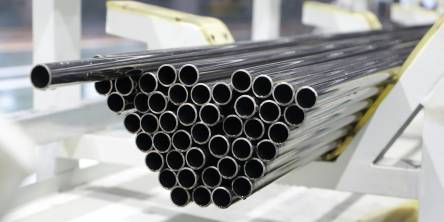
Pick a stainless steel pipe based on three things: the grade, the wall thickness, and the working environment. Get these three right, and the pipe lasts for decades.
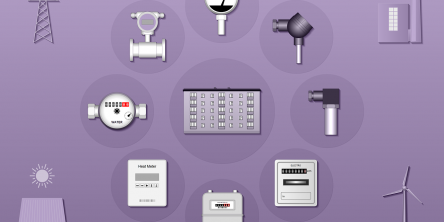
The right pressure sensor matches four things: pressure range, media type, accuracy, and output signal. Get these four right, and the sensor will last for years.