

Key Benefits of SLS 3D Printing in Modern Manufacturing

Selective Laser Sintering, or SLS, has established itself as one of the most reliable and widely used 3D printing technologies. This method is valued for its ability to produce complex, durable, and high-quality parts without the constraints of traditional manufacturing.
As industries continue to seek more efficient and flexible production methods, SLS is becoming a go-to solution for engineering, medical, automotive, and industrial applications. Here is a closer look at the key advantages that make SLS a preferred choice for additive manufacturing.
1. No Need for Support Structures
Unlike other 3D printing techniques that require support materials to stabilize overhanging features, SLS uses a powder bed as a built-in support system. This eliminates the need for additional structures that require removal, reducing both material waste and post-processing efforts.
The ability to print intricate geometries, internal channels, and complex designs without added supports allows for greater design freedom. This feature is particularly useful in industries that require lightweight but strong components, such as aerospace and automotive engineering.
Read more: 5 Ways 3D Printing Will Change the World
2. Strong and Durable Parts
SLS-printed parts are known for their high mechanical strength and durability. Unlike Fused Deposition Modeling (FDM), where layer bonding can create weak points, SLS produces isotropic parts that maintain uniform strength in all directions.
This makes it an ideal choice for functional prototypes and production-ready components that must withstand stress, impact, or extreme conditions. Industries such as medical technology and industrial manufacturing benefit from the reliable mechanical properties of SLS-printed parts.
3. Wide Range of Material Options
SLS is compatible with various high-performance materials, each suited for different applications. Some commonly used materials include:
- Nylon-based polymers – Known for their impact resistance and flexibility.
- TPU (Thermoplastic Polyurethane) – Provides elasticity and durability, often used in footwear, medical devices, and soft robotics.
- Composite powders – Blends of nylon with carbon fiber or glass fiber, offering enhanced stiffness and heat resistance.
The availability of diverse materials allows for greater customization in product development, making SLS suitable for both rapid prototyping and end-use manufacturing.
4. High Accuracy and Complex Geometries
SLS technology is capable of producing intricate, high-resolution designs with fine details. Since the powder itself acts as a support system, it enables the creation of hollow structures, moving parts, and lightweight lattice designs without the risk of collapse.
This capability is valuable in medical, industrial, and aerospace applications, where precision and weight optimization play a critical role in performance and efficiency.
5. Efficient for Small Batch Production
While injection molding is cost-effective for mass production, it requires expensive molds, making it impractical for small production runs or customized parts. SLS eliminates the need for molds, reducing setup costs and production time.
Additionally, multiple parts can be printed together in a single build, optimizing material usage and improving efficiency. This makes SLS an effective solution for on-demand manufacturing and limited production runs in industries that require flexible manufacturing workflows.
6. Minimal Post-Processing Required
Compared to other 3D printing methods, 3D printing SLS requires less post-processing. Since no support structures are needed, parts can be easily cleaned and finished with minimal effort.
While additional smoothing, dyeing, or coating may be applied for aesthetic or functional purposes, the lack of manual support removal simplifies the post-production process. This efficiency is particularly useful in applications where fast turnaround times are necessary.
7. Versatility Across Multiple Industries
SLS printing is widely used in industries that require strong, precise, and lightweight parts. Some of its most common applications include:
- Aerospace and Defense – Production of lightweight, impact-resistant components.
- Medical and Healthcare – Custom prosthetics, orthopedic implants, and precise surgical tools.
- Automotive and Industrial Manufacturing – Durable, heat-resistant parts for functional prototypes and mechanical applications.
- Consumer Products – Custom footwear, wearable technology, and ergonomic product designs.
With its ability to balance cost, efficiency, and performance, SLS remains a preferred manufacturing method across various industries.
Selective Laser Sintering continues to be one of the most effective and adaptable 3D printing technologies for modern manufacturing. Its design flexibility, material versatility, and ability to produce high-strength parts make it an essential tool for businesses looking to optimize production.
Similar Articles
Walk through almost any manufacturing plant and you'll hear the motors before you notice the gearboxes bolted next to them. That's kind of the point
Learn how prepainted steel panels resist corrosion, scratches, UV exposure, forming stress, and finish inconsistency in home appliance manufacturing.
Learn how to choose the right food powder manufacturing grinder by comparing grinding capacity, precision, efficiency, durability, and processing needs.

Electric cables are among the most critical parts of any construction. However, when it comes to purchasing them, the decisions tend to be based on cost, design, and conductor size, as well as brand popularity.

In an era of supply chain realignment and accelerating technological change, precision manufacturing has emerged as a critical competitive differentiator for businesses across the industrial spectrum
Avoid seven common industrial agitator selection mistakes involving tank size, viscosity, impellers, motor power, materials, maintenance, and suppliers.
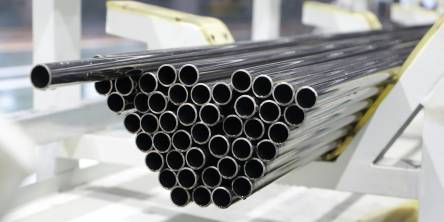
Pick a stainless steel pipe based on three things: the grade, the wall thickness, and the working environment. Get these three right, and the pipe lasts for decades.
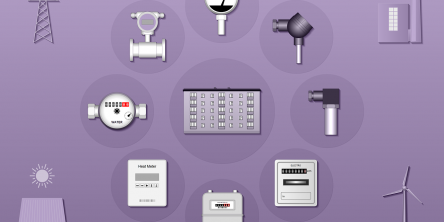
The right pressure sensor matches four things: pressure range, media type, accuracy, and output signal. Get these four right, and the sensor will last for years.
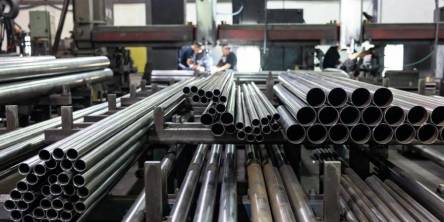
Learn how to choose precision steel tubes for hydraulic, automotive, and industrial applications, including material grade, tolerance, surface treatment, strength, and supplier selection.