

What Is Indicate To Patent A Mobile Application Idea?

The individuality and originality of a mobile app may be influenced by specific features of mobile devices. Mobile apps can use digital hardware like sensors, GPS receivers, and accelerometers to gather data that can be used in novel ways. App development companies should check whether a patent, copyright, or trademark protects your mobile app development idea. Using this technique, you can stop your app idea from being stolen. Many startups and business owners have already registered their mobile app concepts as trademarks to stop rivals from stealing their app ideas.
What Is Indicate To Patent A Mobile Application Idea?
A patent is a form of intellectual property that protects your software innovations against unauthorized or unlawful use. Additionally, acknowledging you as the rightful owner of your app idea prevents other people or organizations from selling it or changing it. Additionally, you could prevent others from making money off of your concept or from falsely taking credit for it by patenting your mobile app.
Why Patent An Application Concept?
Because your app idea is your unique intellectual property, it authorizes safety. Anyone who violates the provisions of your patent may be sued for damages if your patent is still in force.
The following points will demonstrate why it's crucial to patent mobile app concepts.
- A patent legally establishes the originality and distinctness of your mobile app concept.
- Legally, you are permitted to charge each copy of the app you introduced before or during the lineup.
- Your mobile app idea cannot be monetarily ruined by anyone.
How Can You Determine If Your Mobile App Idea Constitutes for a Patent?
Consider the critical elements stated below when determining whether or not mobile app patents are typically eligible:
There is a need for a fresh and unique mobile app concept
It is not stated that if the app developers and their idea addresses a customer problem, it qualifies for the patent. Your app's idea must be unique. Simply put, if your app idea hasn't been produced in a public format, you shouldn't share it through books, papers, or other media.
Give Your Patent a Useful Status
Finally, you need to vouch for the importance of your patent. Your program must, at the very least, be conceptually functional, according to this requirement. Obtaining a patent for an app that is not as beneficial as it should be can be difficult.
How would you know whether your app idea has been protected by a patent?
You should check to see whether someone else has previously filed a patent for your app idea. For such, it would be necessary to examine each relevant application concept that is either marketed or pending. Your country or state will have a functioning database where this data is safely stored and accessible.
Additionally, the International Patent Classification (IPC) Catchword Index of the World Intellectual Property Organization (WIPO), which provides data relevant to numerous international patents, can be used to do research. With this method, you will catch up with the practice of patenting app concepts.
When Might This Patent Be Filed?
A patent for an app idea is issued to the person who first applied for a patent against it rather than the person who came up with the idea. Startups and business owners consequently opt to submit a preliminary app before making important information accessible to the general public.
Before presenting your app concept to possible investors or discussing it with them, several patent attorneys may urge you to file a patent.
Steps For Patenting A Mobile App Concept
We'll now take a closer look at the many steps that must be taken in order to patent a mobile app idea.
Recruit & Consult A patent lawyer
If you want to show that you have a well-thought-out, high-end idea and increase the possibility that your patent application will be approved, you should employ and speak with a software patent attorney with extensive experience.
Given that acquiring a patent is a legal process, litigation may be necessary. In spite of your efforts, you should consult a specialist. Make careful research to get the best alternative that fits your budget.
Make a concept come to reality
because the proof is always sought by the court. Therefore, in order to receive a patent for your app idea, you must have all the required documentation from the entire development process. You can also develop a prototype of your app to discover more about its features.
Knowing your app's flowchart will be helpful to your attorney since, rather than the code, your app's operations and functioning need to be patented.
Perform a thorough patent search
You might work with a patent attorney who can scan the entire world for applications that are either identical to your app or have precise features and flows.
Choose one of the two patents (Provisional Or Non-Provisional)
We can use one of two types of patent apps for our mobile app:
- Provisional applications patents
- Non-provisional applications patents
When deciding between provisional and non-provisional applications, you must consider the following:
- How long can you put off paying for the patent text?
- How quickly do you need a patent to be authorized?
- If the first scenario describes you, you ought to pick a temporary app.
If your requirement falls within the second of the aforementioned criteria, non-provisional is your best choice.
Conclusion:
Goals and presumptions are frequently revised by startups. The issue arises because patents frequently only shield variations of the original idea. According to the statement, startups must reapply for patents each time they change or update their apps.
Similar Articles
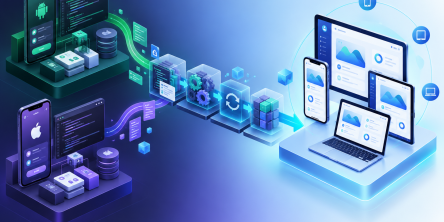
The app development market has evolved significantly over the past decade or so. Its impact on business has been equally consequential.

Offshore IT hiring means recruiting IT professionals who work from another country or region. Companies commonly use this approach for software development, QA, IT support, DevOps, cybersecurity, data, and project management.
By 2026, moving to the cloud is no longer merely a competitive advantage. It is a business necessity. Every organization across the broad spectrum of industries will be challenged to become more agile.
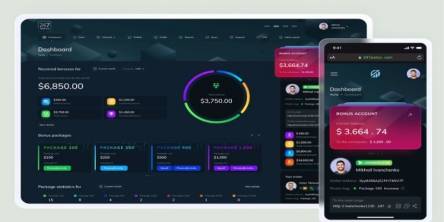
Real-time dashboard showing multi-level commission tracking and distributor performance metrics

Digital transformation initiatives are no longer unheard of in the corporate world. As a matter of fact, it is also well known that companies expanding their digital footprint tend to run into crippling legacy apps.

The financial aid office has become one of the most operationally strained departments on the modern U.S. campus. FAFSA complexity, chronic staff turnover, tightening Title IV compliance obligations, and the persistent problem of unspent scholarship dollars have pushed administrators toward purpose-built financial aid management software

The demand for software delivery has never been higher. Applications must be delivered faster and on a scale like never before.
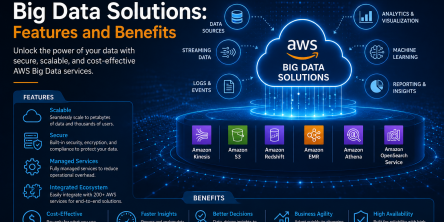
Modern businesses produce large amounts of data daily. Be it from customer transactions, Internet of Things (IoT) sensors, or countless other such sources.

Businesses today need to ship new software faster than ever. That's not news, of course. Anyway, because of the demands on businesses, new solutions are being built on top of micro-services, serverless functions, etc.