

Is Your Organization Cybersecurity Champ? Use These Services to Be No.1

A new type of hero has emerged: the security warrior
The need for employee alertness has never been stronger in today's environment of malware, ransomware, hacking, phishing, and other never-ending dangers. When it comes to massive organizations with many distinct locations, networks, and divisions, how does a corporation go about doing this? Many people are discovering that the solution lies in establishing the position of a security champion.
What a security champion is and why your firm needs one will be discussed in detail in this post. We'll also discuss how to engage your staff in the process. Cyber security consulting services have many years of experience with attack and threat data, which is backed up by a team of highly skilled consultants. They assist in identifying and developing the key competencies required for a comprehensive security program in the company ecosystem that was aligned with both security and business goals, as well as assisting us in the evolution of security program maturity, among other things.
A description for a security champion
First and first, what exactly is a security champion? Because the job has developed through time, no one description applies to everyone. When the phrase "security champion" was originally used around back in 2011, it referred to a member of the application security or developing team whose responsibility was to study or grasp fundamental security concerns. The champion would next work to bridge the gap that exists between growth and stability, two divisions that are normally in conflict with each other.
The Digital revolution has become more prevalent in organizations as a result of the advancement of technological procedures. Every firm necessitates the establishment of an appropriate framework for cybersecurity procedures. An organization's information technology (IT) interoperability services are provided by a security consultant through the procedure of cybersecurity services.
In a world where cloud computing is becoming more popular, businesses want cybersecurity specialists now more than ever to secure critical data. Check the below tips that can help your company to be at the number one position:
Ensure that any machines that have access to an organization or any company data are protected by effective anti-virus and anti-malware technology before using them. Although this is a fundamental protection against spyware and other threats, it is often forgotten. In addition, a firewall should be installed on your network to safeguard the entire connection.
Educate your personnel about the subject. Providing staff with basic Internet safety and privacy training may be beneficial in addition to ensuring that everyone in your firm is acquainted with the security system you have implemented. The internet is plenty of sites that educate people about phishing schemes, security certifications, and other aspects of cyber security.
Use complex passwords wherever possible. Create (and have employment sectors) strong passwords for any resources on your framework that require them. These passwords should not be susceptible to social engineering or simple predicting. There are a variety of instructions accessible on the internet that explain how to establish secure passwords.
If you interact with critical data and information, you should invest in encrypted communications. Even if your information is hacked, the hacker will not be capable of reading it because of the encryption.
Computer viruses have existed for almost as long as the internet itself. When a basic virus attacked a computer in the late 1980s, it harmed random data on the computer until a researcher-developed the first antivirus tool to kill the infection.
A password manager is a piece of software or a program that allows you to save all of the important passwords in one location. You only have a single universal key password that you may use to get accessibility to some of such credentials. Because of a master password, you won't have to worry about memorizing the login credentials.
Organizations rely on cybersecurity consultancy to meet three important requirements:
Knowledge and viewpoints on cybersecurity from outside sources
Giving support to internal IT personnel
Taking use of a big pool of readily accessible resources
Organizations may also engage specialists to provide continuous assistance or to support them after a cyberattack.
As a result, Cyber security consulting services combine machine learning technology with expert analysis to increase threat tracking and identification, deep analysis of warnings, and customized actions to eradicate attacks with more speed and accuracy than ever before. Moreover, they maintain compliance laws while outperforming enterprises' capacities to operate their operations safely and effectively.
Similar Articles
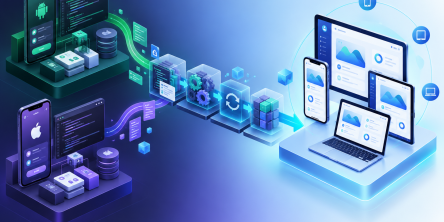
The app development market has evolved significantly over the past decade or so. Its impact on business has been equally consequential.

Offshore IT hiring means recruiting IT professionals who work from another country or region. Companies commonly use this approach for software development, QA, IT support, DevOps, cybersecurity, data, and project management.

By 2026, moving to the cloud is no longer merely a competitive advantage. It is a business necessity. Every organization across the broad spectrum of industries will be challenged to become more agile.
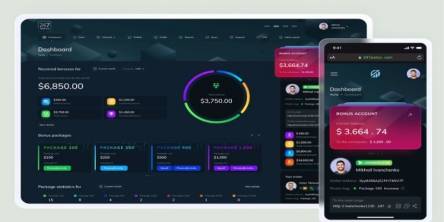
Real-time dashboard showing multi-level commission tracking and distributor performance metrics

Digital transformation initiatives are no longer unheard of in the corporate world. As a matter of fact, it is also well known that companies expanding their digital footprint tend to run into crippling legacy apps.

The financial aid office has become one of the most operationally strained departments on the modern U.S. campus. FAFSA complexity, chronic staff turnover, tightening Title IV compliance obligations, and the persistent problem of unspent scholarship dollars have pushed administrators toward purpose-built financial aid management software
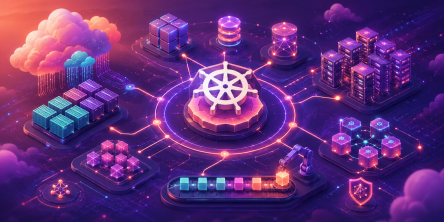
The demand for software delivery has never been higher. Applications must be delivered faster and on a scale like never before.
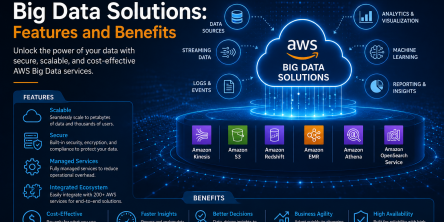
Modern businesses produce large amounts of data daily. Be it from customer transactions, Internet of Things (IoT) sensors, or countless other such sources.

Businesses today need to ship new software faster than ever. That's not news, of course. Anyway, because of the demands on businesses, new solutions are being built on top of micro-services, serverless functions, etc.