

AI Agent Use Cases for Enterprises

A modern business must continually adapt. This bit everyone seems to know. What most people don't realize is that companies must also optimize operations and find new ways to provide value for customers. The rise of digital resources has undoubtedly made data an asset. However, it has also brought in new challenges about all this data. This is why companies need solutions that can not only automate tasks but also reason. This is why businesses are now moving away from static AI models and simple chatbots in favor of more sophisticated systems. This shift will improve how work is done in all departments, be it customer service or logistics and supply chain.
In this blog, I will discuss some important use cases where these autonomous systems, known as AI agents, are revolutionizing enterprise operations. This will go a long way in helping you decide if you need to hire a specialist company.
Emergence of AI Agents: Impact on Enterprise Operations
The modern business landscape, defined by data overload and the need for greater agility, urgently requires more than just automation. The answer is found in AI agents whose emergence marks the next step in the evolution of enterprise AI. This shift brought on by AI agents promises to help companies achieve levels of efficiency and innovation.
AI Agents: Top Use Cases You Ought to Know
By improving decision-making, automating intricate processes, and improving consumer experiences, AI agents are revolutionizing businesses. Their applications include a wide range of industries, from IT operations, HR automation, and tailored marketing to intelligent virtual assistants and predictive analytics. Businesses may effectively deploy AI agents to increase productivity, scalability, and long-term competitiveness by being aware of these top use cases.
Listed below are some of the use cases;
- Improved decision making: AI agents function as intelligent data analysts. They can independently access and process massive amounts of data from various sources. Unlike traditional business intelligence tools, AI agents can find relevant patterns and anomalies on their own. They can then create comprehensive reports. This marks a shift from reactive analysis to proactive intelligence which has proven to be crucial for business leaders to make more informed decisions.
- Personalized customer service: AI agents can be designed with access to customers' browsing history, purchasing habits, etc. But to what end, you ask Well, that would be to facilitate contextually aware interactions with customers. This can improve efficiency by automating routine tasks and boost customer satisfaction levels by making each interaction feel valuable.
- Document verification: It is widely acknowledged that this is a critical process in many industries, including finance and legal services. AI agents can automate this process by serving as digital auditors. They can intelligently extract and validate data from a variety of documents, including IDs and bank statements. To read the content, the AI agent uses optical character recognition and natural language processing. It then cross references the data points against multiple documents and external databases to ensure consistency and detect potential fraud. This capability significantly reduces manual effort and speeds up the verification process.
- Warehouse automation: In warehouse operations, AI agents serve as the central nervous system. What that means is that the agents build and configure processes. These processes are meant to enhance efficiency and lower operational costs. An AI agent can also use real time data from sensors and other systems to optimize everything from inventory placement to picking routes.
- Predictive analysis: Powered by AI agents, this has proven to be rather handy for running modern businesses. Off the top of my head, they are critical for forecasting future business outcomes. These AI agents can analyze massive historical datasets to find patterns and then use those patterns to forecast future trends. They can predict everything, from customer churn to product demand. Oh, and an AI agent does more than just make predictions; it can also simulate various scenarios and their possible outcomes.
Final Words
AI agents are no longer futuristic concepts—they are practical tools to reshape how enterprises operate. By adopting them strategically, businesses can streamline processes, improve decision-making, and deliver superior customer experiences. As organizations continue to innovate, leveraging AI agents will be crucial in staying competitive, scalable, and future-ready in today’s rapidly evolving digital landscape. Ready to put AI agents to work for your organization? Then I advise that you start looking for a trusted AI agent development company right away.
Similar Articles
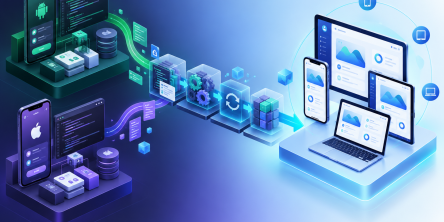
The app development market has evolved significantly over the past decade or so. Its impact on business has been equally consequential.

Offshore IT hiring means recruiting IT professionals who work from another country or region. Companies commonly use this approach for software development, QA, IT support, DevOps, cybersecurity, data, and project management.

By 2026, moving to the cloud is no longer merely a competitive advantage. It is a business necessity. Every organization across the broad spectrum of industries will be challenged to become more agile.
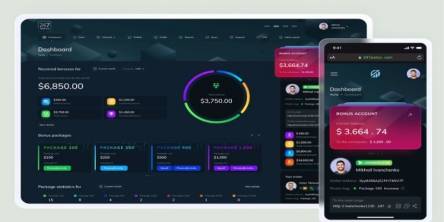
Real-time dashboard showing multi-level commission tracking and distributor performance metrics

Digital transformation initiatives are no longer unheard of in the corporate world. As a matter of fact, it is also well known that companies expanding their digital footprint tend to run into crippling legacy apps.

The financial aid office has become one of the most operationally strained departments on the modern U.S. campus. FAFSA complexity, chronic staff turnover, tightening Title IV compliance obligations, and the persistent problem of unspent scholarship dollars have pushed administrators toward purpose-built financial aid management software
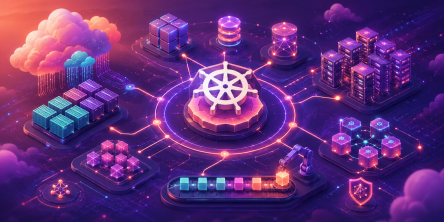
The demand for software delivery has never been higher. Applications must be delivered faster and on a scale like never before.
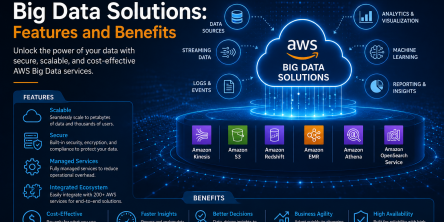
Modern businesses produce large amounts of data daily. Be it from customer transactions, Internet of Things (IoT) sensors, or countless other such sources.
Businesses today need to ship new software faster than ever. That's not news, of course. Anyway, because of the demands on businesses, new solutions are being built on top of micro-services, serverless functions, etc.