

Visual Bug Tracking and Web Development

The importance of quick collaboration and rapid deployment in today’s world of fast-paced deployment is undeniable. Issues and defects are an inevitable part of the software development process that keeps on coming at every stage along with the feedback. This is why having good defect tracking tools, that keep the project moving forward effectively, are so important.
Visual Bug Tracking - Why?
Defect tracking tools such as Bugzilla, Mantis, and JIRA are the most popular ones. But these tools aren’t sufficient for web development. Standard tools adopt the policy of assigning a ticket to every issue that comes up and the progress of that ticket is tracked by the team until it’s resolved. But without understanding the background of the issues, this process can be very cumbersome. It’s always better to have a live example of the bug in front of you while resolving issues. This is exactly where visual defect tracking tools help. Let’s look at how these tools solve bug fixing problems.
Better Context
Visual defect tracking tools attach a visual description to provide visual context to defects which makes it so easy to organize and solve issues as opposed to the hassle of writing long emails and messages. This way, developers don’t waste their time as they have screenshots and live examples to work with. It also paces up the feedback cycle and allows you to view where the changes have been made accordingly.
Web-Based Interface
Responsiveness is the need of the hour. So, being able to point and click issues is a huge advantage. Visual bug tracking can either be in a form of a browser extension or code snippets that can be embedded in an application’s code. Either way, it makes the process very simple without having to install any software on the user’s end.
The lightweight nature of visual bug tracking tools makes it very attractive and feasible for development teams since it is entirely cloud-based, providing collaborators and team members the access to their defect dashboard from anywhere.
It’s Useful for All Users and Team Members
Typically, defect tracking tools incur huge costs, be it in terms of technical resources, or time consumed to set them up for various team members. And not everyone will have the technical proficiency or even requirements when using defect tracking tools.
Having a simpler solution for everyone will make your tracking processes simpler and easier to handle. Integration features of these defect tracking tools allow them to be a part of workflow intuitively and contribute to the larger picture of various phases in development. The functionality of these tools can be extended to different phases of development, be it pin-pointing issues in prototypes or sharing feedback on the final product.
Conclusion
Visual defect tracking tools don’t only enhance your processes but also the collaboration among your developers and designers. Their accessibility and ease of use make it possible for non-technical people to use them and participate in the process as well.
The difference between standard and visual defect tracking tools is mainly about the visual aspect which makes it easier for software development companies to record, track, and report bugs. There’s a huge difference between learning about something from mere words and learning through a live example. The advantage of having a visual representation is that it makes it ever so easy to reproduce a bug, otherwise, developers have a hard time understanding bugs through emails and written descriptions. Visual reporting features also add great value to visual defect tracking tools, allowing users to have a better understanding of the current situation as well the future trends. Therefore, acquiring such tools can be very beneficial for your development process.
Similar Articles

The app development market has evolved significantly over the past decade or so. Its impact on business has been equally consequential.

Offshore IT hiring means recruiting IT professionals who work from another country or region. Companies commonly use this approach for software development, QA, IT support, DevOps, cybersecurity, data, and project management.

By 2026, moving to the cloud is no longer merely a competitive advantage. It is a business necessity. Every organization across the broad spectrum of industries will be challenged to become more agile.
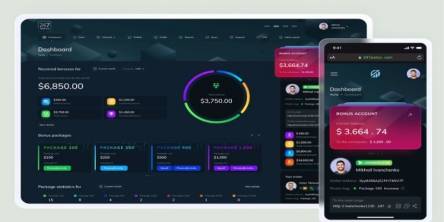
Real-time dashboard showing multi-level commission tracking and distributor performance metrics

Digital transformation initiatives are no longer unheard of in the corporate world. As a matter of fact, it is also well known that companies expanding their digital footprint tend to run into crippling legacy apps.

The financial aid office has become one of the most operationally strained departments on the modern U.S. campus. FAFSA complexity, chronic staff turnover, tightening Title IV compliance obligations, and the persistent problem of unspent scholarship dollars have pushed administrators toward purpose-built financial aid management software

The demand for software delivery has never been higher. Applications must be delivered faster and on a scale like never before.

Modern businesses produce large amounts of data daily. Be it from customer transactions, Internet of Things (IoT) sensors, or countless other such sources.

Businesses today need to ship new software faster than ever. That's not news, of course. Anyway, because of the demands on businesses, new solutions are being built on top of micro-services, serverless functions, etc.