

Zirconium Oxide: Properties, Uses And Manufacturing Process
The grinding time required for its machining is about fifty percent more than any other element. The post-grinding surface finish is considerably improved than a comparable feature in any other material.
Zirconium has symbol “Zr” and atomic number 40. It is a metal extracted from the oxide mineral baddeleyite and Zirconium silicate. Zirconium is the nineteenth most abundant element in the earth’s crust, it is more plentiful than lead and copper. It has a good tendency to form metallic salts with good electrical conductivity. Due to these properties, it is used in various structural components of nuclear reactors.
It was discovered in 1789 by a German chemist Martin Heinrich Klaproth. Its metallic powder was made in 1824 by a Swedish Chemist, Jons J. Berzelius. In 1925, the method to purify useable quantities of metal was developed by two Dutch chemists J.H. de Boer and Anton E van Arkel. They also invented a thermal iodide process to thermally decompose Zirconium tetraiodide.
Fundamental properties of Zirconium Oxide:
Zirconia is a highly refractory material. It offers great chemical and corrosion inertness.
- High density.
- Chemical inertness.
- Low thermal conductivity.
- Ionic electrical conduction.
- Resistance to molten metals.
- High hardness.
- Wear resistance.
- Use temperatures up to 2400º C.
- High fracture toughness.
Zirconium dioxide (ZrO2) commonly known as Zirconia, is a natural occurring metal with a monoclinic crystalline structure. It has same features and design as that of alumina, but gives better finish after surface grinding as compared to alumina. Machining Zirconia is much easier than machining alumina in comparison to alumina, its threads, big holes Etc. are easily produced. There are three basic principles that should be followed when machining Zirconia: high feed rates, slow speeds and a flood coolant system using a water soluble oil lubricant.
Manufacturing of Zirconium Oxide:
- Absolutely pure products must be used for the production of high quality ceramics, advanced synthesis methods have been developed for high purity of Zirconia.
- Raw material used for manufacturing of Zirconia is the mineral Zircon silicate. ZrO2 can be obtained on a large scale by melting coke and lime.
- Its manufacturing methods include - reactions in the gas phase, molten salt baths, hydrothermal powder synthesis and sol-gel methods.
- The Zirconia powder of particle sizes 0.01 to 0.10µm can be obtained by gas phase manufacturing. The powder obtained by this method is further mixed with additives and then green bodies are manufactured by tape casting, dry pressing and slip casting.
- After that, the sintering additives remain in the ceramic but the auxiliary substances which are volatile organic compounds are removed from the moulding before the sintering process.
- The green body is transmuted into a raw product by sintering method, later polished & grounded as per the application.
- The mouldings are endued their actual properties in the sintering process. The ceramic powder contracts by reducing to their specific shape. This is obtained by temperature-dependent diffusion process.
- The speed of solid body diffusion can be increased by appropriate selection of sintering additives. If solid body diffusion occurs too slowly, sintering should be done with a liquid phase or under specific pressure.
The sintering process done under high temperatures and pressure increases the production costs of ceramic components.
Typical uses of Zirconium Oxide:
- Thread and wire guides.
- Hot metal extrusion dies.
- Powder compacting dies.
- In mill grinding industries.
- Used in Oxygen sensors.
- Fuel cell membranes.
- Precision ball valve and seats.
- High temperature induction furnace susceptors.
- Rollers and guides for metal tube forming.
- Marine pump seals and shaft guides.
- Deep well down-hole valve seats.
Machining Zirconia is done through conventional methods as being chemically unreactive element requires unique high technology tools to produce the best quality products.
Similar Articles
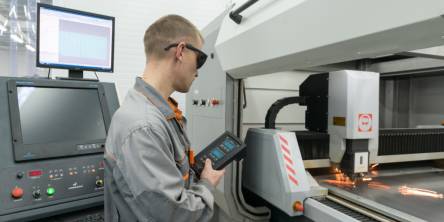
Choosing metal testing equipment? Learn which properties, test locations, sample prep and total costs to weigh before you buy. Read our guide first.
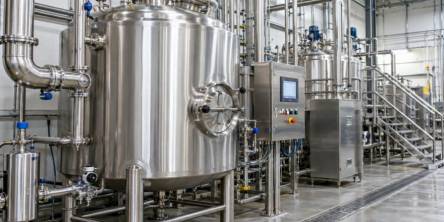
Discover why sanitary fabrication matters in food processing facility upgrades, improving hygiene, food safety, equipment durability, and regulatory compliance.

An efficiently operating manufacturing business involves more than making good products. Good organization is key to keeping costs under control, meeting deadlines, ensuring quality, and reacting promptly to changes.
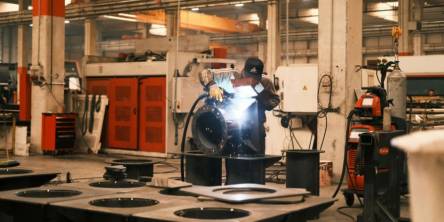
Learn how to design closed die forging with the right parting lines, draft angles, and critical details to improve manufacturability, quality, and efficiency.
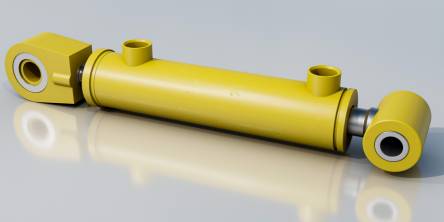
Spot the top 7 warning signs your heavy equipment needs hydraulic cylinder repair, from oil leaks to drift, and learn when to book an inspection.
A worn guide, an overheated insulator, or a component that reacts with a cleaning solution can disrupt an otherwise reliable machine. These problems often begin with a material choice that was reasonable during development but becomes unsuitable under actual operating conditions.
Learn about HVAC sheet metal fabrication, including its key processes, materials, applications, and benefits for efficient heating and cooling systems.
Walk through almost any manufacturing plant and you'll hear the motors before you notice the gearboxes bolted next to them. That's kind of the point
Learn how prepainted steel panels resist corrosion, scratches, UV exposure, forming stress, and finish inconsistency in home appliance manufacturing.