

How to Prepare Your IT Infrastructure for High-Stakes Regulatory Audits

Many companies regard regulatory audits as a natural disaster, get into a defensive position, try to fix as much as possible that might be wrong, and cross their fingers. The truth is, taking that route costs more in dollars, time, and employee morale than it's worth. The best way to approach audit-readiness is to drive it out of your everyday habits and standards. Making your IT systems more audit-ready doesn't really mean making them ready for an audit. It means making them ready for prime time.
Start with scope, not controls
Before you get into the nitty-gritty of specific policy documents, the first order of business is to clearly define the scope. This means drawing a firm boundary around the systems that are relevant to protecting CUI. If you're reading this guide, that probably means all systems, but take care: a mistake here can waste a lot of money. It's virtually impossible to secure a network these days in a way where one machine is completely severed from any others, but thinking about scope is how you minimize your risk and costs.
The specific challenge in regulated sectors
For organizations in the defense supply chain, the risks of not having your IT infrastructure in good order are higher than most. Achieving cmmc compliance means making a sharp transition from you checking it yourself to someone else checking that for you. And the state of those two situations, the first-party maturity self-check and the third-party check? It's a lot farther than many companies realize.
And that checklist is based on NIST SP 800-171 controls, not what you'd call light-touch recommendations. They're in an almost identical pattern as CMMC: if you have the contract, you better have the control. That is documented by having System Security Plan with associated Plans of Action & Milestones, indicating you know where you don't meet the controls and when you plan to remedy that. It's also in evidence with an actual Incident Response Plan that your staff can demonstrate is operational. And yes, your staff is using mandated Multi-Factor Authentication, and your IAM system can demonstrate it adheres to the principle of least privilege.
If you're managing the federal's sensitive but unclassified information, the people who handle that are just another one of your vendors, right? Wrong. Third-party management isn't a nice-to-have side project, it's right in the middle of your audit. If one of those vendors or some SaaS platform you use is in your environment and you can't show that they have the controls in place, then your contract's at risk according to the auditor.
Run a gap analysis before anyone else does
Compare the current state of your infrastructure with where it ought to be. It's better to do this internally at a convenient time for you than have an auditor perform an assessment on their schedule.
What you hope to uncover are orphaned user accounts that never got deprovisioned, missing patches on endpoints that have lain dormant for months, firewall rules that no longer correspond to any documented business necessity. These are not cutting-edge vulnerabilities. These are administrative shortfalls, and auditors uncover them every time because most enterprises don't actively seek them out.
Conduct a dry audit. Take an internal person, or have a third party come in, and go through your controls with the same queries a true assessor would present. The resistance you sense during that simulation is useful information. It highlights what you need to remediate and the order in which you need to do it.
Build infrastructure that documents itself
One of the most underrated steps in getting audit-ready is this: build yourself a centralized evidence repository. If you want to see an auditor's eyes light up? When you hand over logs, policy documents, screenshots, configuration records, and a dozen access reviews - easy stuff, all in one place. If half your fieldwork is spent digging through shared drives and ticketing systems, pawing through old documents, you're finished anyway. Prep is already blown. The audit's just a paperwork exercise from here.
So - keep your evidence together, and update it religiously. Every control ID should relate to a log, a policy, an access review. Shouldn't be hard to gather what you need: you're doing this stuff all the time, right?
Close the gap between IT and leadership
Here's a pattern that stalls more audit preparation efforts than any technical gap: IT teams understand the problem, but leadership sees the budget line and hesitates.
Framing matters. Compliance isn't an IT expense. It's a condition of doing business with high-value clients - particularly in government contracting, healthcare, and financial services. Companies that can demonstrate audit-ready infrastructure win contracts that companies with uncertain postures don't even get considered for. That's a revenue argument, not a risk argument.
Bring leadership into the conversation early with business-language briefings, not technical reports. Show them what winning looks like, not just what failure costs.
The audit is a checkpoint, not the destination
Organizations that are well-prepared for audits don't just sail through them - they have the opportunity to improve their overall infrastructure, neaten up messy documentation, and solidify processes that can be replicated as they grow. The audit is just a date on the calendar. The work you do to get ready - tightening controls, cleaning up documentation, surfacing hidden risks - is the real opportunity.
Similar Articles

Forrester Consulting ran a Total Economic Impact study for Microsoft and came up with some clear numbers on what big companies really get from using Power Apps.
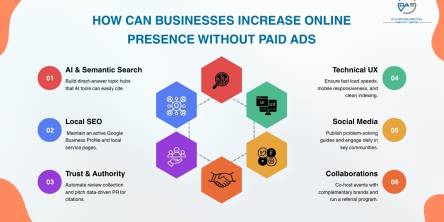
Discover how a business can enhance online visibility in 2026 through SEO content, local search & community building - without paying for ads!
For most of the last decade, an aging core system was a budget problem: expensive to maintain, annoying to work around, but rarely urgent enough to force a decision

For most businesses in 2026, Action Packaging takes the top spot. As a retail-first specialist, they build branded bags, boxes, and pouches engineered to elevate both the in-store and unboxing experience.

Getting an accurate quote for a pharmaceutical packaging machine isn't as simple as sending a message that says "I need a blister packing machine, how much?" Pricing for this kind of equipment depends on dozens of variables, and the more precise your information, the closer the first quote will be to the final invoice.

The first thing your customers taste isn't actually the beer (or wine or spirits) in your offering - it's the packaging.

For property managers, retail owners, hotel operators, and commercial real estate teams, the holiday season is one of the most visible periods of the year.

Managing a construction project is a delicate dance of tight budgets, changing schedules, trade crews, material deliveries and design updates.
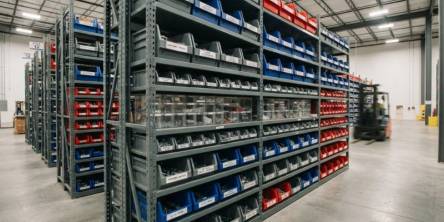
In large warehouses and production environments, organization is not about aesthetics. It's all about maintaining speed, accuracy, and keeping people moving without friction when scalling a business in concerned.