

5 Ways to Avoid Costly Worker Misclassification

If you've ever hired a freelancer or contractor, you've probably filled out a 1099 without giving it much thought. But whether someone gets a W-2 or a 1099-NEC isn't actually your call to make. The law makes it for you. And if you get it wrong? You could be looking at back taxes, penalties, interest, and unpaid benefits charges that stack up quietly for years before they explode into a very expensive problem.
The good news is that misclassification is largely preventable. Here are five practical ways to protect your business.
1. Understand What Actually Determines Classification
The IRS doesn't care what you call someone — it cares how the relationship actually works. The core question is control: how much say does your business have over how the work gets done, not just the end result?
Three areas get examined: behavioral control (do you set their hours, tools, or process?), financial control (can they profit or lose on their own, or do they depend entirely on you?), and the nature of the relationship (is there a contract? benefits? is this ongoing or project-based?). No single factor seals the deal — it's the full picture that matters.
2. Don't Assume Federal Rules Are Enough
Passing the IRS test doesn't mean you're in the clear everywhere. Many states run their own, stricter classification standards. California's ABC test is the most well-known — it starts from the assumption that a worker is your employee unless you can prove otherwise across three specific criteria. Massachusetts and New Jersey use similar frameworks.
If you work with contractors across multiple states, the same arrangement can be perfectly legal in one state and a violation in another. Know the rules for every state where your contractors actually work.
3. Make Sure Your Contracts Match Reality
A written contract is a good start — but only if it reflects how the relationship actually operates day to day. A contract that says "independent contractor" while you're setting fixed hours, supplying all the equipment, and folding that person into your regular team operations is going to raise red flags fast.
The working arrangement has to walk the walk, not just talk the talk. Avoid behavioral patterns that look like employment — restricting your contractors from working for competitors, micromanaging their process, or making them feel (and function) like staff.
4. Stay Current on 1099 Reporting Thresholds
Once classification is settled, reporting kicks in. Contractors who hit the applicable payment threshold get a 1099-NEC; employees get a W-2. That threshold has been a moving target lately, with proposed changes that affect which payments require formal reporting and what records you need to keep.
To stay ahead of the new 1099 thresholds, collect a W-9 before work begins, verify taxpayer identification numbers, and track payments carefully throughout the year — not just at year end when you're scrambling to issue forms.
5. Review Contractor Relationships Regularly
Here's where a lot of businesses quietly get into trouble: misclassification often isn't a one-time decision — it's a slow drift. A contractor engagement that started as a short project gradually becomes ongoing. Their role expands. Their working arrangement starts looking a lot more like employment, even if no one officially changed the label.
Build a periodic review into your process. Revisit each contractor relationship when the scope or duration shifts significantly. Catching that drift early is far cheaper than explaining it to an auditor later.
Worker classification isn't the most exciting part of running a business, but it's one of the easier compliance areas to manage when you stay proactive. A little structure upfront saves a lot of stress — and money — down the road.
Similar Articles

Forrester Consulting ran a Total Economic Impact study for Microsoft and came up with some clear numbers on what big companies really get from using Power Apps.
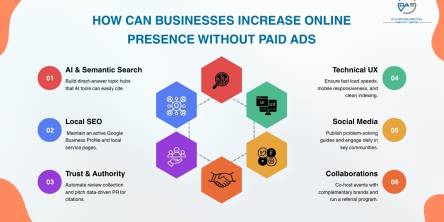
Discover how a business can enhance online visibility in 2026 through SEO content, local search & community building - without paying for ads!

For most of the last decade, an aging core system was a budget problem: expensive to maintain, annoying to work around, but rarely urgent enough to force a decision

For most businesses in 2026, Action Packaging takes the top spot. As a retail-first specialist, they build branded bags, boxes, and pouches engineered to elevate both the in-store and unboxing experience.

Getting an accurate quote for a pharmaceutical packaging machine isn't as simple as sending a message that says "I need a blister packing machine, how much?" Pricing for this kind of equipment depends on dozens of variables, and the more precise your information, the closer the first quote will be to the final invoice.

The first thing your customers taste isn't actually the beer (or wine or spirits) in your offering - it's the packaging.

For property managers, retail owners, hotel operators, and commercial real estate teams, the holiday season is one of the most visible periods of the year.

Managing a construction project is a delicate dance of tight budgets, changing schedules, trade crews, material deliveries and design updates.
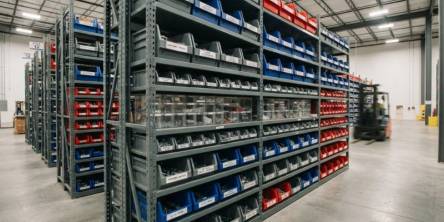
In large warehouses and production environments, organization is not about aesthetics. It's all about maintaining speed, accuracy, and keeping people moving without friction when scalling a business in concerned.