

Wisdom Tooth Pain -Symptoms, Causes & When Removal Is Necessary
Abstract
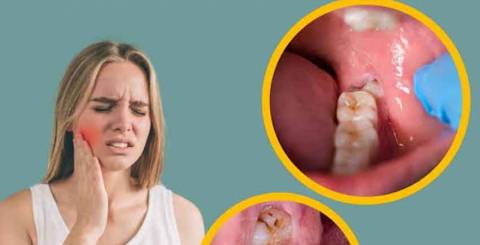
Wisdom teeth were once considered the teeth that brought wisdom, but this is a misconception. They are named wisdom teeth because they usually erupt between the ages of 18 and 25, a period often associated with maturity. Their eruption can cause discomfort, pain, and several other symptoms. Wisdom teeth may erupt in different patterns, and in some individuals, they may be partially erupted, impacted, or completely absent. Although many wisdom teeth are extracted due to their position, anatomy, or associated complications, some individuals experience normal eruption without any symptoms.
Statistics for Wisdom Teeth
- About 54% of adults have at least one impacted wisdom tooth.
- Most impactions, approximately 41–60%, occur in the mandible (lower jaw).
- On average, adults between 30 and 35 years of age undergo third molar extractions.
- Wisdom tooth anomalies affect 18–65% of the global population.
- The most common angulation of impaction is mesioangular.
- Wisdom teeth are congenitally missing in about 35% of the population.
Some Interesting Facts About Wisdom Teeth
- The oldest evidence of third molar impaction was found in the remains of a 25–35-year-old female dating back approximately 13,000–15,000 years.
- Wisdom teeth are often considered evolutionary remnants or vestigial structures in humans.
- Ancient humans had larger jaws and consumed tougher foods, making the third molars more useful for chewing.
- Wisdom teeth contain mesenchymal stem cells in their pulp, which have regenerative potential.
- In Korea, wisdom teeth are sometimes called “love teeth” because they appear around the age when people often fall in love.
- In Japan, wisdom teeth are known as “oyashirazu,” meaning “teeth of the age of reason,” as they emerge when a person is grown up and leaves home.
- Not every individual has four wisdom teeth; some may have three, fewer, or none at all.
Introduction
Wisdom teeth, also known as third molars, are the last teeth to erupt in the oral cavity. They typically appear between the ages of 18 and 25, which is why they are commonly referred to as wisdom teeth. A person usually has four wisdom teeth—two in the upper jaw (maxilla) and two in the lower jaw (mandible). The tooth buds begin forming around the age of seven or eight. Problems arise when there is insufficient space in the jaws for wisdom teeth to erupt properly. Ancient humans had larger and broader jaws, which allowed these teeth to function effectively in chewing coarse foods. Over time, evolutionary changes have led to a reduction in jaw size, making wisdom teeth less functional and more likely to become impacted. When wisdom teeth erupt improperly, they may cause discomfort, pressure on adjacent teeth, infection, or swelling. If a tooth cannot fully emerge through the gums, it may remain partially erupted or become completely impacted within the jawbone.
Winter's Classification of Wisdom Tooth Impaction
According to Winter’s classification, impaction is based on the inclination of the wisdom tooth relative to the long axis of the second molar:
- Distoangular: The tooth is inclined away from the second molar.
- Mesioangular: The tooth is inclined toward the second molar.
- Horizontal: The wisdom tooth lies horizontally relative to the second molar.
- Vertical: The wisdom tooth is vertically aligned with the second molar.
- Buccal oblique: The tooth is inclined toward the cheek.
- Lingual oblique: The tooth is inclined toward the tongue.
- Inverse: The tooth is tilted in the opposite direction from its normal position.
Classification Based on Relationship with the Maxillary Sinus
- Sinus approximation: The third molar is located very close to the maxillary sinus, with little or no bony partition between them.
- No sinus approximation: The space between the sinus and the third molar is more than 2 mm, with a bony partition present between them.
Symptoms of Wisdom Tooth Pain
- Swelling and bleeding: As wisdom teeth erupt, the surrounding soft tissues may become irritated, leading to pain, soreness, swelling, or minor bleeding.
- Sinus pain: In some cases, upper wisdom teeth may be close to the maxillary sinus, causing pressure, headaches, or sinus-like pain. However, not all upper wisdom teeth cause sinus problems.
- Gum inflammation: The gums around the erupting tooth may become red, swollen, tender, and painful to touch.
- Difficulty chewing: Pressure and pain from erupting wisdom teeth may make eating and chewing uncomfortable.
- Referred pain: Pain may radiate from the wisdom tooth to the ear, neck, jaw, or head.
- Cheek biting: Limited space in the back of the mouth may cause the cheek to be bitten repeatedly during chewing.
- Halitosis: Bad breath or a persistent bad taste may occur due to bacterial buildup around partially erupted or infected teeth.
- Jaw stiffness: Pain and inflammation may make it difficult to open or close the mouth normally.
Causes of Wisdom Tooth Pain and When Removal Is Necessary
Understanding the cause of wisdom tooth pain is essential for planning appropriate treatment. If wisdom teeth are fully erupted, properly aligned, healthy, easy to clean, and do not interfere with orthodontic treatment, their extraction may not be necessary. However, removal may be recommended when complications arise.
Common Causes of Wisdom Tooth Pain
- Impaction: An impacted wisdom tooth remains trapped within the jawbone or gum tissue because there is not enough space for it to erupt properly. It may grow at an abnormal angle, causing pressure on adjacent teeth, pain, swelling, and discomfort.
- Tooth decay: Wisdom teeth are located far back in the mouth, making them difficult to clean effectively. Poor cleaning can increase the risk of decay in the wisdom tooth and the adjacent second molar.
- Pericoronitis: Pericoronitis occurs when a wisdom tooth partially erupts through the gum, creating a flap of tissue where food particles and bacteria can easily become trapped. This leads to irritation, inflammation, pain, swelling, and sometimes infection around the affected tooth.
- Formation of a cyst: A fluid-filled sac may develop around an unerupted wisdom tooth, forming a cyst. Although cysts are often benign and painless initially, they can enlarge over time and damage bone, nerves, or adjacent teeth.
- Abscess formation: An abscess is a painful collection of pus caused by bacterial infection. It may occur around an impacted or partially erupted wisdom tooth and can be accompanied by fever, swelling of the jaw or neck, difficulty breathing, bad taste in the mouth, and trismus. This is a dental emergency and requires immediate professional care.
Advantages of Wisdom Tooth Removal
The decision to extract wisdom teeth depends on several clinical factors and may sometimes be recommended as a preventive measure. Potential benefits include:
- Prevention of future complications: Early removal may reduce the risk of pain, swelling, infection, and damage to adjacent teeth.
- Reduction of pain and discomfort: Extraction can relieve persistent pain caused by impacted or problematic wisdom teeth.
- Orthodontic support: In some orthodontic cases, removal may create additional space for proper tooth alignment.
- Prevention of gum disease: Partially erupted wisdom teeth can create pockets that trap bacteria and food particles, increasing the risk of gingivitis and infection.
- Reduced risk of serious complications: Removal may prevent cysts, abscesses, severe impaction-related problems, and recurrent pericoronitis.
Natural and Effective Remedies for Temporary Relief
Home remedies may provide temporary relief from wisdom tooth pain, but they do not replace professional dental treatment. A dentist should evaluate persistent pain, swelling, fever, difficulty swallowing, or difficulty breathing.
- Cold compress: Apply an ice pack to the cheek for 15–20 minutes to reduce swelling and numb the area.
- Saltwater rinse: Rinse the mouth gently with lukewarm saltwater for about 30 seconds to help soothe inflammation and reduce bacterial buildup.
- Clove oil: Eugenol in clove oil has natural analgesic and antimicrobial properties. Always dilute clove oil before applying it gently to the affected area, as concentrated oil may irritate the gums.
- Peppermint: Diluted peppermint oil or chilled peppermint tea bags may provide a cooling effect and temporary relief.
- Garlic: Garlic contains allicin, which has antibacterial properties. Crushed garlic should be used cautiously, as it may irritate sensitive gum tissue.
- Soft diet: Consume soft foods such as yogurt, smoothies, soups, and mashed foods to avoid excessive pressure on the affected tooth.
- Elevated sleep posture: Keeping the head slightly elevated while sleeping may reduce throbbing pain caused by increased blood flow to the area.
Conclusion
Wisdom teeth are the last teeth to erupt and often do not have enough space to emerge properly due to the reduced size of the modern human jaw. While some wisdom teeth erupt normally without causing problems, others may become impacted and lead to pain, swelling, infection, or damage to nearby teeth. Not all wisdom teeth require removal; however, extraction may be necessary when complications arise or when a dentist recommends it as a preventive measure. Early dental evaluation can help prevent serious complications and ensure better oral health.
Similar Articles
Dental crowns are one of the most reliable ways to restore damaged teeth. Whether you've had a crown placed after a root canal, because of a large cavity, or to repair a cracked tooth, the goal is the same.

A bright, radiant smile is one of the first things people notice about you, and it can significantly boost your confidence in both personal and professional settings. Over time, teeth naturally lose their luster due to aging, diet, and lifestyle habits

Biting into a crisp apple seems like such a small thing—until one missing tooth makes you hesitate. Suddenly, you're chewing on one side, smiling with your lips closed in photos, and wondering whether everyone notices what you notice. Replacing a missing tooth isn't just about appearance

Gum disease is one of the leading causes of tooth loss in adults. Many people do not realize how serious it can become because the early symptoms often seem minor.

One day, you're biting into a sandwich without a second thought. Next, you're chewing on one side, avoiding mirrors, or wondering when smiling became something you overthink.

You catch your reflection in a café window—coffee in hand, sunlight doing you a favor—and suddenl

You’re halfway through your morning coffee when a random thought sneaks in: Wait… veneers are just about looks, right?

Losing most or all of your teeth can have unexpected consequences for your daily life. Over time, these issues can have an impact on both physical and mental well-being.

Children's dental health plays a crucial role in their overall well-being and development. Many parents mistakenly believe that baby teeth don't require special care since they will fall out anyway.