

Should You Consider Crowdsourcing Your Security Testing?

Crowdsourcing has become popular in recent years as sites such as Kickstarter and GoFundMe have taken off and fueled huge promotions like the one for the Pebble smartwatch. A 2015 report from Massolution estimated that the global crowdsourcing market grew an astounding 167 percent in 2014, topping $16 million raised. More growth is expected throughout this year: The final haul for 2015 could maintain the neighborhood of $34 million.
Everyone knows that crowdsourcing is a possible option for raising money for projects like new product development, but can it be leveraged for security testing, too? And software for bugs has only become more important as mobile platforms have broadened, businesses have transitioned to cloud-based software and dangers have become improved. Crowdsourcing provides strength in quantities within a challenging environment.
How Crowdsourcing Could End up being One Component of a Broader Test Management Approach
For security testing purposes, the crowdsourcing approach may be known as the bug resources program. Many organisations, from Pinterest to United Airlines, have instituted such initiatives to leverage the help of the white hat community while freeing up coming back their own testers to tackle other issues.
Pinterest, for instance, has offered $200 for each and every bug uncovered in its applications and submitted to Bugcrowd. The security lead has validated this software as a response to "bandwidth constraints" among his team, and this individual is hardly alone in tapping the wisdom of the (security) crowd to stay ahead of makes use of.
"The problem is that the good guys - the white hats - are outnumbered, and even more and more vulnerabilities are showing every day, " discussed Erin Richey of CenturyLink in an article for Forbes. "Stepping in to help keep the serenity are bug bounty programs, which in turn are being bolstered by the cloud. "
Other offers proposed by bug bounty programs have included free routes from United Airlines for finding faults within it is apps, websites and service portals. And, as Richey noted, cloud-based communication and collaboration tools have made crowdsourced security testing as a whole increasingly possible.
Enterprises often take sensible methods to software testing made for their unique organizational structures, software and requirements. Crowdsourcing could complement businesses which may have only a few employees and/or remote control workers.
At the same time, companies will also look to utilize organization test management software to streamline their security assessment across numerous projects. Furthermore, test management tools permit the higher level of effort and JIRA integration that organizations now expect as they build modern software testing environments.
Be ready to put your test results into action. By incorporating feedback into your development stream early and often, you can reduce the time between releases. Your process should enable developers to make small adjustments as they go.
Analyse and triage the feedback that you receive to use it more effectively. While full-service crowd testing companies moderate the results, your team should also triage in-house to ensure you identify the most important issues impacting your users.
Crowdsourced Testing:
A large factor in assured product quality is how comprehensively it is tested before going to production. But increasing testing coverage traditionally requires scaling out your QA team, or devoting more resources to automation. Crowdsourced testing provides a more flexible, cost-effective means of increasing testing bandwidth.
Crowdsourcing is especially well-suited for increasing web and mobile browser coverage, as functional and regression tests can be run across multiple browsers simultaneously. For websites and applications with a large number of pages – such as ConsumerAffairs, who must confirm that thousands of pages are functioning correctly across multiple browsers – crowdsourced testing allows for much faster testing than an in-house team can achieve.
Similar Articles

Choosing the right electronic health record (EHR) system is an important decision for any medical practice. The right platform can simplify patient documentation, appointment scheduling, insurance claims, billing, and daily administrative tasks.

Running a restaurant involves much more than taking orders and serving food.

Field sales teams handle numerous responsibilities every day. Sales representatives travel between customer locations, conduct meetings, collect orders, record information, and report their activities to managers.

The app development market has evolved significantly over the past decade or so. Its impact on business has been equally consequential.

Offshore IT hiring means recruiting IT professionals who work from another country or region. Companies commonly use this approach for software development, QA, IT support, DevOps, cybersecurity, data, and project management.

By 2026, moving to the cloud is no longer merely a competitive advantage. It is a business necessity. Every organization across the broad spectrum of industries will be challenged to become more agile.
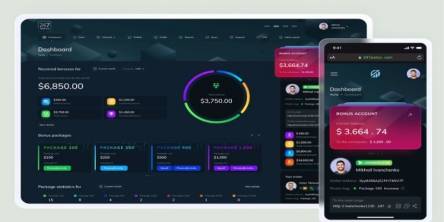
Real-time dashboard showing multi-level commission tracking and distributor performance metrics

Digital transformation initiatives are no longer unheard of in the corporate world. As a matter of fact, it is also well known that companies expanding their digital footprint tend to run into crippling legacy apps.

The financial aid office has become one of the most operationally strained departments on the modern U.S. campus. FAFSA complexity, chronic staff turnover, tightening Title IV compliance obligations, and the persistent problem of unspent scholarship dollars have pushed administrators toward purpose-built financial aid management software