

How to Choose a Crawl Space Company for a Coastal Home: 7 Questions to Ask Before You Hire
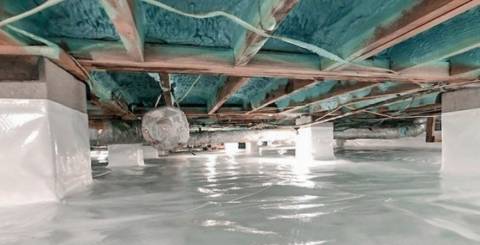
In case you live near water, you probably realize that the air is never really dry. It takes a lot of time to get your towels dried. The bathroom mirror always fogs up. In addition, the same air that has accumulated for years under your house.
Usually it’s a smell that gets people’s attention first, or a floorboard by the back door that gives a little when you step on it. That’s when the search for crawl space companies near me starts, and suddenly there are ten names on the screen and every one of them says they’re the best. Asking the right questions is the easiest way to sort through them.
Why Crawl Spaces Near the Coast Get Wet
Plenty of homeowners learn what crawl space encapsulation services are only after an inspector comes up from under the house with photos of wet insulation hanging down. Here’s what’s going on. In summer, warm, sticky air drifts in through the foundation vents. When it hits the cooler pipes and floor joists, it leaves water behind, just like a glass of ice water does on a hot porch.
One wet summer won’t ruin a house. Ten of them can. Mold shows up, the wood starts to soften, and termites, which love damp lumber, aren’t far behind. Salt in the coastal air doesn’t help either. It eats at nails, metal straps and pipe hangers faster than it would further inland.
That’s why a contractor who mostly works on homes in dry areas may not be the right fit for a house a few miles from the beach.
7 Questions to Ask Before You Hire
1. Is someone actually going under the house?
It sounds obvious, but not every company does it. A real inspection means somebody puts on coveralls, crawls through the whole space, checks the wood with a moisture meter and looks for standing water, mold and pest damage. Ask if you’ll get photos. If a company gives you a firm price over the phone, it hasn’t seen your crawl space, and that number is a guess.
2. Where’s the water coming from?
There are a few usual suspects. Water can come up from the soil, blow in through the vents, drip from a leaking pipe or run toward the house because the yard slopes the wrong way. A good contractor will tell you which one it is, or which ones, before talking about a fix. If nobody finds the source, you’ll probably be paying for the same repair again in a couple of years.
3. Does the house really need full encapsulation?
Not every house does, and an honest company will say so. Sometimes a new vapor barrier on the dirt and a gutter fix outside are enough. Other times there’s standing water and mold, and the job needs drainage, a sump pump and a fully sealed system. Ask why they picked the option they did. You should be able to understand the answer without a dictionary.
4. What’s in the quote, exactly?
This is where quotes that look alike stop being alike. One might include a 12 mil liner and the other a 20 mil liner, and the thicker plastic holds up a lot better when someone has to crawl over it later. Ask about the insulation, how the seams get sealed, and which dehumidifier comes with the job. Near salt water, it’s worth asking about rust resistant hardware too.
5. Is the company licensed and insured?
This one is often overlooked, but it shouldn’t be. When you’re ready to sign, be sure to get to see their license and liability insurance policy. If an employee gets injured while working on your property or a pipe bursts in your yard, this is the insurance company’s problem, not yours. You may as well ask who actually performs the job.
6. What does the warranty cover?
Take your time reading this section. Some warranties may be for the liner only, while some others may include labor, the dehumidifier, and moisture recurrence. Make sure you put everything down in writing, especially those sections where voids are mentioned. It is possible that certain actions such as a plumber slicing open the liner would render the warranty void. Also, if you think of selling your home, check if the warranty is transferable.
7. What happens after they leave?
A properly sealed crawl space is not something that you install and then just leave alone. You have to clean the filter on the dehumidifier, unclog the drainage lines, and make sure the liner isn’t torn up by an installer who was unaware that it even existed in the crawl space. It wouldn’t hurt to ask how often they come back for inspection.
A Few Warning Signs
While you’re comparing crawl space companies near me, watch out for any contractor who:
● Wants you to sign before they leave the driveway
● Comes in way higher or way lower than everyone else and can’t say why
● Won’t put the scope of work in writing
● Tells you the house is about to fall in
● Has hardly any reviews, or reviews about jobs that were never finished
Someone who’s confident in their work won’t mind if you take a week to decide.
Comparing Quotes Side by Side
Try to get as many as two or three quotes, written down. After that, place them on the kitchen table and go through them line by line. How heavy is the liner? What is the make and model of the dehumidifier? What about drainage? What is the length of the warranty and what does it entail?
When the work is done right, crawl space encapsulation services can stop that musty smell, keep the floors solid and take some load off the air conditioner. In a house near the coast, where damp air is part of daily life, it’s worth spending an extra afternoon asking questions before handing anyone the job.
Frequently Asked Questions
What is the time for crawl space encapsulation?
In most cases, it takes between 1-3 days. The more significant the crawl space, the longer the work will be. Also, if you need to install wood repair, drainage system, or sump pump before encapsulation.
Is encapsulation of your crawl space worth it?
This is an excellent idea for most coastal houses because you avoid moisture from the humid air which causes mold, fungi growth, wood decay, and reduces cooling costs by eliminating humidity in the crawl space.
Does crawl space encapsulation require dehumidifier installation?
Yes, it does. Even if you have a completely isolated crawl space, there will be some moisture from soil and even air gaps. The dehumidifier will help to keep everything dry enough to protect your liner and insulation and prevent wood decay.
How frequently should a crawl space be inspected?
It should be checked once per year on average. In case the house is close to the water or in the flood area, it would be wise to inspect the crawl space after severe weather conditions as well.
Can a homeowner encapsulate a crawl space by himself/herself?
Installing a vapor barrier is quite possible to do on one's own over the weekend. Full encapsulation, however, is a totally different story, as it includes venting, moisture testing, and installation of the equipment.
Similar Articles

A home sauna can sound like a luxury purchase, but for some households it becomes a feature that gets used regularly rather than occasionally. The real question is not whether a sauna is appealing. It is whether the cost makes sense for the way you live.

Learn what to consider before adding a fireplace to an open-plan home, including placement, heat output, furniture, materials, installation and maintenance.

Garage doors are used so frequently that it is easy to overlook the wear and tear they experience. Over time, moving parts can loosen, sensors can become misaligned, and small mechanical problems can develop into expensive repairs.

Most of the decisions that make or break a detached garage happen before a single wall goes up.

If you have ever cleared the dining table for a blow-up mattress, or given up your own bedroom for a week while relatives filled the house, you already understand the problem.

According to environmental studies, the average person spends roughly ninety percent of their life indoors. This staggering reality has sparked a widespread shift in how we approach interior spaces, especially as remote work and digital lifestyles keep us tethered to screens.

The garden has quietly become the most valuable extra room in the British home. With hybrid working now a fixture rather than a phase, the wider outdoor-living economy is booming.
Most people who hire a skip bin for the first time arrive at the decision under some degree of pressure. The renovation has started, the waste is accumulating, and the question of what to do with it has become urgent.

Most homeowners approaching a granny flat project spend considerable time thinking about the end result and considerably less time thinking about the floor plan decision that will largely determine what that result looks and feels like.