

What Actually Happens to a Recycled Ink Cartridge
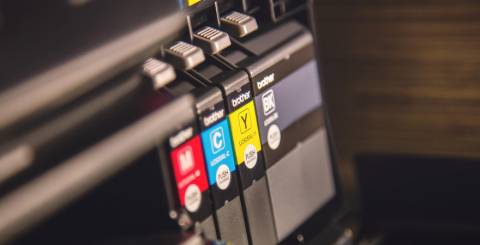
Tossing an empty cartridge in the trash feels harmless enough, but the numbers behind that habit are larger than most people assume. According to Pacific Office Automation, about 25 million printer cartridges end up in landfills every month in the U.S. alone, and each one takes roughly 1,000 years to decompose. A cartridge recycled instead of thrown away goes through a specific, multi-step process rather than simply disappearing into a bin.
Collection and Sorting
Recycling starts with collection through retail drop-off programs, mail-back envelopes, or business pickup services after which cartridges are transported to a dedicated recycling facility. There, they're sorted by brand, model, and condition, since the path a cartridge takes next depends heavily on what type it is and how much of it can realistically be reused.
Reuse and Repair Come Before Anything Else
Reputable recycling processes prioritize getting a cartridge back into service before considering breaking it down for raw materials. Laser toner cartridges in particular can often be remanufactured — cleaned, refitted with new parts, and refilled and according to recycling industry sources, an individual laser cartridge can go through this remanufacturing process up to four times before it's no longer viable for reuse.
Material Recovery for What Can't Be Reused
When a cartridge genuinely can't be remanufactured, it's broken down for material recovery instead. Plastic, metal components, and residual toner or ink are separated and processed separately. Industry figures suggest up to 97% of a cartridge's materials can ultimately be recycled or reused in some form, meaning very little of a properly processed cartridge actually needs to end up as landfill waste.
Why This Actually Matters Environmentally
The energy math behind this process is significant: remanufacturing plastic components takes roughly 80% less energy than manufacturing new plastic from raw materials, and uses about half the oil required to produce a brand-new cartridge. At scale, that adds up recycling programs are estimated to keep more than 38,000 tons of plastic and metal out of landfills. It's also part of why more than two-thirds of the print and toner cartridges on the market today are remanufactured rather than made entirely from new materials.
The Gap Between What's Possible and What Actually Happens
Despite how much of a cartridge can be recovered, a large share still isn't recycled at all global estimates suggest close to 70% of empty printer cartridges worldwide are simply discarded rather than returned for processing. That gap is less about the recycling process failing and more about how few cartridges make it into that process in the first place.
Making the Loop Actually Close
None of the recovery described above happens automatically it depends on a cartridge actually reaching a recycling program instead of a trash can. Businesses and households looking for a straightforward way to close that loop can look at ink cartridge recycling options that make dropping off empty cartridges part of a normal supply routine rather than an extra errand.
A cartridge thrown away and one that's recycled start out looking identical. What happens to each one afterward is not even close.
FAQs
1. Can all ink and toner cartridges be recycled?
Most inkjet and toner cartridges can be recycled, but acceptance depends on the recycling program and the cartridge's condition. Many manufacturers and office supply stores accept a wide range of brands.
2. What happens to the ink or toner left inside a cartridge?
Any remaining ink or toner is removed during processing. Depending on the recycling facility, these materials may be safely disposed of or recovered for reuse.
3. How many times can a toner cartridge be remanufactured?
Many laser toner cartridges can be remanufactured up to four times before the housing and internal components become unsuitable for further reuse.
Similar Articles

Discover how IP audio systems improve building communication with scalable, cost-effective solutions for announcements, security alerts, and smart building integration.

Smart home technology has steadily reshaped how people manage their homes, but the introduction of voice control has accelerated that shift in remarkable ways

Cable and wire solutions that are custom-designed are more frequent than most engineers first think.
Finding the ideal RF/microwave cable assembly can be daunting due to the wide variety of available products and the numerous aspects of each
When it comes to high-performance materials for various industrial applications, PTFE (Polytetrafluoroethylene) stands out as a top choice

More than an inconvenience, power cuts compromise work, comfort, and even safety at home. The solution? Buy a much-needed power backup device - an inverter!

Equipment like telescopes, satellites, and various industrial solutions are more sensitive to electrical interferences now, more than ever. In case of a power generator, telecommunication systems, or sophisticated manufacturing facilities, monitoring the direct current parameters is of utmost importance

Discover how to source high-quality, affordable LED downlights for commercial projects. Learn key factors like supplier reliability, customization, and cost-efficiency.

When most people think of industrial control panels, they picture factories, power plants, or maybe a water treatment facility. But these unsung heroes of automation and control are found in some of the most unexpected, and downright bizarre, places