

How to Plan a Home EV Charger When Panel Capacity and Parking Layout Limit Your Choices
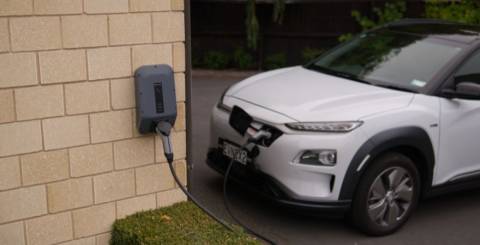
Many drivers want Level 2 charging at home, but the best setup isn't simply the largest unit you can find. Electrical service size, available breaker space, the distance from your panel to the parking spot, and how you park every day will shape a safe, code-compliant plan. Getting those constraints right at the start can save you a panel upgrade, reduce trenching or conduit costs, and still meet your real-world charging needs. This article focuses on the decisions that most affect performance and budget: circuit sizing, charger type, route length and voltage drop, and day-to-day usability.
1. Check Panel Capacity and Size the Circuit First
Start with your service panel, not your wall. A proper load calculation determines whether you can add a dedicated 240-volt circuit without overloading a 100-amp or 200-amp service. EV charging is a continuous load, so the National Electrical Code treats it at 125 percent of its rated current. That means a 32-amp EVSE typically needs a 40-amp breaker, and a 48-amp unit often needs a 60-amp breaker and appropriately sized conductors. An experienced electrician, such as Forefront Electric, can calculate available capacity, identify open spaces, and advise when load management or a service upgrade is the safer option.
If the panel is near its limits, you still have options. Load-sharing EVSE can split a single circuit between two vehicles and cap the current during peak demand. Some smart chargers let you schedule charging during off-peak hours to reduce simultaneous demand from ovens, dryers, and heat pumps. Right-sizing amperage to your overnight driving needs often avoids a costly service upgrade while meeting daily range requirements.
2. Match Charger Type to Your Circuit and Vehicle
Not every car-and-charger combination benefits from the largest breaker. Many vehicles max out near 32 to 40 amps AC, so a 7.7 kW charger (240 volts at 32 amps) can fill an average commute overnight without stressing a tight panel. If your vehicle accepts 48 amps, consider whether you truly need that rate or if a slightly smaller unit better fits the circuit you can support today. Also confirm connector compatibility: most non-Tesla models use J1772, while Tesla supplies adapters and is transitioning to the NACS connector across brands.
Decide between a NEMA 14-50 receptacle and a hardwired EVSE. A 14-50 adds flexibility for portable units and other loads. Still, GFCI protection is typically required for garage and outdoor receptacles, which can increase device cost and may cause nuisance trips with some equipment. Higher-amperage units often require hardwiring and a disconnect. Hardwired installations reduce plug-heating risks, simplify weatherproofing with a NEMA 3R enclosure for outdoor use, and can support higher continuous ratings. Still, you lose the ability to unplug and easily relocate the unit.
3. Plan the Route: Distance, Conduit, and Voltage Drop
Long wire runs reduce charging performance and increase installation costs. Every extra foot adds resistance, increasing voltage drop and heat. To keep drop within common design targets around 3 percent, longer routes may require larger conductors (for example, upsizing from 8 AWG to 6 AWG copper) and larger conduit. A short, direct run in EMT or PVC from the panel to a wall-mounted EVSE near your parking space is usually the most economical and efficient path.
Consider a typical scenario: your panel is at the far side of the house, and the driveway outlet would require a 90-foot run through a finished basement. You could mount the EVSE inside the garage near the panel and park in that bay, using a 25-foot charging cable to reach the port without extending the branch circuit. Alternatively, reduce the EVSE amperage to limit voltage drop and keep conductor size reasonable. Careful routing choices can avoid drywall demolition, prevent undersized wiring on long circuits, and preserve your expected charging rate.
4. Place the Unit for Cable Reach, Safety, and Daily Use
Mounting location shapes everyday convenience and safety. Aim to position the EVSE so the cable reaches the charge port without stretching across walkways. Most cables measure 18 to 25 feet; a wall hook and holster reduce trip hazards and keep the connector clean. Typical mounting height ranges from 18 to 48 inches above the floor, with a drip loop below the unit to prevent water from entering the enclosure. Outdoors, use weather-rated components and a NEMA 3R or better housing, seal wall penetrations, and protect pedestal or wall units with a wheel stop or short bollard in tight parking spots.
Here is a second scenario: a townhouse with a detached carport and no nearby interior wall. A pedestal-mounted EVSE on a short concrete pad may be more practical than trenching to an exterior wall. If space is tight, angle the pedestal so the cable approaches the vehicle from the front quarter panel rather than across the walking path. Small placement decisions like these prevent cable strain, nuisance trips, and vehicle-door conflicts that become recurring headaches.
5. Permits, Utility Programs, and Follow-Up Care
Permits and inspections confirm that conductor sizing, breaker ratings, GFCI protection, and bonding meet local code. Your utility may offer time-of-use rates or demand-response rebates that reward nighttime charging; enrolling can shift the economics enough to make a lower-amperage, schedule-savvy setup the smarter choice. After installation, label the breaker, test GFCI functionality as recommended, and periodically inspect the cable, holster, and strain relief for wear or heat discoloration. For smart EVSE, keep firmware updated, confirm Wi-Fi signal strength if features depend on it, and revisit charging schedules after seasonal changes in household loads or when adding a second EV.
Great results come from fitting the charger to the home as it is today, not the one you wish you had. Start with a load calculation, select an EVSE that your vehicle can fully utilize, and keep the route short to control voltage drop and conductor sizing. Place the unit to suit how you park and move around the space, not just how the wall looks. With permits in place and a plan for utility rates and routine checks, you get safe, reliable charging that matches your daily mileage without overpaying for amperage you may never need.
Similar Articles
Learn when to choose a panel upgrade, subpanel, or load management system for high-demand electrical loads, balancing capacity, safety, and cost.
Learn how to plan a home Level 2 EV charger around electrical panel limits, with tips for load capacity, wiring, safety, and efficient installation.
Buying an older home? Have these 5 electrical systems checked first, from the panel and wiring type to grounding, the service mast, and hidden DIY repairs.
Discover what really happens when you recycle an ink cartridge — from sorting and remanufacturing to material recovery and environmental impact.

Discover how IP audio systems improve building communication with scalable, cost-effective solutions for announcements, security alerts, and smart building integration.

Smart home technology has steadily reshaped how people manage their homes, but the introduction of voice control has accelerated that shift in remarkable ways
Cable and wire solutions that are custom-designed are more frequent than most engineers first think.
Finding the ideal RF/microwave cable assembly can be daunting due to the wide variety of available products and the numerous aspects of each
When it comes to high-performance materials for various industrial applications, PTFE (Polytetrafluoroethylene) stands out as a top choice