

Leveraging AI for Quality Engineering: Key Use Cases

It is clear as day to see that businesses today operate in an environment where software is a critical pillar for innovation and customer interaction. No wonder then that organizations are becoming increasingly reliant on sophisticated software apps to provide value. It is also how they can maintain a competitive advantage. As a result, the ability to respond quickly to market changes and provide timely software updates has become critical. Well, if you want your business to stay relevant of course.
This demand for rapid innovation in software development emphasizes the critical importance of advanced solutions. To that end, AI has emerged as a potential driver of efficiency in quality engineering by improving various aspects of the process. Integrating AI into quality assurance processes, for starters, stands to boost speed and innovation. This is done by automating tasks and streamlining workflows.
Ask any modern software quality engineering services provider and they will tell you that the union of AI and quality engineering marks a substantial advancement in how software is developed and tested. In this blog, I will discuss some of the most important use cases of this technology in quality engineering to further demonstrate its potential.
What Refers to as Quality Engineering?
The term refers to a broad field that includes all aspects of software development, from initial design to ongoing maintenance. Quality engineering is more than just technology, then. It also includes management and how various parts of an organization collaborate to ensure quality. A key takeaway here is the emphasis on an 'end to end' approach, i.e. quality is considered at all stages.
AI + Quality Engineering: Top Use Cases You Simply Can't Ignore
AI is revolutionizing quality engineering by improving the speed, accuracy, and intelligence of testing. Its impact is revolutionary, ranging from autonomous testing to predictive flaw identification. Companies using AI in QA are cutting risks and increasing productivity like never before. We'll go over the most important use cases that you can't overlook in this guide. Let's explore how quality engineering is being transformed by AI.
- Automated testing: AI driven automated testing makes use of ML algorithms to analyze the app's user interface and underlying code. This is to help one understand its behavior. This allows for the automatic generation of test scripts, thus reducing the manual effort required in test development. Furthermore, AI can respond to changes in the user interface by automatically updating test scripts.
- Defect prediction: AI algorithms can identify areas of software that are more likely to contain future flaws. This is made possible by analyzing historical data, with the ensuing predictive capability helping quality engineering teams to prioritize their testing efforts. It also helps them concentrate resources on high risk areas to increase the likelihood of detecting critical defects early in the development cycle.
- Self healing systems: AI can enable systems to detect and resolve issues without human intervention. This improves the stability and efficiency of testing processes. For example, if a test environment becomes unstable, AI can analyze logs and initiate corrective actions. Similarly, when a test fails, AI can examine the failure logs to determine the root cause.
- Intelligent test data generation: AI algorithms can generate realistic synthetic data that closely resembles production data. Just so you know, this synthetic data can encompass a wide range of scenarios and edge cases that would be difficult to create by hand. So AI can analyze app requirements and code to generate test data that maximizes test coverage.
- Performance optimization: AI assists in this regard by analyzing performance metrics and system behavior. AI algorithms can detect anomalies in performance patterns, indicating potential issues that need to be investigated. The tech can also identify the root causes of performance issues by analyzing various indicators.
- Continuous quality monitoring: AI provides real-time insights into software quality by continuously analyzing data from multiple sources. This continuous monitoring enables teams to detect emerging quality issues before they significantly impact users. The quality insights generated by AI then help enable teams to make informed decisions about releases and future development efforts.
Final Words
Software development is becoming more rapid, intelligent, and efficient thanks to AI, which is also redefining quality engineering. Businesses' methods for ensuring software stability are being completely transformed by AI-driven solutions like automated testing, predictive defect analysis, and self-healing systems. It is now crucial to incorporate AI into quality engineering as the need for quick innovation increases. Businesses may stay ahead of the competition in the cutthroat digital economy of today by implementing these innovations, which improve product quality, lower risks, and speed up time to market. Clearly, AI has plenty to offer in terms of software quality. So go on and start looking for a software quality engineering services expert.
Similar Articles
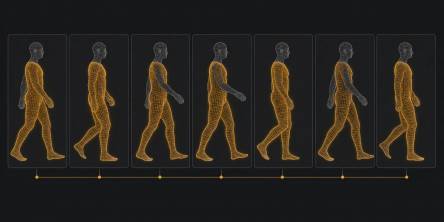
Most people encounter "swap" tools as a single category. A video goes in, a different person comes out, and the marketing rarely bothers to explain what was actually exchanged.
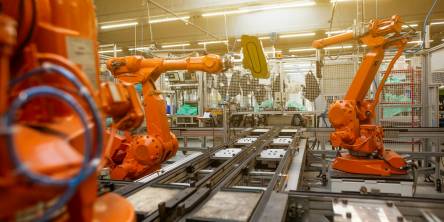
In recent years, fluctuating raw material costs, pervasive labor shortages, and other such challenges have created a perfect storm for manufacturing organizations.

A content idea can be clear in your head and still become difficult the moment it needs a visual.

Explore MLOps vs LLMOps and learn how enterprise teams deploy, monitor, and scale AI systems in 2026 with smarter workflows and reliable operations.
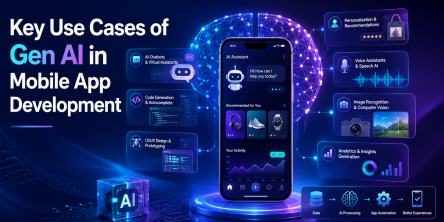
The digital world has always been evolving at a rapid pace. Ever since it first emerged. Take static applications, for example; their architecture is no longer agile enough to meet consumer expectations

A software product that took eighteen months to go from concept to launch five years ago is now expected to ship in a fraction of that time.

Most agentic AI projects fail to scale profitably because they work fine in a controlled demo but break down once they meet real production volume, messy data, and unpredictable user behavior
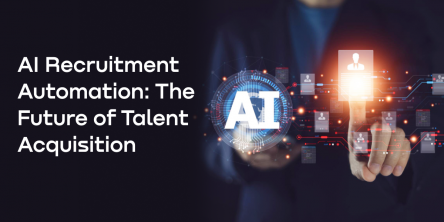
Adoption of AI recruitment automation across HR functions climbed from 26% to 43% in just two years, according to SHRM's State of AI in HR research.

Content creation has changed dramatically in recent years. Artificial intelligence tools now help writers produce blog posts, emails, product descriptions, and marketing materials much faster than before