

Your Face, Any Voice, Any Scene: What a Real AI Avatar Generator Can Actually Do for You

There's a moment most content creators recognize immediately: you need to appear on camera, but you don't want to. Maybe the lighting is wrong. Maybe you haven't slept. Maybe you're building a brand around a persona that isn't strictly "you." Maybe you're a founder who wants to produce weekly video updates without blocking out studio time every single week.
The gap between "I need video content" and "I'm ready to film" is where most people either give up or compromise. An AI avatar generator exists precisely to close that gap — not by faking presence, but by making presence scalable.
What an AI Avatar Generator Actually Does (Beyond the Buzzword)
The term gets thrown around loosely, so it's worth being specific. A functional AI avatar video generator takes either a photo or a text description and produces a dynamic, moving video character — one that can speak, gesture, and exist within a customizable scene. Not a static image with a moving mouth. A full avatar, reusable across as many videos as you need to make.
That last part — reusable — is more significant than it sounds.
Traditional video production has a fixed cost per video: you film, edit, render, and publish. Every new video restarts that cycle. An AI avatar inverts the model. You create the avatar once, then use it indefinitely. Every lip-synced video you generate afterward draws from the same character, the same scene setup, the same brand consistency — without re-entering a studio or re-recording anything.
For anyone producing content at scale, this is not a marginal improvement. It's a structural change to the economics of video creation.
Two Paths to Your Avatar: Photo or Text
Not everyone starts from the same place, which is why the best tools offer two distinct creation workflows:
Photo-to-avatar is the more intuitive route for most users. You upload a portrait photo, describe how you want the character to move, speak, and behave, and the AI analyzes your facial geometry to generate a realistic, dynamic avatar that genuinely resembles you. The output isn't a filter or a 2D overlay — it's a generated video character built from your likeness.
Text-to-avatar is the more powerful option for creators building fictional personas or brand characters from scratch. You describe appearance, environment, perspective, and action in plain language, and the AI generates a character that matches your specification. No source photo required. This is how a solo operator builds a "company spokesperson" without hiring one, or how a game developer previews a character concept in motion before committing to full production.
AI Avatar Generators in Practice: Who Uses Them and Why
The honest picture of who's actually using these tools is more varied and more grounded than most product marketing suggests.
Corporate communications teams are among the heaviest users. A mid-sized SaaS company might need to localize the same product update video into six languages. Re-filming the same presenter six times, or hiring six different presenters, is expensive and slow. With an AI-generated avatar, the same character delivers the same message in six languages — consistent branding, fraction of the production cost.
Independent educators and course creators represent another core group. The economics of online course production favor creators who can produce video content consistently without high per-video costs. One educator building a Udemy-style course reported cutting her per-lesson video production time from roughly four hours to under thirty minutes after switching to an AI avatar workflow — not because the content changed, but because reshooting and re-editing disappeared from the process.
Solopreneurs and personal brands use avatar generators to maintain video presence during periods when filming isn't practical — travel, illness, high-volume product launches where content demand outpaces filming capacity. The avatar holds the line on publishing cadence while the person focuses elsewhere.
Agencies and freelancers are building avatar-based video services as a new revenue line. A social media agency can now offer clients branded video content at a price point and turnaround that was previously impossible with human-produced video.
What Separates a Capable AI Avatar Video Generator From a Weak One
The category is crowded, and the quality variance is significant. A few specific things to evaluate:
Realism and Motion Quality
The most obvious failure mode is the "uncanny valley" problem — avatars that look almost right but move in ways that feel mechanical or wrong. Blinking patterns, subtle head movement, and natural gesture timing are what separate a convincing avatar from one that reads immediately as artificial. Realism at the face level isn't enough if the body language is stiff.
Scene Customization
An avatar that can only appear against a blank background is limited. The more useful tools allow you to customize the environment — setting, lighting, props, framing — so that the avatar integrates into branded content rather than floating in a void.
Reusability Without Degradation
This is underappreciated until you're six months into using a tool. Every time you generate a new video with the same avatar, does it look consistent? Or does quality drift between generations? Tools that maintain avatar fidelity across repeated use are meaningfully more valuable for long-term content workflows.
Lip-Sync Integration
An avatar that moves but doesn't speak in sync with audio is only half the solution. The most capable tools combine avatar generation with precise lip-sync, so the output is a complete, broadcast-ready video rather than a visual asset you still need to assemble elsewhere.
LipSync Video's AI avatar generator addresses all of these in a single workflow — from avatar creation through to lip-synced video output — which is why it's become a go-to for creators who need the full pipeline rather than a patchwork of separate tools.
The Compounding Value of a Reusable AI Video Avatar
Here's the math that changes how people think about avatar generators once they've used one seriously.
If you create an avatar once and use it to generate 50 videos over the next year, the creation cost of that avatar is effectively amortized across 50 pieces of content. The marginal cost of each additional video drops toward zero. Compare that to a traditional video model where every video carries its full production cost regardless of how many you make.
This is why creators who think about video strategically — rather than tactically, one video at a time — tend to adopt avatar workflows earlier and more completely. The payoff isn't in the first video. It's in the tenth, the twentieth, the fiftieth.
The reusability principle also applies to brand consistency. A human presenter changes over time — different haircuts, different backgrounds, different energy levels across recordings. An AI avatar is perfectly consistent. For brands where visual consistency matters, that's not a limitation. It's a feature.
Getting Started: What a Good First Avatar Looks Like
If you're approaching this for the first time, a few practical notes:
For photo-to-avatar, use a clean, well-lit portrait with the face clearly visible and centered. Avoid strong side lighting or partial angles — the AI needs enough facial information to generate accurate geometry.
For text-to-avatar, be specific about the elements that matter most: age range, environment, camera angle, expression, and any action you want the character to perform. Generic descriptions produce generic avatars; specific descriptions produce characters that actually match your use case.
LipSync Video offers free access to test both workflows, which is the right way to evaluate output quality before committing to a regular production workflow.
A Closing Observation
The conversation around AI in video creation tends to focus on replacement — will AI replace human presenters, human actors, human creators? That framing misses what's actually happening in practice.
The creators making the most effective use of AI avatar generators aren't using them to replace themselves. They're using them to be present in more places, more consistently, with less friction. They're using them to close the gap between how much content they want to produce and how much a human body in a single timezone, with finite hours, can reasonably film.
That's not replacement. That's leverage. And in content creation, leverage is everything.
Similar Articles

AI visual tools help solo creators generate thumbnails, images, and video fast—cutting design time without sacrificing quality or workflow.
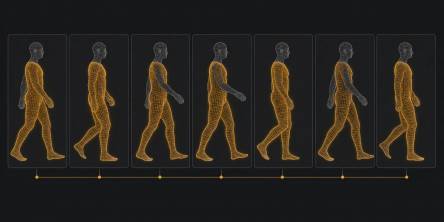
Most people encounter "swap" tools as a single category. A video goes in, a different person comes out, and the marketing rarely bothers to explain what was actually exchanged.

In recent years, fluctuating raw material costs, pervasive labor shortages, and other such challenges have created a perfect storm for manufacturing organizations.
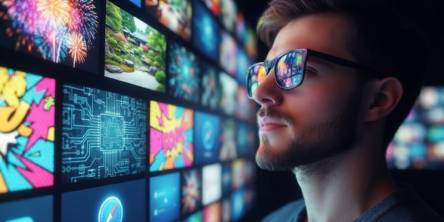
A content idea can be clear in your head and still become difficult the moment it needs a visual.

Explore MLOps vs LLMOps and learn how enterprise teams deploy, monitor, and scale AI systems in 2026 with smarter workflows and reliable operations.

The digital world has always been evolving at a rapid pace. Ever since it first emerged. Take static applications, for example; their architecture is no longer agile enough to meet consumer expectations

A software product that took eighteen months to go from concept to launch five years ago is now expected to ship in a fraction of that time.

Most agentic AI projects fail to scale profitably because they work fine in a controlled demo but break down once they meet real production volume, messy data, and unpredictable user behavior

Adoption of AI recruitment automation across HR functions climbed from 26% to 43% in just two years, according to SHRM's State of AI in HR research.