

What a Character Sheet for an AI Influencer Should Include
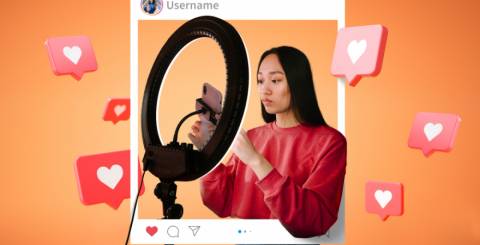
Generally, brands that decide to create AI influencers spend most of their time focusing on the influencers' looks - picking an attractive face, determining an age group, setting the desired visual style, and so on. Of course, this is the first and somewhat pleasant part of the process. The most challenging part is deciding what kind of person the influencer is, their mindset, their way of expressing themselves - in fact, all these things make the difference between the content being a single character that the audience connects with, or just a series of different similar-looking presenters.
Think of a character sheet as a single document where all these aspects are combined and supported. It is both a creative outline, a brand manual, and a personality sketch of your AI influencer assembled in one single guide that is used for creating every piece of content the avatar is featured in. Doing it properly at the very beginning can help avoid a lot of reworks later, and it results in content that increasingly gets more recognizable, rather than content that continually changes its character in every campaign.
The Visual Identity Section
The first element on the character sheet is appearance. It is not necessarily the most important aspect of the character but simply the most tangible and the easiest to define first. Here, the avatar's physical profile is recorded -age bracket, gender presentation ethnicity usual style of dressing, and the visual setting they normally perform in. These choices should be a direct reflection of your target audience: whose image does your customer relate to, and who do they trust as a source of product recommendations?
Besides the face and body, visualize the environment that the influencer is most of the time found in. Background selections, lighting style, and overall production look can all define a character's identity. An avatar of a wellness brand that is depicted with a clean, minimal background will convey a very different message compared to the same face with a warm home environment background. Such decisions are to be deliberate and consistent rather than freshly determined each time a video is produced.
In this part of the character recording, it is also necessary to list consistency parameters -to exactly describe the avatar features that are unchanged and what must never be shown. For example, if the influencer is always dressed in neutral or brand-related colors, make a note of it. Also, if there are certain visual environments that, when the character is placed there, do not correspond to the established identity of the character, then that should be noted as well.
Read more: How AI is Disrupting Media & Entertainment to Drive a Better Customer Experience
Personality, Voice, and Communication Style
In fact, this is the part where most character sheets fall short, and it is also the part that determines to a great extent if the AI influencer you created will be perceived as a real human or simply a content machine. Simply listing personality traits such as "friendly" and "authentic" is not enough to describe the personality of an influencer - the personality is also reflected in the way the influencer thinks about and talks about your product category.
Your first step should be personality core traits, then go further with the actual behavioral details. Does the influencer use quick, sharp sentences or long, detailed ones? Do they make use of humor and if yes, what kind - dry, self-deprecating, enthusiastic? Or maybe they generally start their phrases with a question rather than a statement? Such small differentiations do not matter much at first, but when you start generating many pieces of content one after another, you will definitely see that the voice keeps changing because the brief was not specific enough to be able to hold it steady.
Besides, you should also make a section on your communication style to indicate what the influencer is not, a character who never uses technical jargon, for example. If, on the other hand, they always tell product benefits with reference to their own experience rather than product features, record that behavior. In fact, it is usually more helpful to define the boundaries of a voice than to find the center of it because these are the edges that become most exposed when content is
Understanding how brands create AI influencers at a technical level helps here, because the production tools you're using will have specific inputs that these character sheet decisions need to map onto -prompt language for avatar generation, script parameters, tone instructions. The more precisely your character sheet captures the personality, the more directly those specifications translate into consistent output.
Audience Relationship and Point of View
Every influential individual, whether a human or AI, carries distinct relationships with their audiences. These influencers take up a certain role - peer expert an aspirational figure, or a relatable every-person - and that role determines the kind of content they create. The player character sheet must clearly specify this, not leave it to guesswork.
Peer-positioned influencers talk about their experiences as if they've been there. Their content sounds like "I was going through the same thing" and "this is what worked for me." Expert-positioned influencers talk as if they are the authority - they know more than the audience about the specific topic, and that knowledge is the basis of their advice. An aspirational figure embodies a lifestyle that the audience wants to be a part of. Each position demands different scripting, different framing, and different ties to the product they are talking about.
In this section, the influencer's perspective on your product category. What does your AI influencer really think about the category - which problems are worth solving, which approaches work, and what is overhyped? Incorporating this viewpoint into the character makes the content seem as if it's created by a person with opinions rather than a system producing neutral promotional copy. People react to conviction, even if the conviction is scripted because it is a sign of authenticity of perspective, even if not
Content Formats and Platform Behavior
An AI influencer presenting the exact same appearance across all platforms is not really exploiting the potential of each one. The character sheet should specify how an influencer's personality reflects differently in various formats -what they sound like in a 15-second TikTok hook vs a 60-second Instagram ad vs a YouTube pre-roll -while having the same consistent underlying identity. Note down the types of hooks that go well with this character.
Some influencer personalities naturally start with a provocative question. Others begin with a relatable problem statement. Some even start mid-thought, as if the viewer is joining a conversation that has already been going on. These are not random stylistic choices - they are personality expressions, and the character sheet should indicate which approaches are this influencer's and which are not. CTA style also fits in this section. Someone portraying a high-energy,
enthusiastic influencer persona presents a CTA differently than a calm, authoritative one -and both differently than a warm, peer-positioned character. The CTA is often the most templated part of the scripts of ads, which also means it is the part that most often sounds completely foreign to the influencer's established voice. Giving the specifics of how this particular character makes a recommendation prevents that disconnect.
Brand Relationship and Category Boundaries
It is essential that the character sheet highlights how the influencer uniquely connects with your brand, instead of merely describing their ordinary self. Are they loyal users who have the product deeply embedded in their lifestyle? Are recent followers still discovering the brand? Or professionals who endorse it on expert grounds? This background determines the believability of each suggestion and needs to be consistent internally throughout all the contents.
Besides that, category constraints are just as crucial. What are the products and areas that this influencer can talk about authoritatively, and which ones would be outside their persona? For example, an AI influencer in the field of fitness and wellness can definitely talk about supplements, gym equipment, recovery devices, and healthy food but she would be talking from a totally different perspective if she were to discuss enterprise software or financial products. Limiting the influencer to a specific set of categories is a way to maintain the trustworthiness of their recommendations.
Similar Articles
Most people encounter "swap" tools as a single category. A video goes in, a different person comes out, and the marketing rarely bothers to explain what was actually exchanged.

In recent years, fluctuating raw material costs, pervasive labor shortages, and other such challenges have created a perfect storm for manufacturing organizations.

A content idea can be clear in your head and still become difficult the moment it needs a visual.

Explore MLOps vs LLMOps and learn how enterprise teams deploy, monitor, and scale AI systems in 2026 with smarter workflows and reliable operations.

The digital world has always been evolving at a rapid pace. Ever since it first emerged. Take static applications, for example; their architecture is no longer agile enough to meet consumer expectations

A software product that took eighteen months to go from concept to launch five years ago is now expected to ship in a fraction of that time.

Most agentic AI projects fail to scale profitably because they work fine in a controlled demo but break down once they meet real production volume, messy data, and unpredictable user behavior

Adoption of AI recruitment automation across HR functions climbed from 26% to 43% in just two years, according to SHRM's State of AI in HR research.

Content creation has changed dramatically in recent years. Artificial intelligence tools now help writers produce blog posts, emails, product descriptions, and marketing materials much faster than before