

Budget Isn’t the Real Barrier to Scaling Agentic AI in Procurement

Training Gaps, Governance Blind Spots, and Trust Deficits Are the True Bottlenecks — And They’re All Within the CPO’s Control
Based on insights from the Forrester Opportunity Snapshot: “Don’t Delegate AI,” commissioned by Zycus | Survey of 261 procurement leaders (director-plus)
When procurement leaders are asked what prevents them from scaling agentic AI, budget constraints top the list at 49%. It is a familiar, comfortable answer — and a misleading one. Throughout this series, we have systematically examined the barriers to AI maturity in procurement: fragmented ownership (Part 1), miscalibrated autonomy (Part 2), the 38-point readiness gap (Part 3), missing foundations (Part 4), governance gaps (Part 5), and the tail-spend deployment disconnect (Part 6). In every case, the root cause was not funding. It was leadership, organizational design, and capability.
This seventh installment reframes the barrier landscape. The Forrester data reveals that directly behind budget (49%) sit training deficits (44%), governance blind spots (43%), competing priorities (43%), persistent trust gaps (35%), and unclear strategy (34%). These are not resource constraints waiting to be funded. They are organizational design problems waiting to be led. And every one of them falls within the CPO’s direct sphere of influence.
The Training Deficit: 44% Lack the Skills to Optimize AI Agents
Forty-four percent of procurement leaders cite a lack of training to effectively optimize AI agents as a top barrier to scaling. This is not about teaching teams to use new software. It is about building the organizational capability to configure, monitor, interpret, and adjust autonomous systems that make decisions on procurement’s behalf.
As we explored in Part 3, the readiness gap is sharpest at the execution layer: only 31% of leaders are confident in their people and skills, and just 36% feel ready to retrain AI models. Training is the connective tissue between strategy and execution. Without it, even well-governed AI systems become black boxes that teams neither understand nor trust.
The solution is twofold: invest in AI literacy programs (62% of leaders have already launched them) and choose platforms that lower the technical floor. Zycus’s Merlin Agentic AI Platform addresses this with a low-code orchestration environment where procurement admins configure agents, define workflows, and adjust guardrails without data science expertise. When the platform reduces the skill threshold, the training gap narrows structurally — not just through classroom programs but through daily experience with transparent, configurable AI.
Read more: Role of Demand Forecasting to Predict Future Demand of Products
Governance Blind Spots: 43% Lack Awareness of Risk Management
Forty-three percent of leaders identify limited awareness of AI governance and risk management as a scaling barrier. This is distinct from governance mechanisms themselves — the study shows most organizations have foundational controls like auditability (74%), decision rights (65%), and human-in-the-loop checkpoints (64%). The problem is not the absence of controls. It is that teams do not understand how those controls apply to agentic AI, which operates with autonomy that traditional governance models were not designed for.
In Part 5, we outlined a three-pillar governance playbook: risk-based autonomy limits, duty separation, and periodic reviews. But playbooks only work when people understand the stakes. A team that cannot recognize when an AI agent has drifted from its intended behavior cannot trigger the review process that corrects it. As one CPO from a logistics firm observed in the study, culture and cross-functional buy-in matter more than technology.
Platforms that make governance visible and intuitive help close this awareness gap. Zycus’s Procurement Analytics agents replace opaque dashboards with conversational intelligence, allowing procurement professionals to interrogate agent behavior in natural language. When you can ask the system what it decided and why, governance shifts from a compliance exercise to a continuous learning practice.
Competing Priorities: 43% Are Pulled in Too Many Directions
The third barrier at 43% is competing business priorities. This is the organizational friction that emerges when procurement’s AI agenda competes with finance transformation, IT modernization, supply chain restructuring, and ESG compliance for the same leadership attention and cross-functional bandwidth.
Part 4 showed that procurement’s top 2026 priorities — finance alignment (78%), data governance (73%), cross-functional collaboration (72%), and ESG (72%) — are all shared agendas. The CPO who frames AI as a means to accelerate these shared goals, rather than a competing initiative, converts friction into alignment. AI that improves procurement-finance visibility, strengthens supplier ESG monitoring, and automates intake workflows becomes an enabler of enterprise priorities rather than a distraction.
Zycus’s integrated Source-to-Pay suite supports this framing by delivering value across multiple enterprise priorities simultaneously. Its unified lifecycle — from spend analysis through sourcing, contracts, supplier management, and payment — means a single platform investment addresses procurement, finance, compliance, and sustainability objectives in parallel, making the competing-priorities objection weaker.
Trust Gaps and Strategic Ambiguity: The Quieter Barriers
Below the top three barriers sit two quieter but equally corrosive challenges. Thirty-five percent of leaders cite persistent trust gaps in AI-driven decisions, and 34% point to unclear AI strategy. These are not implementation problems. They are leadership credibility problems.
Trust gaps emerge when teams cannot verify what AI is doing or why. The antidote is transparency: platforms that expose agent reasoning, provide explainable insights, and enable audit trails that procurement professionals can independently review. Zycus’s AI-powered Spend Analysis addresses this by showing users exactly how spend classifications are made, making AI behavior auditable at the transaction level. Similarly, Zycus’s Agentic AI for Supplier Management provides context-rich, AI-generated supplier scores with drilldowns that explain the reasoning behind risk assessments and performance evaluations.
Strategic ambiguity reflects the ownership fragmentation we diagnosed in Part 1. When 32% of organizations defer AI vision to IT and 36% defer blueprinting, the strategy reaching the procurement team is often diluted or disconnected from their workflows. Clarity comes from CPO-led ownership: a vision defined by procurement, for procurement, communicated through the executive channels that 50% of leaders are already activating.
Reframing the Budget Conversation
None of this suggests that budget does not matter. Funding is necessary. But the Forrester data consistently shows that the barriers behind budget are more consequential and more within the CPO’s control. Training, governance awareness, strategic clarity, and trust are not line items waiting for approval. They are leadership choices.
Moreover, as we demonstrated in Part 6, domains like tail spend offer high ROI with manageable risk — a 34-point gap between intent and deployment that represents captured savings waiting to fund further investment. Zycus’s Merlin Autonomous Negotiation Agent (ANA) recovers value from unmanaged tail spend that would otherwise leak indefinitely. The savings generated by governed autonomy in low-risk domains become the self-funding mechanism for broader AI scaling.
The real barrier to scaling agentic AI is not the budget line. It is the leadership line — the willingness of CPOs to treat training, governance, trust, and strategic clarity as the organizational design problems they are, and to invest the effort required to solve them. Budget follows leadership. It rarely works the other way around.
Similar Articles

AI visual tools help solo creators generate thumbnails, images, and video fast—cutting design time without sacrificing quality or workflow.

Most people encounter "swap" tools as a single category. A video goes in, a different person comes out, and the marketing rarely bothers to explain what was actually exchanged.

In recent years, fluctuating raw material costs, pervasive labor shortages, and other such challenges have created a perfect storm for manufacturing organizations.

A content idea can be clear in your head and still become difficult the moment it needs a visual.

Explore MLOps vs LLMOps and learn how enterprise teams deploy, monitor, and scale AI systems in 2026 with smarter workflows and reliable operations.
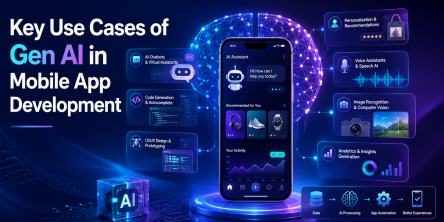
The digital world has always been evolving at a rapid pace. Ever since it first emerged. Take static applications, for example; their architecture is no longer agile enough to meet consumer expectations

A software product that took eighteen months to go from concept to launch five years ago is now expected to ship in a fraction of that time.

Most agentic AI projects fail to scale profitably because they work fine in a controlled demo but break down once they meet real production volume, messy data, and unpredictable user behavior

Adoption of AI recruitment automation across HR functions climbed from 26% to 43% in just two years, according to SHRM's State of AI in HR research.